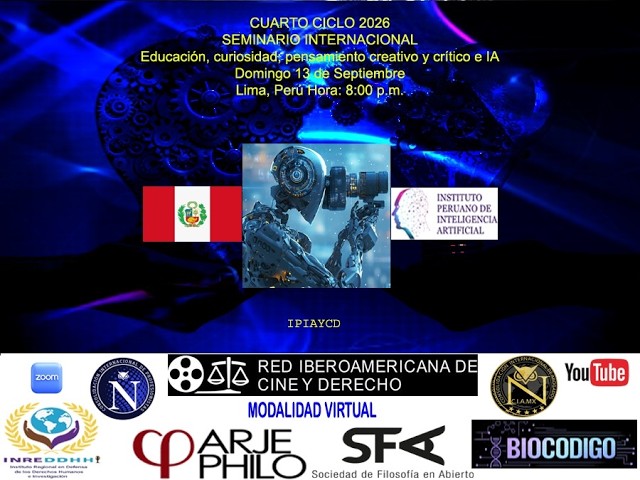
EDUCACION: curiosidad, pensamiento creativo y crítico e IA
EDUCATION: Curiosity, Creative and Critical Thinking, and AI
Keywords
Summary
168 words
Critical Evaluation
Value of the Information & Strength of the Argument
The video presents a well-structured argument that AI in education is a double-edged sword. It effectively draws on cognitive science concepts (metacognition, cognitive load theory) and cites recent empirical evidence, including specific statistics and effect sizes, to support its claims. The arguments are coherent and logically developed across multiple sections, with a clear progression from problem statement to potential solutions. However, the argumentation sometimes relies on broad generalizations without detailed methodological discussion, and the cited studies are not described in depth, which may limit the precision of the conclusions.
Scientific Rigor, Source Quality, Title Accuracy
The scientific rigor is moderate. The video mentions recognized frameworks (UNESCO, Bloom’s taxonomy, Delphi expert consensus) and empirical studies (e.g., the Chilean creativity study, the MDPI review of 63 studies), but does not provide specific citations or links, reducing verifiability. The sources appear credible but are presented without critical evaluation. The title accurately reflects the content, and the overall message is consistent with the latest discussions in educational technology. The absence of concrete references in the description further weakens the ability to trace the claims directly.
190 words
Title / Content Match
The French title is perfectly aligned with the content, which indeed addresses curiosity, creative and critical thinking in the context of AI in education.
Quality & Reliability
7/10
The video relies on recognized scientific concepts and mentions concrete studies and frameworks (UNESCO, MDPI, etc.), but lacks precise bibliographic references or direct links, making independent verification difficult.
Key Moments
Markers derived by PSI from the transcript: the creator did not define chapters.
- Introduction to the paradox of effortless learning with AI
- Data on generative AI adoption among students (66% to 92%)
- The engine of learning: metacognition and curiosity
- The need for cognitive friction in the learning process
- Challenges of fostering curiosity in the classroom
- The paradox of AI: removing friction versus deep learning
- Risks to epistemic agency and metacognitive calibration
- Strategies to restore essential friction using AI
- UNESCO AI competency frameworks and their five dimensions
- Chilean study on creativity: flexibility improvement but not fluency
- Four instructional strategies for integrating AI (feedback, dialogue simulation, peer review, critical engagement)
- MDPI review: 63 studies, 47% show significant critical thinking gains
- Conclusion: designing education to protect intellectual effort
Cited Sources
- Susan Engel on curiosity in classrooms — Quoted to emphasize that curiosity remains rare in classrooms despite its importance.
- Cognitive Load Theory (Sweller) — Mentioned to explain that AI removes both extraneous and germane load, hindering deep processing.
- UNESCO AI Competency Frameworks — Cited as a guide for integrating AI in education with dimensions like human-centered mindset and AI pedagogy.
- Study on creativity with Chilean students (SESIC) — Described an experiment using ChatGPT and Vanlab to create songs, measured with Torrance Tests.
- Peter Facione's Delphi study on critical thinking — Provides six core skills: interpretation, analysis, evaluation, inference, explanation, self-regulation.
- Revised Bloom's Taxonomy — Used to illustrate the hierarchy of thinking skills from remembering to creating.
- MDPI literature review on generative AI and critical thinking — Synthesized 63 empirical studies, with 47% showing significant improvements in critical thinking under guided use.
Contribution & Novelties
The video synthesizes recent research and frameworks to argue that AI can be a valuable cognitive partner if designed to preserve friction and epistemic agency. It offers a structured taxonomy of strategies (prompt engineering, epistemic hints, dynamic calibration) and presents concrete empirical evidence from a Chilean study and a MDPI review.
Pour aller plus loin :
- Metacognition — Overview of the concept of thinking about thinking, central to the video’s argument.
- Cognitive load theory — Explanation of the distinction between extraneous and germane load.
- Bloom’s taxonomy — Hierarchical model of cognitive skills used to justify higher-order thinking.
- Torrance Tests of Creative Thinking — Standardized tests referenced in the Chilean study.
- Artificial intelligence in education — General context on AI applications in education.
122 words
Radar Profile
The radar profile shows a balance between information quantity (8/10) and overall reliability (7/10), with slightly lower scores for technical depth (6/10). This suggests a comprehensive but accessible overview, lacking in deep methodological details.