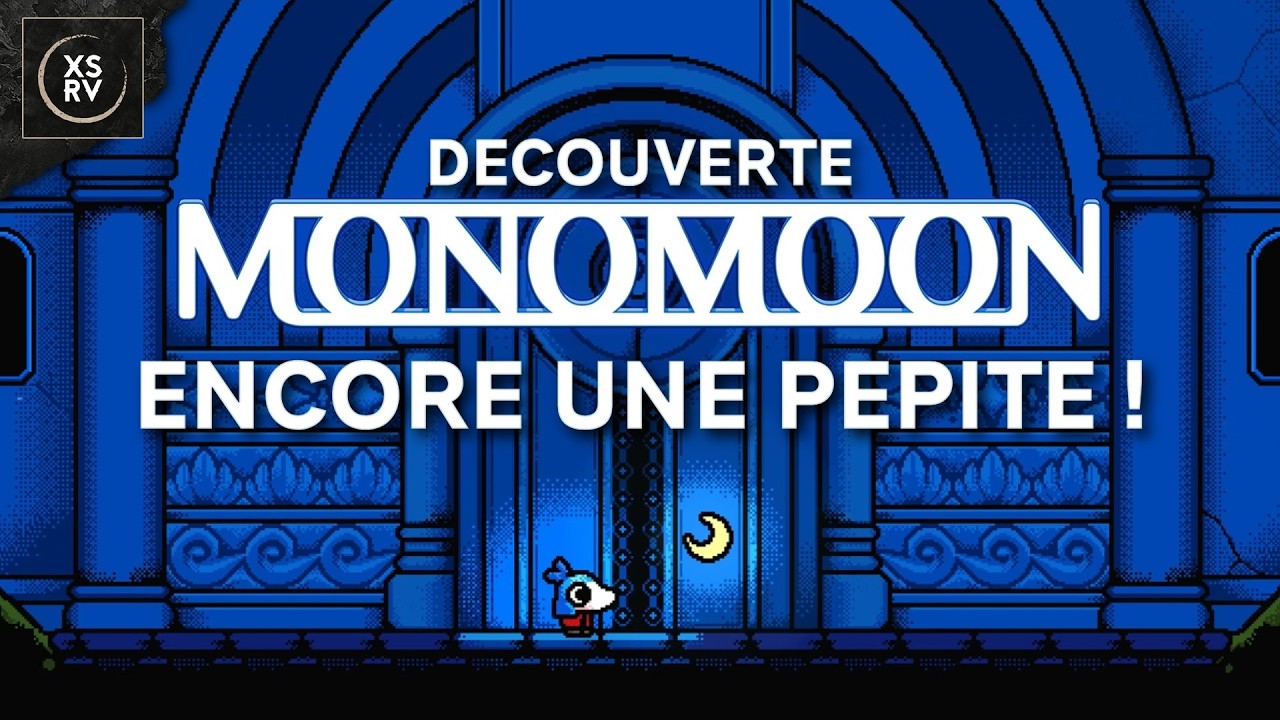
Monomoon, encore une pépite indé ! Un "brainvania" à découvrir
Monomoon, another indie gem! A "brainvania" to discover
Title history
- Monomoon, encore une pépite indé ! Un "brainvania" à découvrir — observed on 20261118-1632 UTC (YouTube)
Keywords
Summary
107 words
Critical Evaluation
Value of the Information & Strength of the Argument
The video provides valuable first-hand insight into the game’s mechanics and puzzle design. The host’s stream of consciousness reasoning demonstrates how the game encourages experimentation and observation. The argumentation is based on personal experience rather than established facts, which is appropriate for a game review. The host articulates the game’s appeal: no combat, exploration-driven, and ’eureka’ moments. However, the discussion is unstructured and occasionally meandering, reducing its argumentative strength.
Scientific Rigor, Source Quality, Title Accuracy
The video does not rely on external sources, and the host makes no factual claims about the game’s development or sales. The title accurately describes the content as a discovery of an indie gem. The description provides links to the host’s support channels and other materials, but no references to external reviews or analysis. The game’s mechanics are presented as observed, not verified. Overall, the scientific rigor is low due to the subjective nature and lack of citations.
162 words
Title / Content Match
The title accurately reflects the content: the host discovers, explores, and praises Monomoon as a 'brainvania', which matches the focus on puzzle-solving and exploration without combat.
Quality & Reliability
6/10
The video offers a subjective and informal gameplay commentary without external references or factual claims about the game's development. It provides detailed observations and reasoning about game mechanics, but the absence of sources and the personal nature of the experience limit its scientific reliability.
Key Moments
Markers derived by PSI from the transcript: the creator did not define chapters.
- Start of gameplay and initial exploration of the environment.
- Discovery of the moon as a light source to reveal hidden elements.
- Finding the map of the building and understanding the layout.
- Learning to use paintings as teleportation portals.
- Struggling with the water puzzle mechanics and expressing confusion.
- Using the mole character to reach new areas.
- Obtaining a new ability and discovering additional mechanics.
Cited Sources
- Aude Javel portfolio — Illustrator credit for the video's artwork.
- Host's books on Third Éditions — Author page for the host's written works.
- Ex Serv's video playlist — Collection of the host's other game tests.
- Ex Serv Discord server — Community discussion and support channel.
External References
Contribution & Novelties
The video offers a detailed first-person account of Monomoon’s puzzle mechanics and ‘brainvania’ design, emphasizing the joy of discovery and the absence of combat. It is valuable for potential players seeking an impression of the game’s feel and challenges. The host’s trial-and-error approach illustrates how the game teaches mechanics through environmental cues.
Pour aller plus loin :
- Metroidvania — The genre that Monomoon draws from, focusing on exploration and ability-gated progression.
- Puzzle video game — The core puzzle-solving elements that define the ‘brainvania’ subgenre.
- Game design — The principles behind creating engaging discovery-driven gameplay.
- ‘Brainvania’ — A term popularized in this video to describe puzzle-heavy Metroidvanias without combat; no established Wikipedia entry yet.
113 words
Radar Profile
The radar profile shows a high quantity of information and moderate quality, but low technical depth and reliability. The high score in quantity reflects the extensive gameplay coverage, while low reliability is due to the absence of sources and subjective nature.