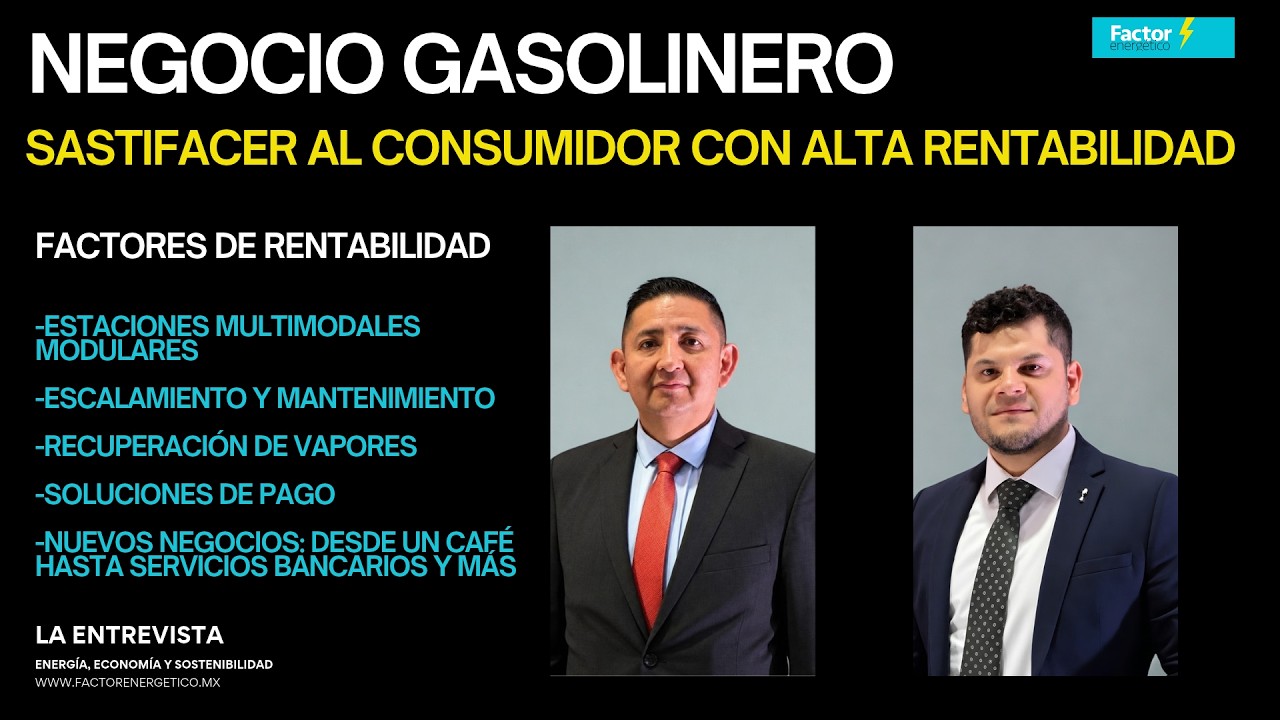
Las Estaciones de Servicio: 5 estrategias para la alta rentabilidad
Gas Stations: 5 Strategies for High Profitability
Keywords
Summary
163 words
Critical Evaluation
Value of the Information & Strength of the Argument
The value of the information lies in the practical, real-world experience of the two executives. They provide concrete examples, such as the client who upgraded a Horizon 2 dispenser to handle eight-digit transactions, enabling larger diesel sales. The argumentation is coherent and persuasive, emphasizing that regulatory compliance (e.g., vapor recovery) can be turned into a profit center rather than a cost. They make a strong case for modular stations, arguing that traditional fixed infrastructure exposes business owners to risks like road construction or new competitors. The claim that 85% of investment can be relocated is presented without evidence, but the logic is appealing. While the discussion lacks statistical data or case studies with metrics, the reasoning is internally consistent and grounded in recognizable industry dynamics. The suggestion to use AI for operational efficiency is realistic, though underdeveloped.
Scientific Rigor, Source Quality, Title Accuracy
The video does not cite external sources or provide verifiable references. The speakers mention regulatory standards (NOM-004, NOM-016, SASISOPA) but do not offer links or official documents. The content is essentially a promotional interview for EMAGAS, which biases the perspective. The title suggests a structured list of strategies, but the actual content is a free-flowing conversation without clear segmentation. That said, the factual claims about emission norms and market conditions appear plausible for Mexico, but without citations they cannot be verified. The lack of any source material lowers the scientific rigor.
243 words
Title / Content Match
The title promises '5 strategies', but the interview does not explicitly enumerate five distinct strategies. Instead, it covers several themes such as vapor recovery, modular stations, and AI integration. The title is somewhat misleading but broadly reflects the focus on profitability.
Quality & Reliability
6/10
The content draws on decades of industry experience from EMAGAS executives, offering practical insights on modernization and regulatory compliance. However, it lacks rigorous scientific methodology, verifiable data sources, and independent validation. The discussion is largely anecdotal and promotional.
Key Moments
Markers derived by PSI from the transcript: the creator did not define chapters.
- Introduction of EMAGAS history and sector overview, noting regulatory changes and the need for innovation.
- Discussion on common mistakes in modernization, emphasizing the need to focus on technology, not just fuel sales.
- Explanation of vapor recovery systems, their environmental importance, and the economic benefit of condensing vapors back into liquid fuel.
- Details on Bennett dispenser upgrade kits, including the example of eight-digit displays enabling larger diesel transactions and reduced customer wait times.
- Introduction of the modular multimodal station concept, emphasizing its movability and adaptability to changing market conditions.
- Discussion on future trends such as electric vehicles and renewable energy integration, encouraging station owners to diversify.
Contribution & Novelties
The video offers a practical perspective on how Mexican service station operators can adapt to regulatory and market pressures. The novelty lies in promoting modular, relocatable stations and retrofitting kits as cost-effective alternatives to full replacement. The emphasis on turning vapor recovery from a compliance cost into a profit source is a useful contrarian viewpoint. However, the content stays at a conceptual level without rigorous analysis.
Pour aller plus loin :
- Filling station — Provides background on service station infrastructure and global trends.
- Charging station — Relevant for the mentioned integration of electric vehicle charging at fuel stations.
- Energy transition — Context for the long-term shift discussed in the interview.
110 words
Radar Profile
The radar profile shows moderate scores across all dimensions, with no extreme highs or lows. The content is reasonably informative and technically relevant, but it lacks the depth and external validation that would elevate its scientific credibility. The balanced profile suggests a practical, experience-based discussion rather than a rigorous, evidence-driven analysis.