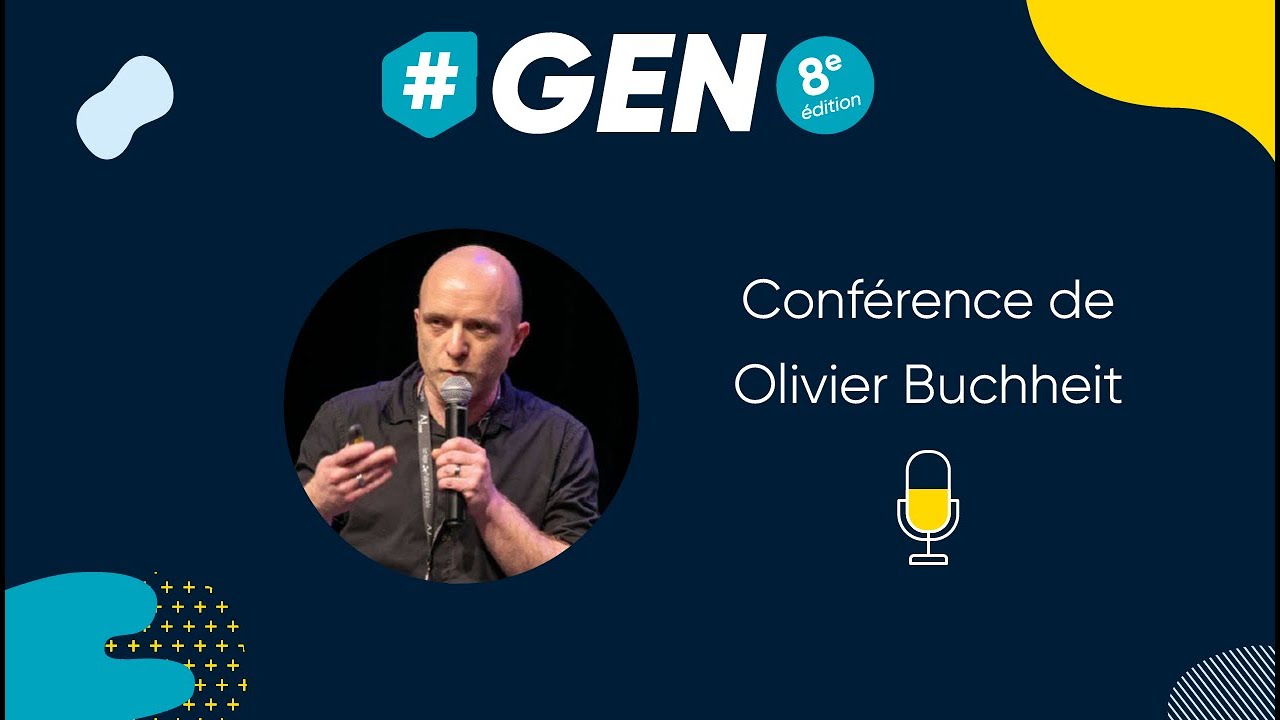
Conférence • Olivier Buchheit • Musique et digital, l'histoire d'une complète mutation #GEN2020
Conference • Olivier Buchheit • Music and digital, the story of a complete mutation #GEN2020
Keywords
Summary
168 words
Critical Evaluation
Value of the Information & Strength of the Argument
The value of this information lies in its clear integration of technological history with the specificities of the music value chain. The argumentation is solid and well-structured, progressing logically from industrial revolutions to concrete musical examples (e.g., MIDI, DAWs, Arduino). The speaker supports his claims with recognizable technical details, such as the mechanics of the glass armonica or the functioning of the MIDI protocol, which strengthens the credibility of his analysis. The narrative effectively demonstrates the impact of digitization on creative processes and business models, making a compelling case for music as a pioneering sector in digital evolution.
Scientific Rigor, Source Quality, Title Accuracy
The scientific rigor is moderate, as the talk relies on the speaker’s expert testimony rather than explicit academic citations. However, the referenced technological elements (e.g., SOHO mission, MIDI standard, digital audio workstations) are well-established and verifiable. The quality of sources is adequate for a conference presentation, though deeper referencing would enhance its formal scientific value. The title adequately encapsulates the scope of the presentation, which successfully delivers a comprehensive overview of the mutation of music through digital technology.
191 words
Title / Content Match
The title accurately reflects the content, as the talk comprehensively covers the digital transformation of the music industry across production, distribution, live performance, and valorisation.
Quality & Reliability
7/10
The speaker provides a structured, historically grounded narrative linking industrial revolutions to the music industry. The content is largely consensual regarding technological history, though it lacks formal citations to academic works, being based on recognized professional knowledge.
Key Moments
Markers derived by PSI from the transcript: the creator did not define chapters.
- Introduction and presentation of the speaker, Olivier Buchheit.
- Demonstration of data sonification using examples from the SOHO satellite and global warming data.
- Overview of the four industrial revolutions and the foundational concepts of machine, energy, and data.
- Evolution of musical instruments from purely acoustic (glass armonica) to hybrid analog-digital systems.
- Explanation of the MIDI protocol, its importance for synchronization, and its impact on musical creation.
- Comparison between Mozart's compositional workflow and modern digital audio workstations (DAWs).
- Description of high-end professional studios and the use of sound design in large-scale film productions.
- Discussion of live coding, DIY instruments with Arduino, and new forms of human-machine interaction.
- Analysis of the transformation of live performance, distribution, and valorisation, including rights and AI.
Cited Sources
- AGA AudioVisuel — Video capture service credited in the video description.
- Grand Est Numérique (GEN) — Reference to the GEN 2021 event and the organization hosting the conference.
Contribution & Novelties
The original contribution of this talk lies in its synthetic mapping of the entire music value chain across history, integrating industrial revolutions, technical protocols, and creative processes in a cohesive narrative. It offers a unique perspective on how specific digital tools (MIDI, DAWs, live coding) have reshaped the roles of musicians, producers, and other stakeholders in the industry, framing music as a leading indicator of broader digital societal transformations.
Pour aller plus loin :
- MIDI — Core protocol discussed in the talk, foundational to modern music production.
- Sonification — The practice of converting data into sound, central to the opening examples of the presentation.
- Digital Audio Workstation — The modern production environment described, contrasting with pre-digital methods.
- Live coding — A performance art using code in real time, highlighted as a new form of creation.
135 words
Radar Profile
The radar profile shows a balanced distribution across scores, with a slight emphasis on quantity of information (8) over technical depth (6). This suggests a comprehensive and accessible overview of the digital transformation in music, suitable for a broad audience interested in the cultural and technological shifts, while maintaining a strong level of provided information.