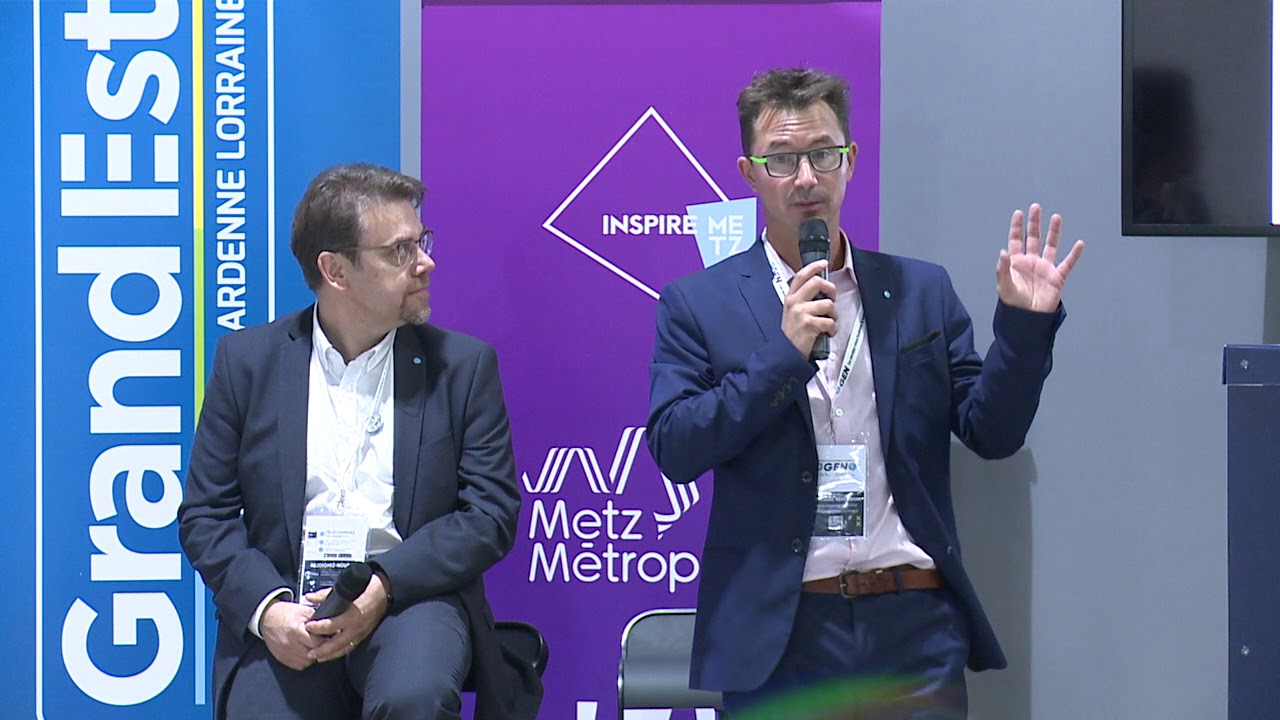
Conférence • Comment réussir et accompagner la transition vers l'industrie du futur ?
Conference • How to succeed and support the transition to the industry of the future?
Keywords
Summary
122 words
Critical Evaluation
Value of the Information & Strength of the Argument
The presentation offers valuable real-world experience from ThyssenKrupp Presta, illustrating a top-down yet employee-centric approach to Industry 4.0. The argumentation is coherent: they emphasize strategy before technology, transparency on objectives, and early involvement of staff. Examples like collaborative robots and automated logistics support the claims. The main strength is the actionable framework (culture, management, skills) that emerged from a 1,200-employee survey. However, the reasoning relies heavily on anecdotal evidence and lacks quantitative results, limiting generalizability.
Scientific Rigor, Source Quality, Title Accuracy
The talk is rigorous in its methodology but not in its sourcing: it presents a single company case without citing external studies or benchmarks. The title accurately reflects the content, and the structure is clear (two complementary perspectives). The absence of conflict-of-interest disclosure and the lack of independent verification reduce the scientific reliability. No comments were provided for public feedback analysis.
151 words
Title / Content Match
The title matches the content: a conference on the transition to Industry 4.0, with two speakers addressing challenges and practical methods.
Quality & Reliability
7/10
Pratical insights from an industrial case study (ThyssenKrupp Presta) with a clear methodology, but no external references or data to support claims beyond anecdotal evidence.
Key Moments
Markers derived by PSI from the transcript: the creator did not define chapters.
- Introduction to the concept of 'industry of the future' and its two pillars: reactivity and competitiveness.
- Presentation of ThyssenKrupp Presta's five-year strategic plan and the importance of a global vision.
- Showcase of collaborative robotics projects, including a demonstrator and deployment on the shop floor.
- Jean-Luc Hemmert begins: the triptych culture, skills, management for successful change.
- Explanation of the employee survey, company DNA definition, and leadership charter.
Cited Sources
- hoook.io — Live recording platform for the GEN2018 conference stream.
Contribution & Novelties
The unique contribution lies in the practical demonstration of how a mid-sized industrial company systematically implemented Industry 4.0 by placing human factors at the core. It offers a template that others can adapt, emphasizing the sequence: strategy, transparency, then technology. The detailed examples of collaborative robotics and automated warehousing provide concrete inspiration.
Pour aller plus loin :
- Industry 4.0 — Background on the fourth industrial revolution and its core technologies.
- Collaborative robot — Definition and safety aspects of cobots used in the examples.
- Change management — Theoretical frameworks for organizational change, complementing the case study.
95 words
Radar Profile
The profile shows a balanced approach with slightly higher scores in information quantity and reliability than in technical depth, reflecting a practical rather than academic focus. The importance of human factors over technology is clearly illustrated.