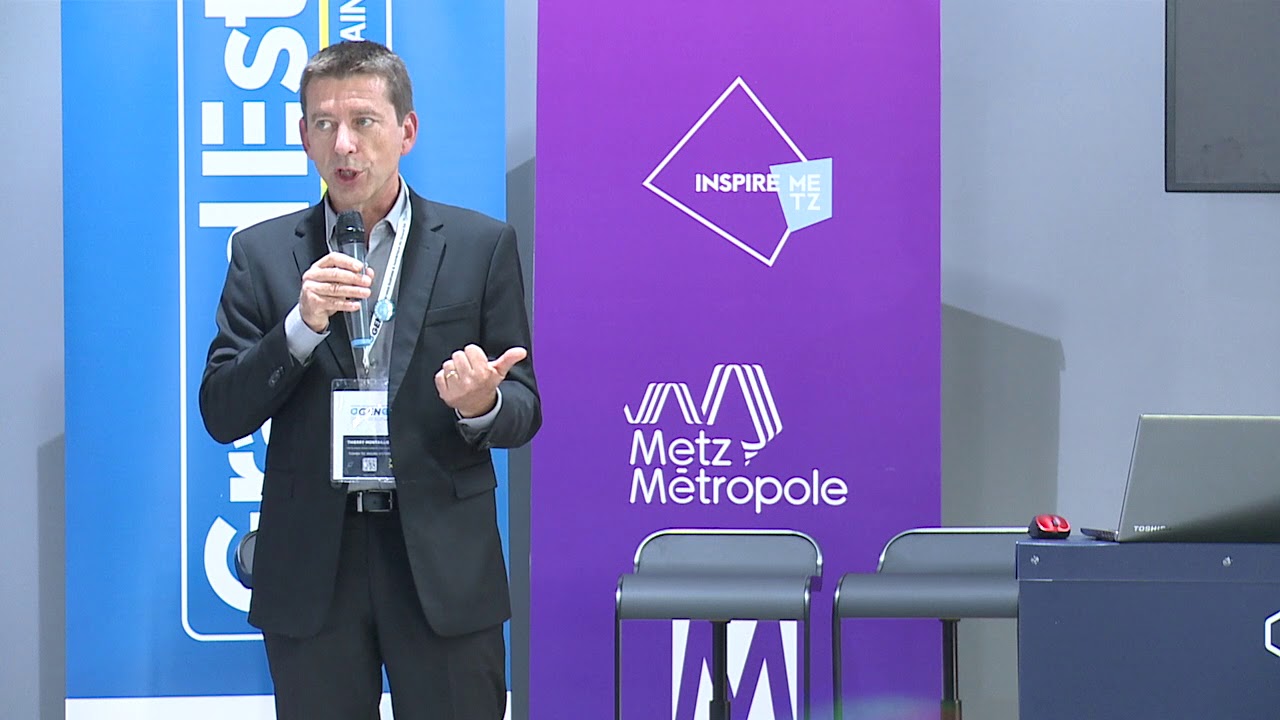
Conférence • Comment la GED répond-t-elle aux nouveaux enjeux de l'entreprise ?
Conference • How does EDMS respond to the new challenges of the company?
Keywords
Summary
154 words
Critical Evaluation
Value of the Information & Strength of the Argument
The value lies in a clear, structured explanation of how GED fits into digital transformation, supported by practical examples such as supplier invoice processing and contract management. The argumentation is solid: the speaker builds a logical case from the problems of document proliferation to the benefits of a centralized, indexed repository. He addresses common pitfalls like unrealistic expectations and the risk of treating digital transformation as a one-time project. However, the reliance on vague statistics (e.g., ‘50% of files grow’ or ‘7.5 hours per week lost’) without citing specific studies weakens the persuasiveness. The discussion of ERP integration is particularly insightful, clarifying that GED and ERP serve different purposes and should cooperate rather than replace each other.
Scientific Rigor, Source Quality, Title Accuracy
The scientific rigor is moderate. The speaker cites studies from AIIM, IDC, and a British consultancy, but provides no URLs or precise references. The only source link in the description is to hoook.io, a production company, not a research reference. The title matches the content well, as the presentation consistently addresses how GED responds to enterprise challenges. The talk is informative but falls short of academic standards due to anecdotal evidence and lack of verifiable data. The language is accessible and practical, making it useful for a business audience rather than a scientific one.
226 words
Title / Content Match
The title accurately reflects the content: the video discusses how GED (Electronic Document Management) addresses enterprise challenges such as document volume, regulatory constraints, and process optimization.
Quality & Reliability
7/10
The presentation offers practical insights based on industry experience but relies on generic statistics from unspecified studies. No citations are provided directly in the talk, although the description includes a production link. The argumentation is coherent and realistic, but lacks verifiable data.
Key Moments
Markers derived by PSI from the transcript: the creator did not define chapters.
- Introduction and welcome, setting the context of digital transformation and GED.
- Definition of digital transformation, statistics on media coverage and French companies' lag.
- Discussion of challenges: document volume, regulatory compliance, and time lost searching for information.
- Recommendations for successful digital transformation: prioritize projects, start with simple ones, select partners.
- Detailed explanation of GED benefits: centralized storage, powerful search, time saving, and automation of processes.
- Comparison between GED and ERP, explaining complementary roles and integration possibilities.
Cited Sources
- hoook.io — Production company for the live event on #GEN2018, mentioned in the video description.
Contribution & Novelties
The video provides a practitioner’s perspective on the role of GED in digital transformation, emphasizing not just storage but process optimization and integration with business systems. It offers a clear framework for understanding the synergy between ERP, CRM, and GED, and highlights the need to view digital transformation as an ongoing journey rather than a destination. The emphasis on prioritizing high-ROI projects and starting small is a practical takeaway.
Pour aller plus loin :
- Electronic document management (Wikipedia) — Foundational concept behind GED, explaining its features and evolution.
- Digital transformation (Wikipedia) — Contextualizes the broader movement into which the video situates GED.
- Business process management (Wikipedia) — Relevant to the workflow optimization aspects discussed by the speaker.
117 words
Radar Profile
The radar profile shows high scores in quantity and moderate technical level, indicating a comprehensive but accessible presentation. The fiabilite score is average, reflecting the lack of formal citations. The overall balance suggests a practitioner-oriented talk rather than a rigorous scientific analysis.