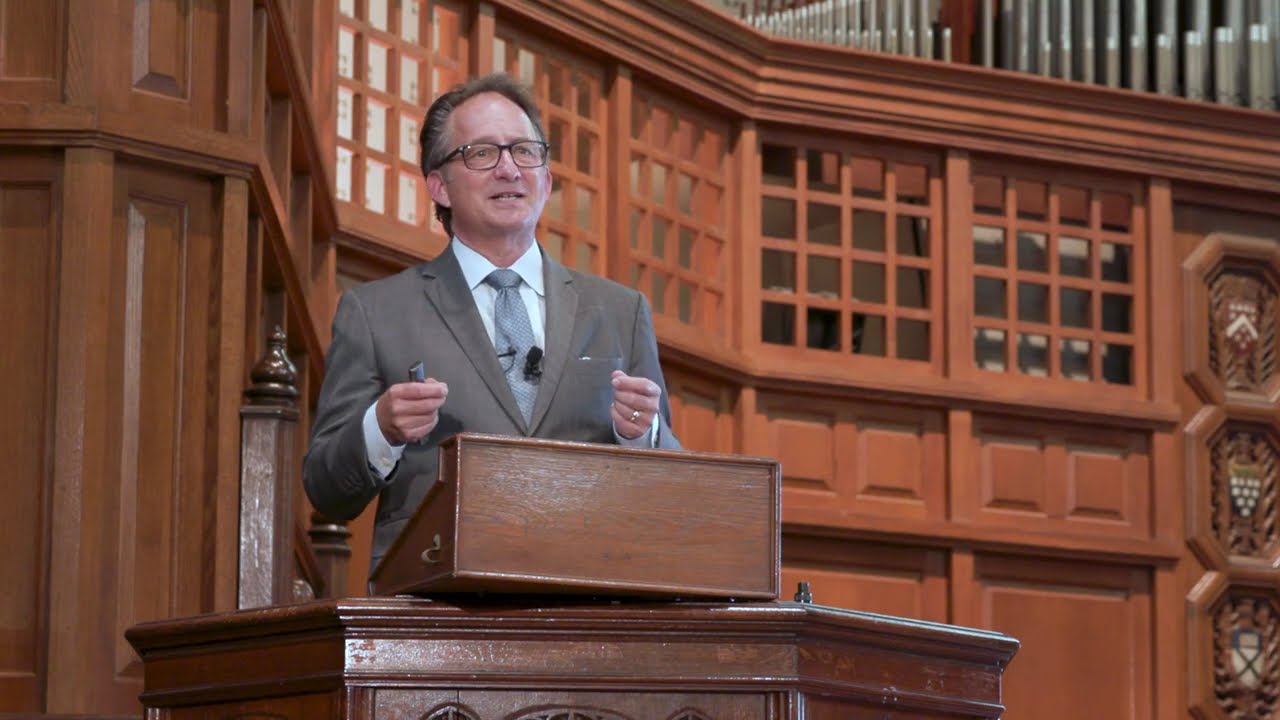
The Founding of Yale College - Purposes of College Education, Lecture 5
Keywords
Summary
230 words
Critical Evaluation
Value of the Information & Strength of the Argument
The lecture provides valuable historical insight into the founding of Yale, connecting it to broader themes of religious, political, and educational development in colonial America. The argumentation is solid: the professor draws on primary sources (the 1701 act), institutional records, and historical debates, while also offering interpretive commentary on the significance of the college’s independence. He maintains a balanced perspective, acknowledging ambiguities (e.g., the book donation timeline) and personal biases (e.g., his own view on academic freedom). The argument is coherent and well-supported, making effective use of anecdotes and visual aids, and the audience participation adds an engaging dimension without undermining the scholarly content.
Scientific Rigor, Source Quality, Title Accuracy
The lecture demonstrates strong scientific rigor in its historical methodology. The professor cites specific dates, documents, and individuals, and openly discusses historical uncertainties (e.g., the exact nature of the founders’ actions). He references the syllabus as a supplementary resource, but otherwise relies on his expertise and institutional knowledge, which is appropriate for an expert opinion. The title ‘The Founding of Yale College’ accurately captures the content, which is focused entirely on the early history and founding circumstances. The course’s broader theme of ‘Purposes of College Education’ is integrated, but the lecture’s explicit focus on the founding is clear and well-executed. No discrepancies between title and content were noted.
227 words
Title / Content Match
The title precisely reflects the lecture's focus on the founding of Yale College, and the content aligns with the course theme.
Quality & Reliability
9/10
The lecture is a well-structured historical account from a credible academic institution, presenting nuanced interpretations and acknowledging debates, though it relies primarily on the lecturer's expertise and the provided syllabus.
Key Moments
Markers derived by PSI from the transcript: the creator did not define chapters.
- Introduction: overview of the lecture and its focus on Yale's founding in 1701.
- Context: population of Connecticut and New Haven; religious motivation for establishing a college.
- The 1701 Act: reading from the act, emphasis on preserving Protestant religion, and the humble name 'Collegiate School'.
- Book donation and founding controversies; move to New Haven and Elihu Yale's gift.
- Religious crisis: dismissal of Rector Cutler in 1722 for using an Anglican phrase.
- Shift to describing 18th-century collegiate education: student body, admission requirements, and curriculum.
Cited Sources
- Purposes of College Education – Public Syllabus — Provided in the video description; serves as a reference for the course structure and reading list.
Contribution & Novelties
The lecture offers an engaging and detailed account of Yale’s founding, emphasizing the interplay between religious zeal, political strategy, and educational philosophy. It highlights the deliberate choice of the ‘Collegiate School’ designation to maintain autonomy from the crown, a factor that contributed to the model of private, independent colleges in America. The lecturer also brings personal reflections, connecting institutional history to contemporary academic freedom debates.
Pour aller plus loin :
- Yale University – Wikipedia — Overview of Yale’s history, including its founding and development.
- Great Awakening – Wikipedia — Religious revival movement relevant to the religious tensions discussed.
- Congregationalism – Wikipedia — The Protestant denomination that influenced the college’s original religious identity.
112 words
Radar Profile
The radar profile shows very high scores in information quantity and quality, moderate technicality, and high reliability. This reflects a lecture that is dense with facts and interpretation, accessible to a general audience, and grounded in credible scholarship, though not highly technical.