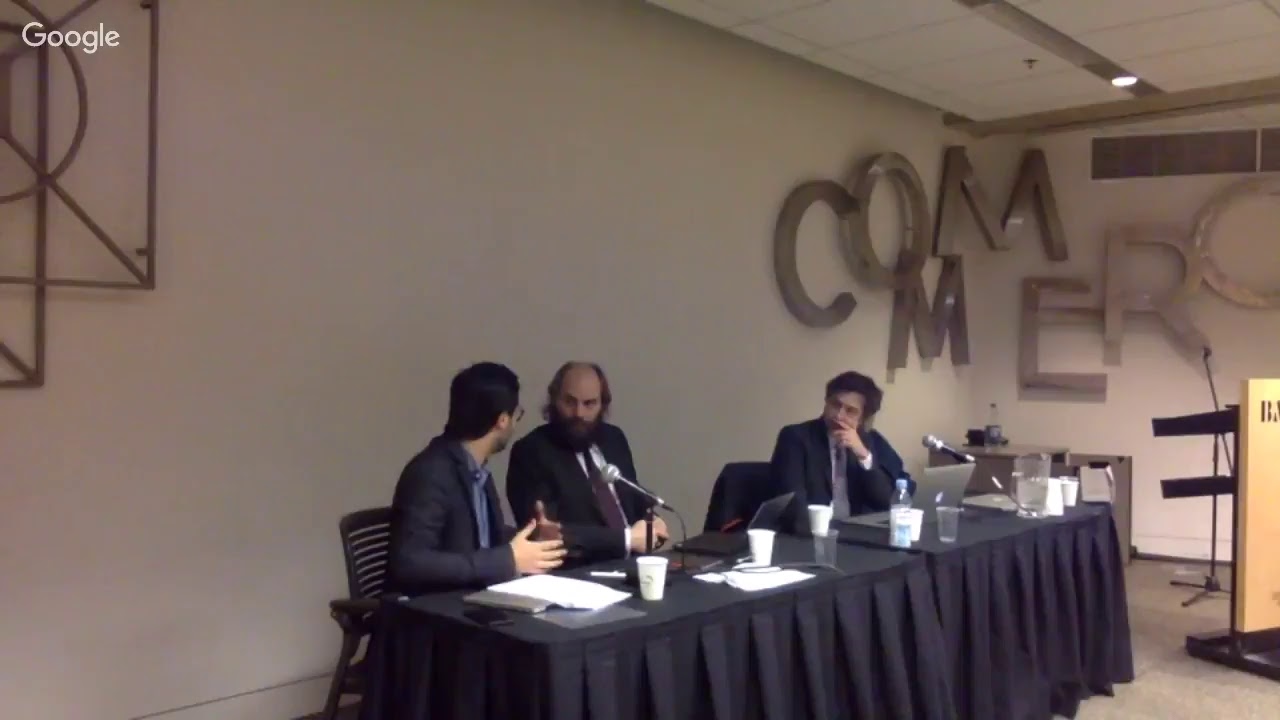
5e rencontre internationale Paul-Zumthor : « Origine »
5th international Paul-Zumthor meeting: "Origin"
Keywords
Summary
162 words
Critical Evaluation
Value of the Information & Strength of the Argument
The value of the information lies in its interdisciplinary perspective, bringing together literary history, media studies, and digital humanities. The argumentation is solid: the speakers use concrete case studies (the Palatine Anthology, web archives, YouTube videos) to ground abstract concepts. The discussion is balanced, with each participant contributing complementary views on the tension between authority and distributed agency. However, the arguments are exploratory and do not always converge on a single thesis, which reflects the nature of a round table rather than a structured research presentation.
Scientific Rigor, Source Quality, Title Accuracy
The scientific rigor is acceptable for an academic panel: the speakers reference specific documents and projects, though explicit citations are sparse. The title accurately reflects the content, and the discussion remains focused on the theme of origin. The sources mentioned (e.g., the Palatine Anthology, archives of Le Monde) are clearly identified, but no formal bibliography is provided. The title’s relevancy is strong, and the panel’s credit lies in its thoughtful, critical engagement with digital culture.
176 words
Title / Content Match
The title directly matches the core theme of the panel, which is the concept of 'origin' in digital environments.
Quality & Reliability
7/10
The round table features three academics from recognized institutions discussing philosophical and technical aspects of digital editorialization. The arguments are nuanced and grounded in concrete examples (anthologies, digital archives), but the discussion remains exploratory and without formal verification of data or systematic citations.
Key Moments
Markers derived by PSI from the transcript: the creator did not define chapters.
- Introduction of the panel and the theme of origin in digital space.
- Éric Méchoulan presents the Palatine Anthology as an example of non-linear origin.
- Matteo Treleani discusses digital archives and the problem of authenticity in web archives.
- Marcello Vitali-Rosati elaborates on the concept of editorialization and spatial authority.
- Concluding remarks and final questions from the audience.
Concurring Sources
- Éditorialisation - Wikipédia — Defines the concept central to the discussion on dynamic structuring of digital spaces.
- Palatine Anthology - Wikipedia — An example of a multi-layered textual tradition used to illustrate non-linear origin.
Contribution & Novelties
The panel contributes a nuanced understanding of ‘origin’ that challenges linear, genealogical models. By introducing the concept of editorialization, it offers a framework to analyze digital environments as dynamic spaces where authority is distributed. The discussion of digital archives brings to the forefront practical issues of authenticity and integrity that are often overlooked.
Pour aller plus loin :
- Éditorialisation (Wikipedia FR) — Provides a definition and context for the key term used throughout the discussion.
- Digital humanities (Wikipedia) — Situates the panel’s approach within the broader field of digital humanities.
- Palatine Anthology (Wikipedia) — Background on the example used to illustrate the concept of origin as resonance.
107 words
Radar Profile
The radar profile shows moderate to high scores across information quantity, quality, technical level, and global reliability, indicating a balanced academic discussion with solid content, though not exceptionally groundbreaking.