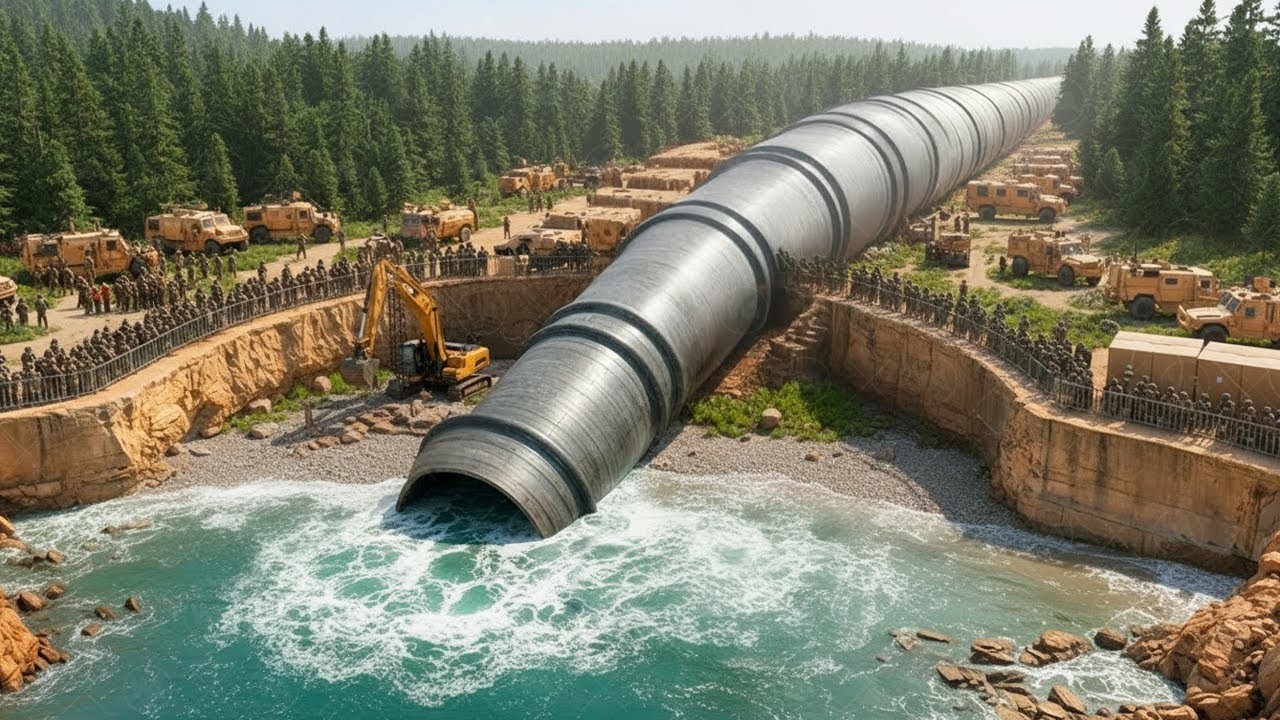
La Pologne Creuse Le Fond De La Mer Baltique Pour Priver La Russie De Son Contrôle
Poland is dredging the bottom of the Baltic Sea to deprive Russia of its control
Title history
- La Pologne Creuse Le Fond De La Mer Baltique Pour Priver La Russie De Son Contrôle — observed on 20261101-0144 UTC (YouTube)
Keywords
Summary
219 words
Critical Evaluation
Value of the Information & Strength of the Argument
The value of the information lies in its ability to synthesize technical, economic, and geopolitical dimensions of a complex infrastructure project. It provides a clear explanation of the engineering necessity of a lock (equalizing water levels to avoid dangerous currents), the logistics of dredging with a specialized vessel (Ursa), and the environmental risks of disturbing phosphorus-laden sediments that could trigger cyanobacteria blooms. The argumentation is structured and layered, starting with the historical grievance, moving through the construction and technical solutions, and concluding with the current underutilization and future plans. The speaker presents a balanced view, acknowledging both the strategic symbolism of independence and the rational criticisms of economic viability, such as the proximity of the large, efficient port of Gdansk. While the argument is persuasive and clear, it relies on a narrative structure typical of a documentary, which at times prioritizes storytelling flow over critical depth, especially when discussing political accusations without fully substantiating them.
Scientific Rigor, Source Quality, Title Accuracy
The scientific rigor is moderate. The video mentions a specific expert, marine biologist Agata Blasiic (likely Agata Błaszczyk), regarding the phosphorus risk, which adds an element of credibility to the environmental section. It also provides precise figures, such as the canal’s cost (420 million euros), depth (5 meters), length (100 meters for vessels), and annual traffic data (31 cargo ships in 2024), lending a factual tone to the narrative. However, no formal academic sources or links are provided in the video description, and the presenter makes generalized claims (e.g., about government handling of problems) without citing evidence. The title accurately reflects the content, focusing on the engineering ‘digging’ and the geopolitical goal of reducing Russian influence. The overall tone is professionally critiqued, but the lack of formal references prevents it from being considered a rigorous scientific source.
307 words
Title / Content Match
The title accurately captures the core subject: Poland's engineering project to build a canal on the Vistula Spit to circumvent Russian control over access to the Baltic Sea. The phrasing 'digging the bottom' is a dramatic simplification of the dredging and construction process but does not mislead about the content.
Quality & Reliability
6/10
The video provides a substantial amount of concrete, technical data (costs, dimensions, traffic statistics, dredging operations) and correctly explains the engineering function of a lock. However, it lacks formal citations or linked sources in the description, and mixes hard facts with editorial commentary and approximations, giving an informative but not rigorously verifiable basis.
Key Moments
Markers derived by PSI from the transcript: the creator did not define chapters.
- Presentation of the Vistula Spit and the geographical problem: the only access to the sea being the Russian-controlled Strait of Baltiysk.
- Historical context explained: post-WWII borders, shared lagoon, and Elblag's century-old dependency on a foreign-controlled route.
- Decision and start of construction in 2019; the goal to cut through the narrowest point of the spit to create an independent waterway.
- Engineering explanation of the hydraulic lock: an 'elevator for water' that equalizes different levels and prevents dangerous currents, ensuring vessel safety.
- Cost analysis: budget overrun from 190 million to 420 million euros, and the intended specifications for ships (100m x 20m, 4.5m draft).
- Environmental concerns: dredging disturbs phosphorus-laden sediments, risking cyanobacteria blooms in the lagoon, as flagged by marine biologist Agata Blasiic.
- Creation of the artificial island (180 hectares) from excavated material as ecological compensation for wildlife.
- Current usage and limitations: mostly used by pleasure craft; low cargo traffic due to shallow lagoon, prompting new dredging operations with the vessel Ursa.
Cited Sources
- Agata Blasiic (marine biologist) — Cited in the video as the scientific source of the environmental concern regarding phosphorus deposits in the lagoon and the subsequent risk of cyanobacteria proliferation.
- Vistula Spit Canal project — The primary subject of the documentary; the narration references its construction, inauguration in September 2022, and its operational data.
Concurring Sources
- Vistula Spit canal - Wikipedia — Corroborates the technical specifications, the construction timeline (start 2019, opened 2022), and the cited costs mentioned in the video.
- Vistula Lagoon - Wikipedia — Supports the geographical description of the lagoon's shallow depths and its split between Polish and Russian territories, matching the video's claims.
Dissenting Sources
Contribution & Novelties
The primary novelty of this content is its concise episodic synthesis of a recent (2022-2024) infrastructure project that combines deep geopolitical tension with highly specific engineering constraints. It demystifies why a ‘simple cut’ through a spit is insufficient, explaining the advanced mechanical role of the lock and the continuous dredging needs created by sediment dynamics. It brings up the counterintuitive reality of the project’s low commercial return so far, a rarely highlighted fact in mainstream coverage, which stresses the primarily political and symbolic value of the canal.
Pour aller plus loin :
- Vistula Spit canal - Wikipedia — Highly relevant official background on the project’s scope, costs, and operational status.
- Vistula Lagoon - Wikipedia — Explains the fragile ecosystem of the lagoon and the hydrological conditions which are central to the video’s technical and environmental arguments.
- Hydraulic lock - Wikipedia — Essential engineering concept discussed in the video (the ‘water elevator’) that governs navigability between different water levels.
- Eutrophication - Wikipedia — Directly links the phosphorus sediment issue mentioned in the video to broader ecological dangers such as cyanobacteria blooms.
180 words
Radar Profile
The radar profile shows a solid documentary-style piece with strong scores in information quantity and technical level, but a slightly lower reliability score due to the absence of formal citations in the description. The balance suggests an accessible yet well-researched technical overview that lacks strict academic rigor.
💬 Over the 30 analyzed comments, the mood is predominantly critical and skeptical, with viewers questioning the project's economic value, ecological damage, and the actual extent of Russian restrictions, while a minority acknowledges the geopolitical symbolic importance of the canal.