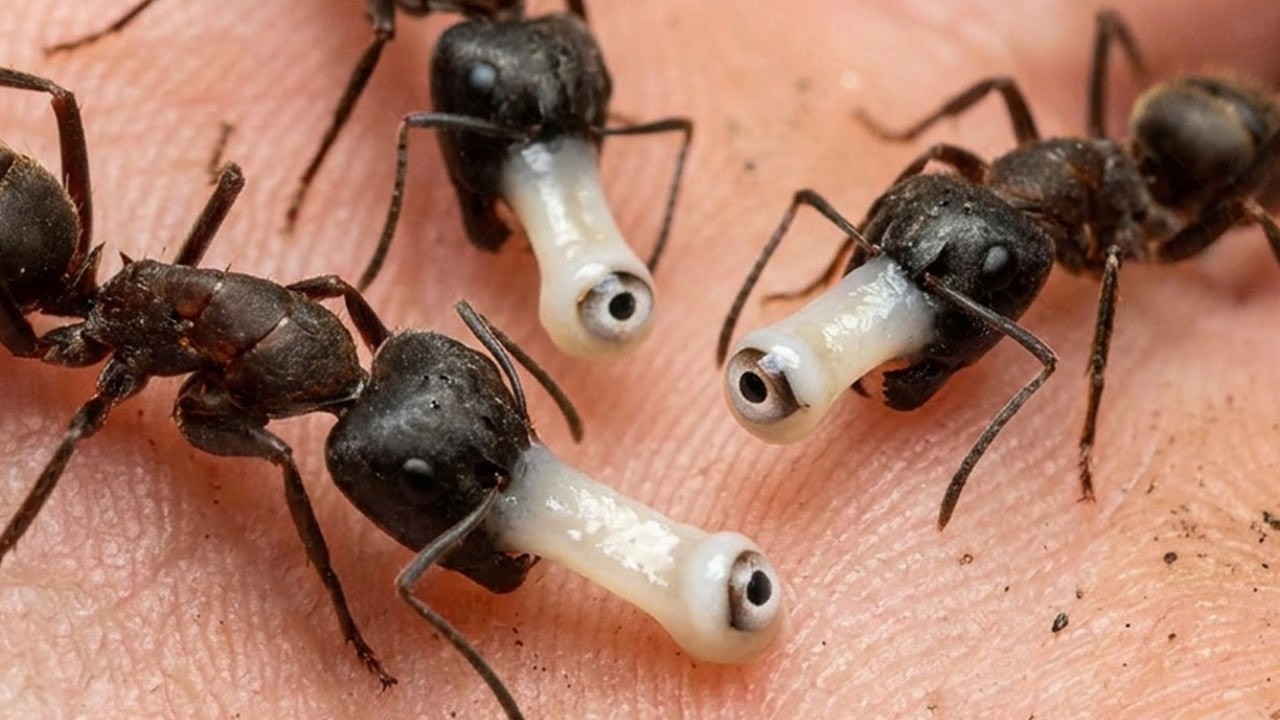
Israël A Trouvé De Minuscules Prédateurs Qui Décapitent Les Fourmis De L’Intérieur
Israel Found Tiny Predators That Decapitate Ants From The Inside
Title history
- Israël A Trouvé De Minuscules Prédateurs Qui Décapitent Les Fourmis De L’Intérieur — observed on 20261101-0118 UTC (YouTube)
Keywords
Summary
207 words
Critical Evaluation
Value of the Information & Strength of the Argument
The video provides a clear, step-by-step explanation of an intriguing biological phenomenon—the decapitating behavior of phorid flies—and contextualizes it within the practical problem of invasive fire ant management. Its value lies in making a complex lifecycle accessible and in connecting it to a real-world biocontrol program. The argumentation is logically structured: it eliminates alternative explanations, gradually reveals the fly’s role, and justifies its effectiveness with concrete examples from the US. However, the narrative relies heavily on anthropomorphic language and dramatic storytelling, which, while engaging, can blur the line between fact and embellishment. The case for applying this method in Israel remains hypothetical; the video explicitly states that no such releases have yet occurred, which tempers its practical relevance. The reasoning about why flies are preferable to larger predators is sound, but the lack of quantitative evidence or expert quotes weakens the overall argumentation.
Scientific Rigor, Source Quality, Title Accuracy
The video demonstrates moderate scientific rigor: the core facts about phorid flies and fire ants are accurate, but it provides no citations, references, or direct links to research or official programs. The channel’s description is empty of any supporting material, and the visuals appear to be AI-generated, as several commenters noted, which further reduces trustworthiness. The title is misleading because it attributes the discovery or deployment to Israel, while the content reveals that the research and application largely originated in the United States; Israel’s involvement is only speculative. The video’s structure as a mystery narrative works for engagement but sacrifices precision. Overall, the substance is passable for a general audience, but the lack of verifiable sources and the sensationalist framing prevent it from being a rigorous scientific resource.
286 words
Title / Content Match
The title suggests Israel discovered these predators, but the video clarifies that the control program is American and Israel has not yet released the flies, making it partially misleading.
Quality & Reliability
6/10
The video presents a mix of accurate entomological facts about phorid flies and fire ants, but lacks cited sources, includes speculative framing about Israel, and relies on storytelling with AI-generated imagery.
Key Moments
Markers derived by PSI from the transcript: the creator did not define chapters.
- Discovery of dead fire ants with detached heads near a rock.
- Systematic rejection of hypotheses: epidemic, ant warfare, poisoning, and known predators.
- Observation of a small fly causing panic and paralysis among the ants.
- Detailed explanation of the phorid fly's egg-laying and larva migration to the ant's head.
- Introduction of the US biological control program against fire ants, started in 1997 in Florida.
- Discussion of Israel's potential use of the flies, including its existing sterile insect technique infrastructure.
- Comparison with alternative predators (anteaters, pangolins) and why they are inefficient.
- Emphasis on the phorid flies' host specificity and the low ecological risk of their introduction.
Contribution & Novelties
48 words
Radar Profile
The radar profile shows moderate scores across all dimensions, with slightly higher marks for information quantity and quality than for technical depth and reliability. This suggests a balanced but shallow overview that prioritizes accessibility over rigorous scientific detail.
💬 Among the 30 comments analyzed, the tone is mixed with a negative slant, as many viewers criticize the video's excessive length, suspected AI-generated visuals, and the misleading title, while some make humorous remarks about the ants.