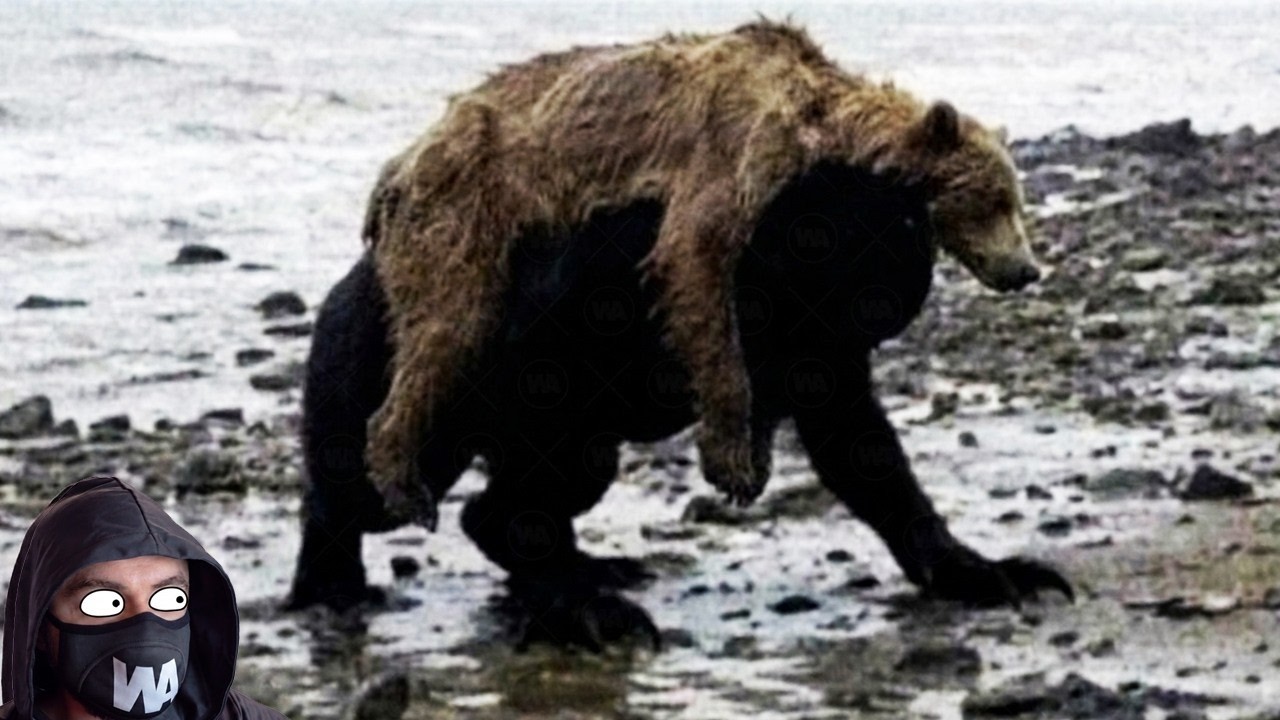
Pourquoi Yellowstone Ne S’Affole Pas Face À Ce Chasseur De Grizzlis De 300 kg
Why Yellowstone Isn’t Panicking About This 660-lb Grizzly Hunter
Title history
- Pourquoi Yellowstone Ne S’Affole Pas Face À Ce Chasseur De Grizzlis De 300 kg — observed on 20261031-2255 UTC (YouTube)
Keywords
Summary
121 words
Critical Evaluation
Value of the Information & Strength of the Argument
The video provides a coherent narrative linking conservation success to increased intraspecific competition. It presents specific data points (e.g., cub survival rates of 49% inside vs 83% outside, mortality records) and explains ecological concepts like interference competition and carrying capacity. However, the argumentation is somewhat one-sided, not deeply examining potential methodological biases in data collection or alternative explanations. The emotional storytelling and dramatic examples (e.g., a male bear flipping dumpsters) add engagement but do not weaken the core scientific premise. Overall, the value lies in making complex ecological processes accessible to a general audience.
Scientific Rigor, Source Quality, Title Accuracy
The video does not cite specific scientific papers or institutions, instead referencing general biologist observations and data summaries. It mentions known ecological phenomena, but without explicit sources, the scientific rigor is moderate. The title is attention-grabbing but slightly misleading, as the video is not solely about a specific 300 kg bear but about broader population dynamics. The content accurately reflects well-known issues in bear management, but the lack of direct citations reduces its credibility for a strictly scientific audience.
188 words
Title / Content Match
The title is somewhat sensationalist and focuses on a specific instance of a large grizzly, but the video content is broader, discussing population dynamics and why Yellowstone is not acting in response. The title moderately matches the content, though it overemphasizes the individual bear.
Quality & Reliability
7/10
The video presents a clear ecological explanation of grizzly bear mortality patterns in Yellowstone, referencing specific data points (cub survival rates, mortality records, food source declines). It aligns with known scientific concepts like intraspecific competition and carrying capacity. However, it lacks direct citations to peer-reviewed studies and sometimes simplifies complex interactions, lowering the reliability score.
Key Moments
Markers derived by PSI from the transcript: the creator did not define chapters.
- Introduction to a grizzly bear attack and the surprising cub survival paradox.
- Explanation of why male grizzlies kill cubs, including reproductive benefits.
- History of grizzly conservation from 136 bears in 1975 to 1000 today.
- Discussion of competition by interference and its effects on females with cubs.
- Analysis of record mortality numbers and challenges in detecting all bear deaths.
- Explanation of improved tracking technologies potentially inflating mortality statistics.
- Decline of whitebark pine due to beetles and climate change, reducing an important food source.
- Impact of invasive lake trout and whirling disease on cutthroat trout populations, affecting bear diets.
- Comparison of threat from wolves vs grizzlies, showing wolves rarely kill cubs.
- Human-related deaths including poaching, euthanization, and an incident with a bear's head removed.
- Conclusion that Yellowstone is at carrying capacity, leading to natural population regulation through intraspecific competition.
Contribution & Novelties
The video presents a synthesized explanation of grizzly bear mortality patterns in Yellowstone, framing conservation success as a driver of intraspecific competition and reduced cub survival. It contextualizes recent mortality records within density-dependent factors, offering a compelling narrative for general audiences. The original contribution is the accessible linkage between conservation goals and unintended ecological consequences, though it does not introduce new scientific findings.
Pour aller plus loin :
- Intraspecific competition — Core concept explaining competition among individuals of the same species.
- Carrying capacity — Fundamental ecological concept for understanding population limits.
- Grizzly bear — General species background and ecology.
- Whitebark pine — Important food source in Yellowstone and its decline.
- Yellowstone National Park — Context of the bear population studied.
120 words
Radar Profile
The radar profile shows a well-rounded informational video with high quantity of information and moderate technical depth. Reliability is slightly lower due to lack of explicit citations, but the content aligns with ecological science. The balance is adequate for a general science communication piece.