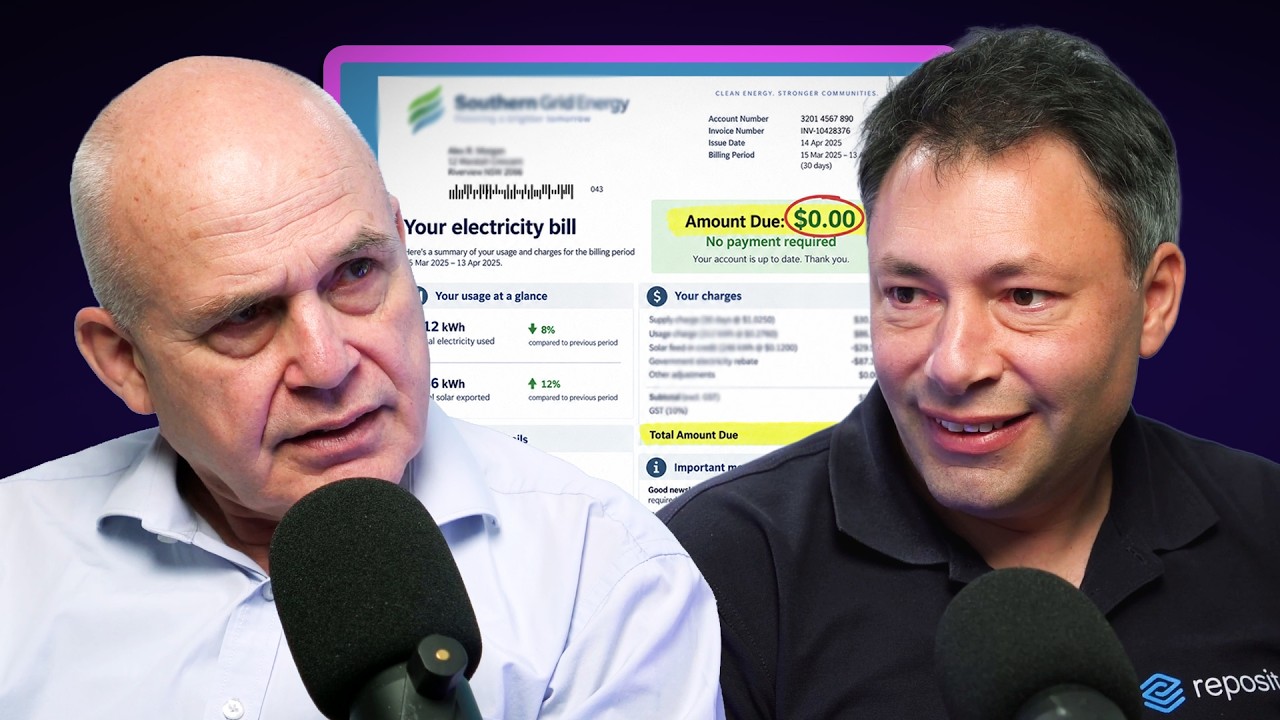
Can Reposit Power Really Get Rid of Your Electricity Bill?
Keywords
Summary
152 words
Critical Evaluation
Value of the Information & Strength of the Argument
The video provides a substantial insider perspective on the Australian energy market, explaining a specific business model in detail. The argumentation is coherent: consumers are overwhelmed by constant changes, and Reposit’s centralization of battery control offers a way to reduce complexity and provide financial relief. The hosts support their claims with examples of customer experiences and mention the scale of their fleet. However, the discussion lacks independent validation and does not address potential risks or alternative viewpoints, making the argument somewhat one-sided.
Scientific Rigor, Source Quality, Title Accuracy
The content is based on the firsthand experience of company founders, which lends authority but introduces potential bias. No external studies or official data are cited; the only references are links to their own website and related content. The title accurately reflects the content, and the video stays on-topic without unnecessary digressions. The quality of information is adequate for understanding the model, but the lack of neutral sources limits its scientific rigor.
169 words
Title / Content Match
The title asks whether Reposit can eliminate electricity bills, and the video directly addresses how the No Bill model works, its conditions, and its viability, so it matches well.
Quality & Reliability
6/10
The information is presented by company representatives and is largely promotional, but it provides a clear explanation of the business model and underlying technical/economic rationale. No independent verification is offered, and the source is not peer-reviewed, but the practical insights into consumer frustration and battery management are valuable.
Chapters
- Why electricity has become so confusing
- How Reposit’s No Bill model works
- What “no electricity bill” actually covers
- What happens when the No Bill period ends?
- Why the electricity market keeps changing
- Solar, batteries and constantly changing retailers
- The problem with badly sized battery systems
- “It’s just no way to live”
- Why households are so frustrated with electricity
- How Reposit combines batteries into a larger fleet
- What Reposit is planning next
Cited Sources
- Watch the full episode here — Full episode of the interview from which this clip is taken.
- Visit Your Energy Answers — Main website of the channel providing energy-related resources.
- Find quality local installers — Directory for solar and battery installers.
- Read more on the topic here — Article about electricity supply charges and Reposit's battery subscription model.
- Your Energy Answers LinkedIn — LinkedIn page for the channel.
Contribution & Novelties
The video offers a direct look at a novel business model where a company leases and controls residential battery systems to provide ’no electricity bill’ guarantees, leveraging fleet aggregation for grid services. This concept, while not entirely new, is presented with practical details on how it operates in the Australian market, including challenges with battery sizing and policy interference.
Pour aller plus loin :
- Virtual power plant — Explains the aggregation of distributed energy resources to provide grid services, a core concept behind Reposit’s model.
- Demand response — Discusses mechanisms for adjusting consumer electricity usage in response to supply conditions, relevant to the battery control strategies mentioned.
- National Electricity Market (Australia) — Provides background on the Australian electricity market, which is central to the discussion about volatility and pricing.
129 words
Radar Profile
The profile shows moderate scores across all dimensions, with quantity of information slightly higher than quality and technical depth. This reflects an informative yet biased discussion that explains a business model without deep technical or independent validation. The radar suggests a balanced but not exceptional resource for understanding the challenges and potential of aggregated battery systems.