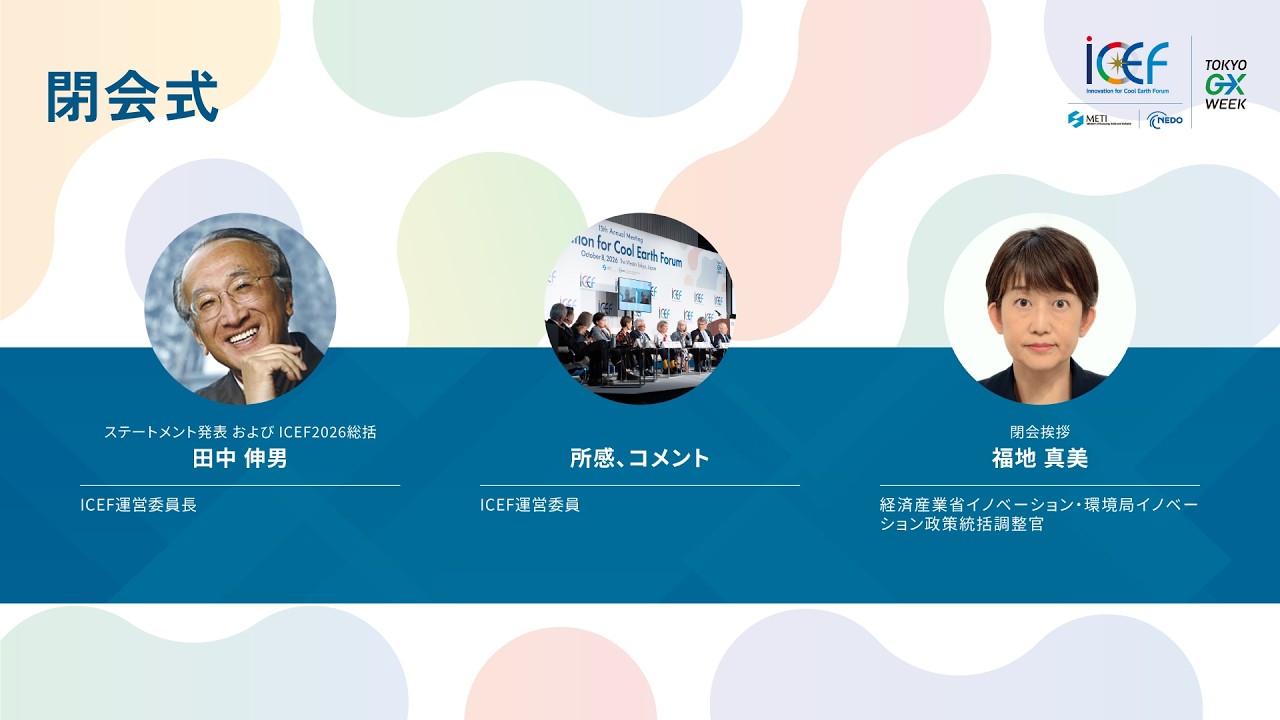
ICEF2026|閉会式
ICEF2026|Closing Ceremony
Title history
- ICEF2026|閉会式 — observed on 20261119-0518 UTC (YouTube)
Keywords
Summary
156 words
Critical Evaluation
Value of the Information & Strength of the Argument
The value of this video lies in its capture of high-level expert opinions on the evolving concept of ‘Electrostate’ as a framework for energy transition. The speakers argue that a shift from fossil-fuel dependence to electricity-based systems is both necessary and feasible, while acknowledging complexities such as coal dependence and geopolitical tensions. The argumentation is largely narrative and experience-based, with limited data or citations, making it a qualitative policy discussion rather than a rigorous scientific analysis. The strength of the argument is in the diversity of perspectives, including Western, Asian, and governmental views, which adds nuance but also shows divergences on implementation strategies.
Scientific Rigor, Source Quality, Title Accuracy
The video has no explicit scientific sources or references; it is a recorded conference session. The content relies on the authority and experience of the speakers, all senior experts in energy policy. There is no verification of claims, and some statements are speculative (e.g., the ‘Electrostate’ concept is a proposal). The title accurately reflects the content as a closing ceremony. The absence of citations or data limits the scientific rigor, but the video offers a valuable insider perspective on policy discussions. No external sources are cited, and the description provides only chapter timestamps, not links to reports.
215 words
Title / Content Match
The title accurately describes the content as the closing ceremony of ICEF2026, consistent with the proceedings shown.
Quality & Reliability
6/10
The video is a closing ceremony of an international energy forum, featuring expert opinions on energy transition concepts. While the speakers are credible experts, the content is largely subjective reflections and thematic summaries, with no formal scientific evidence presented. The transcription is from automatic speech recognition, possibly containing errors.
Key Moments
Markers derived by PSI from the transcript: the creator did not define chapters.
Contribution & Novelties
The video contributes an original framing of the ‘Electrostate’ concept as a new geopolitical paradigm, distinguishing it from petrostates. It also highlights the evolution of ICEF from a technology-focused forum to one addressing systemic and social changes. The discussion on managing the phase-down of hydrocarbon infrastructure is a nuanced contribution often missing in energy debates.
Pour aller plus loin :
- Energy transition — Background on the global shift from fossil fuels to renewable energy.
- Decarbonization — Overview of reducing carbon emissions across sectors.
- International Energy Agency (IEA) — Authority on energy policy and data, relevant for validating claims on energy security.
101 words
Radar Profile
The radar profile shows moderate scores across information quantity, quality, technical level, and reliability, indicating a balanced but non-rigorous content. The video is informative for policy watchers but lacks scientific depth and citations, fitting the profile of a policy discussion.