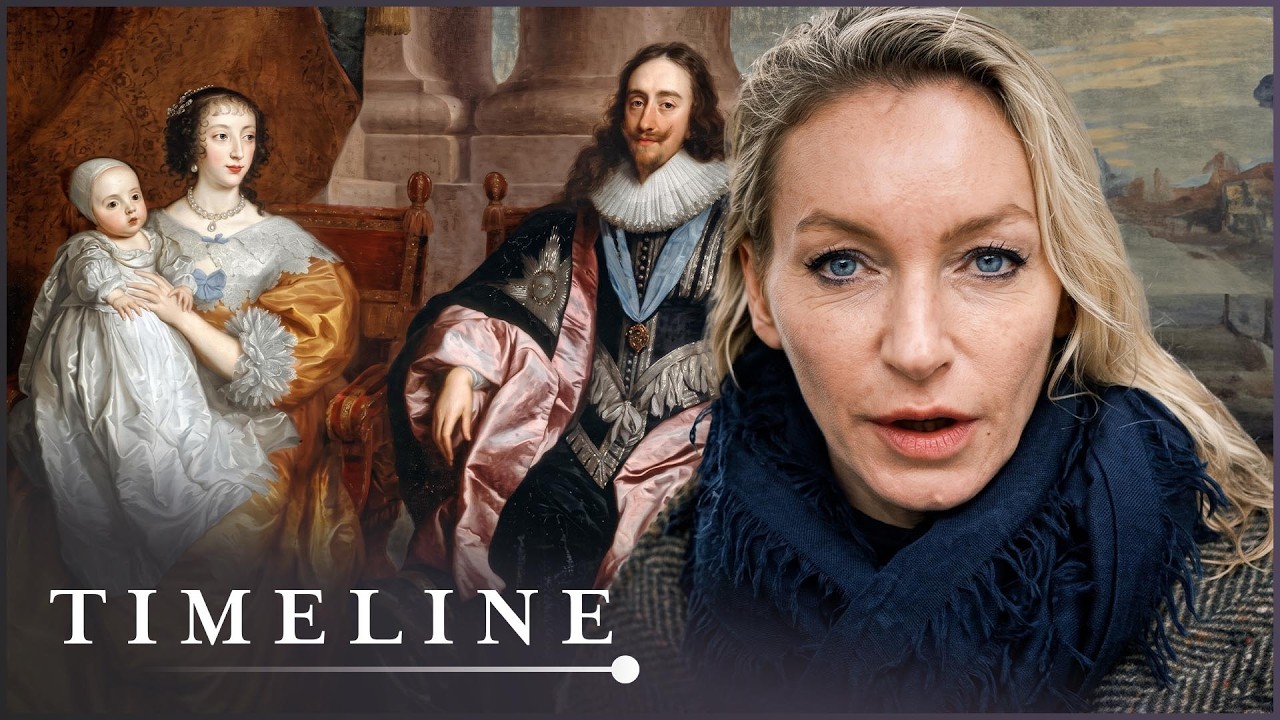
Killing King Charles I: The Execution That Forever Changed British Politics
Title history
- Killing King Charles I: The Execution That Forever Changed British Politics — observed on 20261121-2212 UTC (YouTube)
Keywords
Summary
164 words
Critical Evaluation
Value of the Information & Strength of the Argument
The information provided is substantial, drawing on archival records and the expertise of historians. The argumentation is coherent, tracing the steps from imprisonment to trial logically. The series effectively contextualizes the events within the religious and legal frameworks of the time, especially the concept of divine right and providentialism. The documentary’s narrative is persuasive, though some dramatic reconstructions are speculative. Overall, the arguments are well-supported by cited historical sources, including petitions and official documents.
Scientific Rigor, Source Quality, Title Accuracy
The scholarly rigor is high: the documentary cites specific historical documents, such as the ‘Deliberation about the execution of justice upon HR’ and personal memoirs. It includes interviews with academics and uses local archives. The title accurately captures the subject matter, focusing on the execution and its political significance. The content aligns with mainstream historical accounts, and the presentation avoids sensationalism, though dramatic elements are noted as reconstructions.
157 words
Title / Content Match
The title accurately reflects the content, focusing on Charles I's execution and its political consequences.
Quality & Reliability
8/10
The documentary relies on archival records, expert commentary, and historical documents, though dramatic reconstructions are interpretative. Overall high reliability.
Key Moments
Markers derived by PSI from the transcript: the creator did not define chapters.
- Introduction: The regicide of Charles I and overview of the series.
- Christmas 1648: Charles isolated at Windsor; Puritan ban on festivities.
- Cromwell's background and religious conversion; his military career.
- Leicester petitions illustrate civilian suffering; empathy for victims.
- Pride's Purge: Army seized Parliament, creating the Rump.
- Ordinance to try the king; first reading and uproar.
- Elizabeth Poole's prophetic vision before the Army Council.
- 'Deliberation' document at Bodleian debates execution.
Cited Sources
- Book of Common Prayer — Shown as Charles's personal copy; contrasted with Puritans' soldiers' Bible.
- Thomas Herbert's memoir — Accounts of Charles's daily life at Windsor.
- Treason Act 1351 — Legal basis for defining treason; discussed in relation to trying a king.
- Petitions from Leicester (compensation claims) — Archived petitions illustrating the cost of civil war.
- Deliberation about the execution of justice upon HR — Manuscript at Bodleian Library debating the king's execution.
- Soldiers' Pocket Bible — Parliamentarian troops' devotional manual.
Concurring Sources
- Charles I of England — General historical context of Charles's reign and trial.
- English Civil War — Background of the conflict and factions.
- High Court of Justice for the trial of Charles I — Details of the court established to try Charles.
Contribution & Novelties
The documentary’s contribution lies in its day-by-day reconstruction of the five weeks before the execution, using intimate archives to humanize both Charles and the petitioners. It offers a vivid sense of the period’s religious mentalité.
Pour aller plus loin :
- Charles I of England — Overview of his reign and trial.
- English Civil War — Context of the wars.
- High Court of Justice for the trial of Charles I — Details of the tribunal.
- Divine right of kings — Concept behind Charles’s refusal to compromise.
85 words
Radar Profile
The radar profile shows balanced scores across information quantity, quality, technical level, and reliability, indicating a thoroughly researched historical documentary with slight room in technical depth.