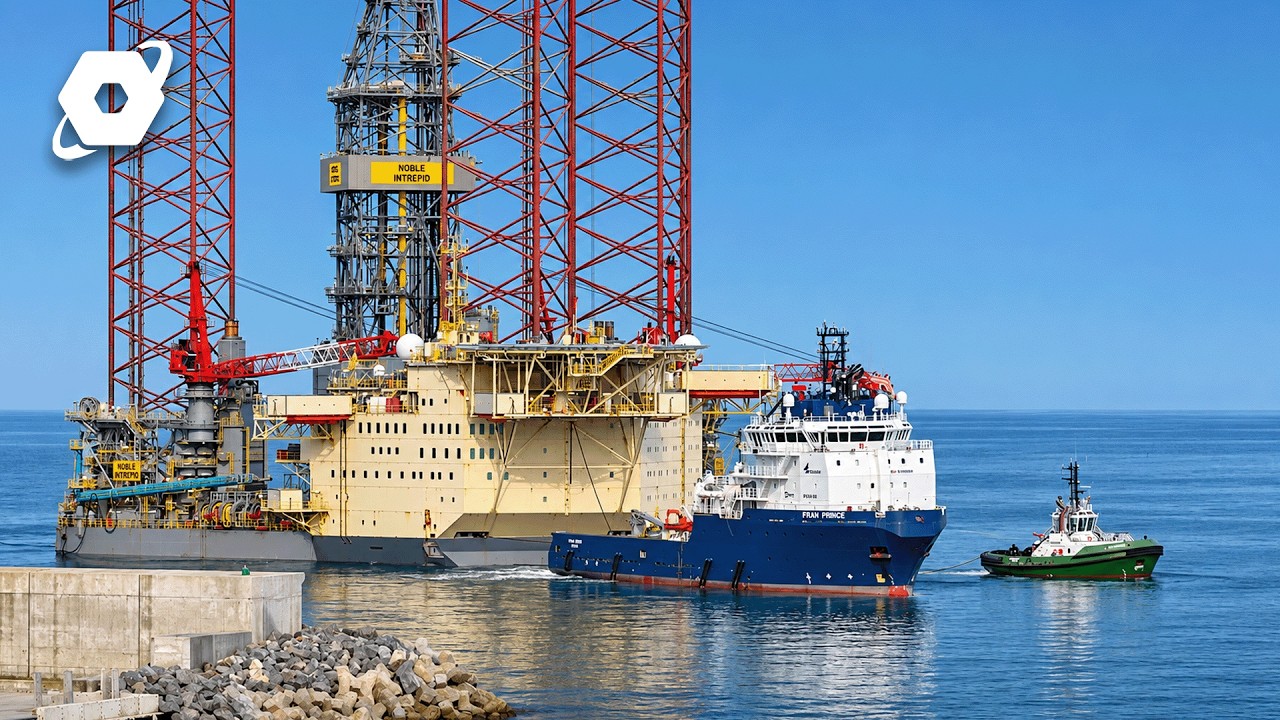
24 Hours Inside Scotland’s Busiest Port | FULL DOCUMENTARY
Keywords
Summary
208 words
Critical Evaluation
Value of the Information & Strength of the Argument
The value of the information lies mainly in its access to operational practice. It shows how a port handles an emergency vessel, how pilots and tugboats manoeuvre a large bulk carrier, how fire services assess a sealed cargo hold, and how a ferry dry-docking is planned under time pressure. These sequences provide concrete insight into procedural coordination, risk assessment, and the interaction between human judgement and technical systems. The programme is also useful for illustrating the logistical interdependence of ports, ferries, maintenance teams, and emergency services. Its argumentative strength is weaker: it is a narrative documentary rather than an evidence-based analysis. Claims about the port’s importance, vessel volumes, cargo risks, and repair deadlines are presented through voice-over and interviews without supporting data, methodology, or comparison. The reasoning is largely experiential, relying on expert testimony and dramatic sequencing. It does not test hypotheses or weigh alternative explanations, and the dramatic framing sometimes substitutes tension for analysis. The result is informative about operations but limited as a source of verifiable technical or policy conclusions.
Scientific Rigor, Source Quality, Title Accuracy
Scientific rigour is modest. The programme relies on interviews with port staff, pilots, engineers, and fire commanders, whose operational roles lend credibility to the descriptions, but it does not cite documents, datasets, accident reports, or regulatory standards. Quantitative statements, such as the share of UK trade carried by sea, the number of vessels handled annually, or the cargo tonnage, are presented without traceable sourcing. There is no explicit methodology, no discussion of uncertainty, and no independent corroboration within the film. The title/content match is good: the documentary does deliver an inside view of Scotland’s busiest port and its operations, although the ‘24 hours’ format is more rhetorical than literal. No comment data were provided, so no audience-trend analysis is offered.
307 words
Title / Content Match
The title accurately signals a documentary about Scotland’s busiest port and its operations. The ‘24 hours’ framing is loose, since the programme follows several parallel stories over an implied short period rather than a strictly time-stamped day.
Quality & Reliability
6/10
Observational documentary built on expert interviews and operational footage, which gives credible procedural detail. However, it provides no formal references, quantitative sourcing, or independent verification of claims such as vessel counts, cargo tonnage, or port rankings.
Key Moments
Markers derived by PSI from the transcript: the creator did not define chapters.
- Introduction to the Port of Aberdeen as Scotland’s largest and busiest port, handling a large share of UK seaborne trade.
- A bulk carrier carrying wood pulp requests a port of refuge after a fire in one of its holds; CO2 has been discharged and the risk of reignition is explained.
- The Orkney ferry Pentalina arrives in Aberdeen for emergency equipment servicing and a tightly scheduled dry-docking.
- The Pentalina is manoeuvred into a narrow dry dock with limited clearance, strong currents, and fading light.
- Maintenance engineers struggle to remove a hydraulic pump and power take-off from the port service vessel Sea Herald, trying several improvised approaches.
- A maritime pilot boards the Land’s Diamond and coordinates tugboats to bring the damaged bulk carrier alongside the South Harbour quay.
- Fire crews test water supply and hose pressure while preparing for the risky opening of the cargo hold.
- The hold is opened; a thermal drone finds no signs of heat, and crews prepare for a closer inspection of the wood pulp cargo.
Concurring Sources
- Port of Aberdeen — General reference on the port’s infrastructure and maritime role, concordant with the documentary’s setting.
- Maritime pilot — Background on pilotage, relevant to the sequence showing a pilot boarding and guiding the bulk carrier.
- Dry dock — Technical context for the ferry dry-docking and repair work described in the programme.
Contribution & Novelties
The documentary’s original contribution is access to the operational choreography behind a port emergency and routine maintenance: pilotage, tug coordination, fire-service planning, ferry dry-docking, and mechanical repair under time pressure. It does not present new scientific findings, but it gives a detailed behind-the-scenes view of how technical and human systems interact in a high-stakes maritime environment.
Pour aller plus loin :
- Port of Aberdeen — Background on the port’s history, infrastructure, and role in Scottish maritime trade.
- Maritime pilot — Explains the role and training of pilots who guide large vessels into ports.
- Dry dock — Context for the ferry repair sequence and the constraints of docking large vessels.
- Tugboat — Reference for the tug operations used to manoeuvre the bulk carrier.
122 words
Radar Profile
The profile shows a high volume of operational information and a moderate technical level, with reliability limited by the absence of cited data or independent verification. It is strongest on procedural detail and weakest on analytical depth.