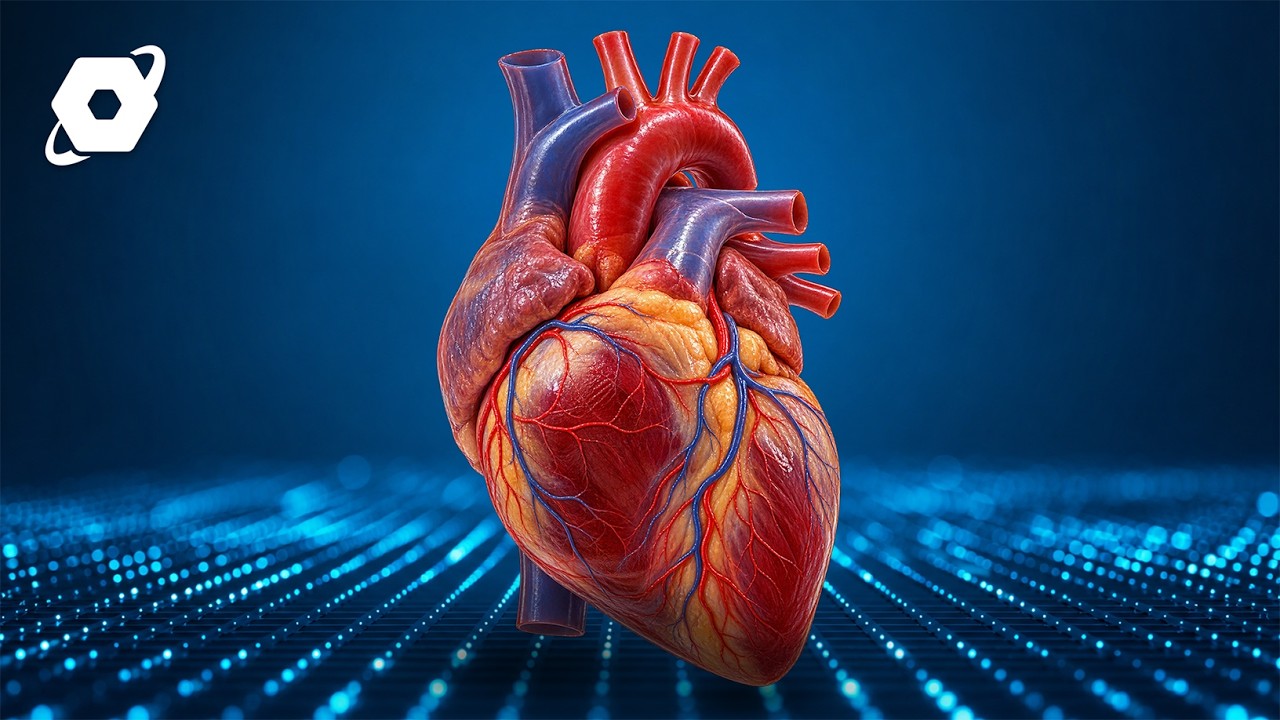
Can We Print Human Organs? | FULL DOCUMENTARY
Keywords
Summary
188 words
Critical Evaluation
Value of the Information & Strength of the Argument
The documentary provides valuable insights into the rapidly advancing field of bioprinting and prosthetic technology. It presents concrete examples, such as Easton LaChappelle’s affordable robotic hand and Dr. Atala’s lab-grown organs, which ground the discussion in practical achievements. The argumentation is generally convincing: it uses expert testimonials and direct demonstrations to illustrate the feasibility of these technologies. However, it occasionally oversimplifies the challenges, such as the complexity of vascularizing larger organs, and does not delve into the regulatory or ethical hurdles. The narrative is optimistic, but it acknowledges limitations, such as the need for intense concentration in mind-controlled prosthetics. Overall, the value lies in its accessible explanation of cutting-edge medical research, while the strength of its argument would be enhanced by more critical scrutiny of the remaining technical obstacles.
Scientific Rigor, Source Quality, Title Accuracy
The documentary relies on interviews with recognized experts like Dr. Anthony Atala and Dr. Glenn Green, which lends credibility. It also showcases actual procedures and prototypes, providing visual evidence. However, it lacks explicit citations to scientific publications, and some claims (e.g., incidence rates) are stated without referencing specific studies. The title ‘Can We Print Human Organs?’ is apt, as the content directly addresses this question through case studies and explanations. The production quality is high, and the documentary maintains a balanced tone, though it leans towards portraying the technology as imminent and transformative. The absence of critical perspectives on safety, long-term outcomes, and costs except for a single price comparison limits the rigor. Nonetheless, the information presented is consistent with known developments in regenerative medicine as of the video’s production.
274 words
Title / Content Match
The title accurately reflects the content, which explores the feasibility of printing human organs and body parts through real demonstrations and case studies.
Quality & Reliability
7/10
The documentary presents real cases and interviews with experts in regenerative medicine and biomedical engineering. It simplifies complex topics but provides accurate descriptions of established procedures like 3D bioprinting and prosthetic control. Some numerical claims (costs, incidences) are mentioned without detailed sources, but overall the information is reliable and well-presented.
Key Moments
Markers derived by PSI from the transcript: the creator did not define chapters.
- Introduction to the concept of printing body parts and Justin Bratton's personal interest.
- Feature on Easton LaChappelle, a teen inventor who created a functional robotic hand from everyday materials.
- Demonstration of a mind-controlled prosthetic hand using an EEG headset and concentration.
- Interview with Dr. Anthony Atala explaining regenerative medicine and the process of 3D bioprinting organs.
- Case study of Ian Orbital, a baby with tracheobronchomalacia, and the 3D-printed airway splint that saved his life.
- Reflections on the future of custom-made body parts and the potential for widespread adoption.
Cited Sources
- Full documentary on Spotify — The only link provided in the video description, pointing to an audio version of the documentary.
Contribution & Novelties
This documentary synthesizes recent breakthroughs in bioprinting and prosthetics for a general audience, highlighting both the promise and the current limitations. It uniquely combines a narrative on prosthetic innovation with medical applications, offering a broad overview of regenerative medicine. The use of real patient cases and expert interviews brings authenticity to the topic. However, it does not introduce novel scientific findings; rather, it repackages existing knowledge in an engaging format.
Pour aller plus loin :
- 3D bioprinting — Wikipedia overview of the technology and its applications.
- Regenerative medicine — Comprehensive introduction to the field and its goals.
- Anthony Atala — Profile of the prominent surgeon and researcher featured in the documentary.
- Tracheobronchomalacia — A medical condition; see Wikipedia for details.
120 words
Radar Profile
The radar profile shows balanced scores with moderate-to-high values across quantity, quality, and reliability, but a slightly lower technical level. This suggests a well-rounded documentary that is accessible to a lay audience while still providing substantial and credible information. The fiabilite score is consistent with the use of expert interviews and real-world examples, though a lack of explicit citations keeps it from being higher.