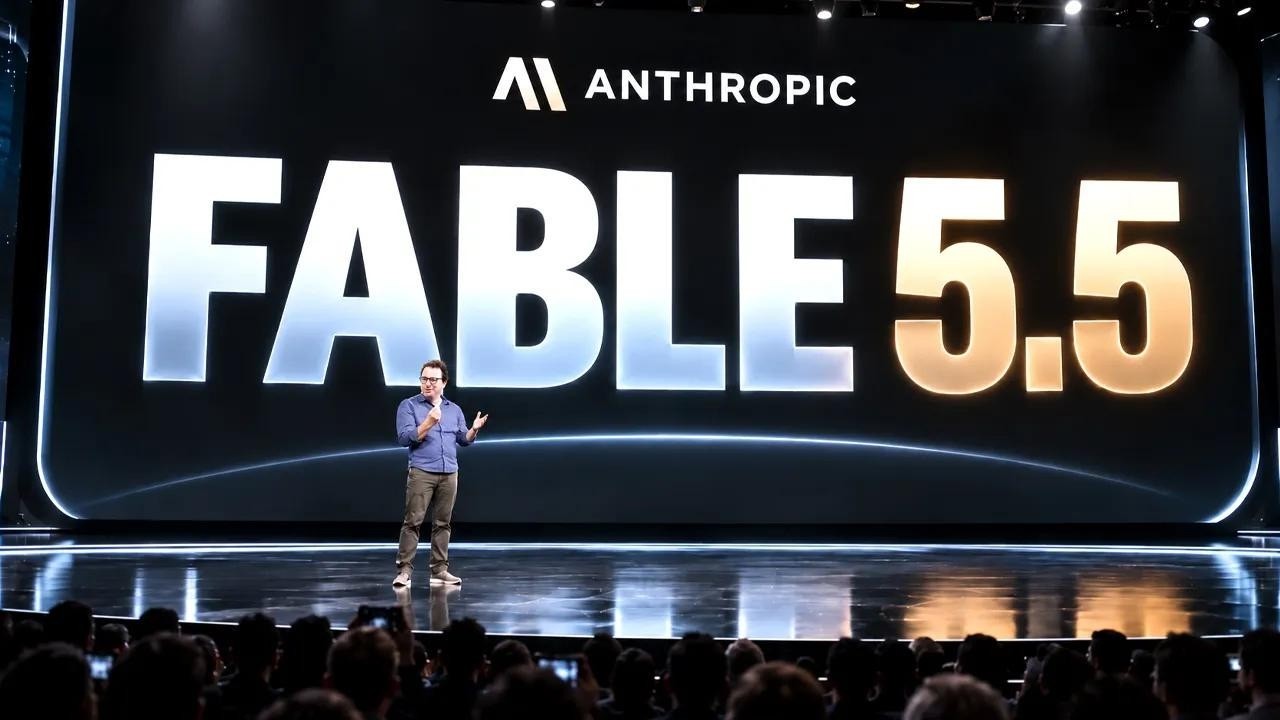
Fable 5.5 fait déjà sensation avec des premières démos de folie
Fable 5.5 is already making waves with crazy first demos
Keywords
Summary
159 words
Critical Evaluation
Value of the Information & Strength of the Argument
The video offers a valuable critical perspective on AI rumors, systematically dismantling the evidence for the secret model by showing leaks lack verifiable data. It provides a reasoned argumentation, comparing official documentation and release notes to contradict the rumors. The coverage of GPT-6 Astra’s feat is compelling, backed by historical context and methodological explanation. For Griffin, the video cites a blind test with 54 participants and gives technical details on architecture and latency, supporting its claims with benchmark numbers. The argumentation is generally coherent, though the reliance on anonymous internet posts for the rumor section slightly weakens the overall rigor.
Scientific Rigor, Source Quality, Title Accuracy
The video references official sources like Anthropic’s documentation and release notes, but does not provide direct URLs. It also mentions benchmarks (Terminal Bench 4.0) and specific test results (Tavus’s 48% human identification rate), but these are not independently verified. The title’s emphasis on ‘Fable 5.5’ overstates the video’s focus, as it covers other topics equally. The lack of comments analyzed (if any) prevents public reception assessment. Overall, the scientific rigor is moderate: the video is transparent about the unverified nature of rumors, but its own conclusions rely on unconfirmed reports.
205 words
Title / Content Match
The title focuses on Fable 5.5 demos, but the video also covers GPT-6 Astra decoding and Griffin avatar, making the title slightly narrower than the content.
Quality & Reliability
6/10
The video provides a critical analysis of rumors and distinguishes between verified and unverified claims, but relies heavily on unverifiable sources (screenshots, anonymous testimonials) and does not provide original data.
Key Moments
Markers derived by PSI from the transcript: the creator did not define chapters.
- Origin of the Fable 5.5 rumor: a prediction on X and subsequent claims from users.
- Examination of the documentation page and the weak evidence behind the rumor.
- Analysis of the test prompt and official Anthropic documentation, concluding the rumor lacks proof.
- GPT-6 Astra succeeds in decoding a 217-year-old letter from Napoleon, with details on the method.
- Introduction of Griffin, Tavus's real-time video interaction model, with results of the one-minute human test.
- Technical breakdown of Griffin's full-duplex architecture, latency, and benchmark scores.
Cited Sources
- AI Revolution en Français - Spotify — Link to the channel's Spotify podcast provided in the video description, mentioned at the end of the video.
- Anthropic Official Website — Referenced as the source of official model information, though not directly linked in the video.
Concurring Sources
- Anthropic Official Documentation — The video references official documentation to verify model release details, confirming that Fable 5.1 is the latest; this aligns with the narrator's conclusion.
Dissenting Sources
- Platform Documentation Page (empty) — The video shows a page on platform.claude.com for 'fable-55' that was empty or error-laden, contrasting with the official fully-populated pages for Fable 5.1, suggesting the page is not substantiated.
Contribution & Novelties
The video provides a critical framework for evaluating AI model rumors, emphasizing the difference between verified features and unverifiable leaks. It also highlights two recent advancements: GPT-6 Astra’s ability to decode historical ciphers, which is a novel application of AI in cryptography, and Griffin’s real-time video interaction, marking progress in human-like avatars. These topics are relatively new in the AI news landscape.
Pour aller plus loin :
- Test de Turing — The video mentions a video Turing test; this Wikipedia page explains the historical concept and its limitations.
- Grand Chiffre — The letter decoded by GPT-6 Astra is related to the Great Cipher, a historical cryptographic system.
- Deepfake — The topic of AI-generated video avatars is directly linked to deepfake technology, with implications for identification.
125 words
Radar Profile
The radar profile shows relatively balanced scores, with information quantity leading while reliability lags slightly, reflecting a video that covers multiple topics but relies partly on unverified rumors.