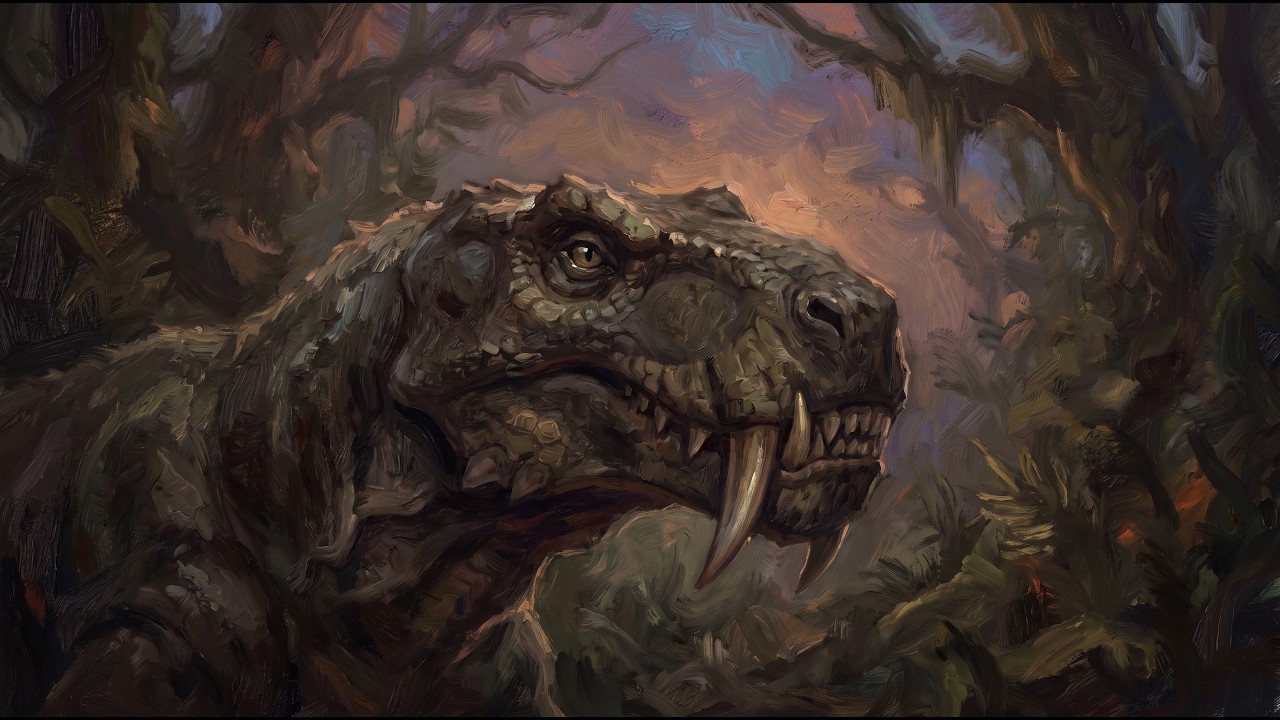
Why Earth Stopped Building Monsters ?
Keywords
Summary
148 words
Critical Evaluation
Value of the Information & Strength of the Argument
The value of the information lies in its broad synthesis of paleontological concepts, presented in an engaging narrative style. The argumentation is coherent, building a causal chain from environmental conditions (oxygen, temperature, vegetation) to biological gigantism, illustrated with specific examples. However, it often oversimplifies complex evolutionary processes and lacks direct references to specific fossils or studies, making it more descriptive than evidence-based.
Scientific Rigor, Source Quality, Title Accuracy
Scientific rigor is moderate: the video relies on well-known paleontological principles, but does not cite specific researchers or publications. The production quality and narrative flow are strong; the title aligns well with the content, which systematically explains the rise and fall of giant prehistoric animals. No commercial advertising is present in the provided transcript.
131 words
Title / Content Match
The title asks why Earth stopped producing giant creatures, and the video covers the rise of prehistoric megafauna and their eventual extinction, addressing the question through environmental and evolutionary factors.
Quality & Reliability
7/10
The documentary provides a broad, engaging overview of prehistoric gigantism and its environmental drivers, with a generally accurate but simplified narrative. It lacks explicit scientific citations, but presents well-established concepts (e.g., Cope's rule, oxygen levels, pneumatic vertebrae) without obvious errors.
Key Moments
Markers derived by PSI from the transcript: the creator did not define chapters.
- Introduction to the hyper-oxygenated atmosphere and giant insects like Meganeura and Arthropleura.
- Transition to vertebrates, Cope's rule, and the rise of large herbivores.
- Land titans: sauropod anatomy, air sacs, and biomechanical adaptations.
- Predator adaptations: bite force, sensory systems, and ambush tactics.
- Marine monsters: evolution of reptiles into aquatic predators.
- The end: volcanic activity, climate change, and extinction of giant forms.
Contribution & Novelties
The documentary’s original contribution is its narrative-driven synthesis of how environmental factors across deep time favored gigantism, bridging invertebrate and vertebrate eras. It effectively conveys the concept of Cope’s rule and the ecological arms race. For further exploration, the following resources are relevant.
Pour aller plus loin :
- Cope’s rule — Explains the evolutionary trend of increasing body size, central to the documentary’s theme.
- Meganeura — Details the giant dragonfly-like insect mentioned in the video, illustrating the oxygen-driven gigantism in the Carboniferous.
- Arthropleura — Provides information on the gigantic millipede, another example of prehistoric invertebrate gigantism.
96 words
Radar Profile
The radar profile shows high scores in quantity of information and fiabilité, with a moderate level of technical depth. This indicates a content-rich documentary that is accessible to a general audience, but not highly technical.