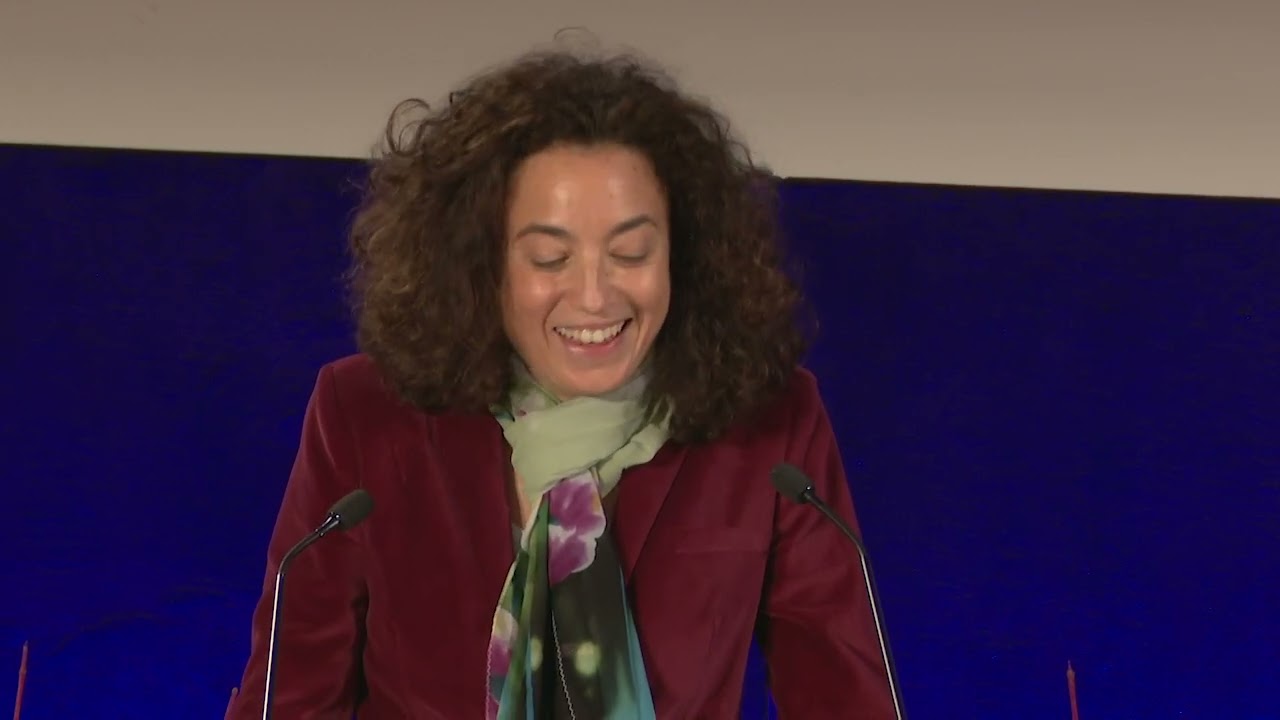
Professeur Steve Sparks : Les volcans et la gestion des risques
Professor Steve Sparks: Volcanoes and risk management
Keywords
Summary
207 words
Critical Evaluation
Value of the Information & Strength of the Argument
The presentation offers substantial value through the unique combination of a world-class researcher’s narrative with clear pedagogical illustrations. Sparks builds his argument methodically: starting from aesthetic observations, he establishes the physical basis of volcanism, then moves to hazard types and risk management, using concrete examples like Montserrat to make the science relatable. He uses repetitive concepts and analogies (e.g., champagne bottle) to clarify complex phenomena such as degassing and pyroclastic flows. The lecture is well-structured, alternating between fundamental Earth science and applied risk reduction, demonstrating how academic research translates into societal benefits. While not highly technical, the core scientific concepts are explained accurately, with occasional references to advanced methods like seismic tomography. The argumentation is solid, grounded in decades of field and laboratory work, and avoids sensationalism, even when discussing disasters.
Scientific Rigor, Source Quality, Title Accuracy
Steve Sparks is a highly cited scientist (55,000+ citations), and his presentation reflects a rigorous scientific approach. He draws on his own published research on magma mixing, eruption triggers, and pyroclastic flows, as well as collaborative international projects. The mention of the World Bank-funded volcano observatory project and the production of educational films indicates a systematic outreach effort. The title is faithful: the talk extensively covers volcano formation and risk management, with a clear link between the two. Although the conference is aimed at a general audience, it maintains scientific integrity, using real data and quantitative examples (e.g., 5 km³ magma for Tambora, 2,800 km³ for Toba). No external sources are directly cited in the description, but the video material and references to his team’s work substantiate the claims.
275 words
Title / Content Match
The title accurately reflects the content, which covers volcanic processes and societal risk management, with detailed case studies and practical examples.
Quality & Reliability
8/10
Presentation by an internationally recognized volcanologist with over 500 publications and extensive field experience, including leading studies on Montserrat eruption and advising governments on risk management. The content is grounded in established scientific methods and real-world applications.
Key Moments
Markers derived by PSI from the transcript: the creator did not define chapters.
- Presentation of Professor Steve Sparks by Dr. Corneille Bona Dona, highlighting his career and achievements.
- Start of lecture: beauty of volcanoes, examples of Krakatoa and Calbuco eruptions, and record-breaking 2022 Hunga Tonga eruption.
- Giant eruptions and calderas: Tambora, Toba, with comparative scales of magma volumes.
- Why volcanoes exist: Earth's internal heat, plate tectonics, and mechanisms of decompression melting and water-induced melting.
- Global volcano statistics: number of volcanoes, annual eruptions, and the role of the Pacific Ring of Fire.
- Explosive eruptions: gas-driven fragmentation, plume formation, and educational film on volcanic ash.
- Pyroclastic flows: how they form, their deadly nature, and a second educational film illustrating their behavior.
- Risk management and forecasting: monitoring, warnings, the Montserrat case study, and the human dimension of volcanic disasters.
Cited Sources
- World Bank volcano observatory educational films — Sparks mentions producing 18 films for the public in different languages, including French, to explain volcanic hazards, funded by the World Bank.
- Montserrat eruption case study — Sparks discusses his role as head of the project during the 1995 Montserrat eruption, which affected over 10,000 people and involved evacuations.
Concurring Sources
- Volcano hazard and risk management — USGS Volcano Hazards Program provides authoritative information on volcanic hazards and monitoring, consistent with Sparks' approach.
- Sparks et al., 1997, J. Volcanol. Geotherm. Res. — Academic paper cited in similar contexts but not explicitly listed; refer to Sparks' extensive publications for rigorous backing.
Contribution & Novelties
The lecture offers a rare ‘big picture’ perspective from a leading volcanologist, integrating decades of research into a coherent narrative accessible to a general audience. Sparks’ emphasis on the social dimension of volcanology, particularly his Montserrat experience, illustrates how scientific understanding directly informs emergency response and policy. The use of analogies and films makes complex physical processes tangible, contributing to public science education.
Pour aller plus loin :
- Volcano — General overview of volcanic processes and types.
- Volcanic hazard — Detailed classification of volcanic threats and risk mitigation.
- Pyroclastic flow — Physical description and case studies.
- Montserrat eruption — Case study of the 1995-1999 eruption and its management.
108 words
Radar Profile
The radar profile shows notably high scores for quantity and quality of information, reflecting the depth of content and expert delivery. The technical level is moderate, making it accessible while retaining scientific precision. Overall reliability is strong, consistent with the speaker's credentials and evidence-based approach.