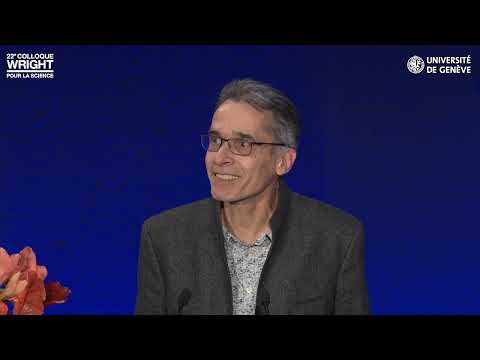
The Nature of Artificial intelligence
Keywords
Summary
193 words
Critical Evaluation
Value of the Information & Strength of the Argument
The lecture’s value lies in its capacity to make a technically complex subject intelligible without sacrificing accuracy. Mitchell structures her argument clearly: she first establishes the historical cycles of overpromising and disappointment to contextualize current AI hype, then provides a synthetic but faithful explanation of how large language models function (tokenization, embeddings, attention, feed-forward layers, probabilistic next-word selection). Her argument is supported by concrete, documented cases—the ImageNet error-rate curve, the adversarial ‘school bus’ perturbation, the skin-lesion classification shortcut, the ‘Humanity’s Last Exam’ math benchmark, and the Bing/Sydney anecdote. She maintains a balanced epistemological stance, emphasizing both the impressive achievements and the un-human-like fragility of these systems, and explicitly refrains from definitive predictions about existential risks or future capabilities.
Scientific Rigor, Source Quality, Title Accuracy
Scientific rigor is high. Melanie Mitchell is a professor at the Santa Fe Institute and was awarded the Eric and Wendy Schmidt Award for Excellence in Scientific Communication (2025). Her claims are grounded in verifiable, well-documented sources: the Dartmouth proposal (1955), Rosenblatt’s perceptron (1957), the Lighthill report (1972), ImageNet, peer-reviewed papers on adversarial examples and shortcut learning (2018), and OpenAI’s ChatGPT. The historical narrative aligns with standard accounts of AI development. The title ‘The Nature of Artificial intelligence’ accurately matches the talk’s content and its announced four-part structure. The main limitations are that this is a broad synthesis rather than an original contribution, and the video description provides no external links to the cited works, which slightly limits direct source verification.
254 words
Title / Content Match
The title accurately reflects the content: the lecture examines the nature, history and inner workings of artificial intelligence, especially generative models, with no significant digression from the stated topic.
Quality & Reliability
8/10
High-quality popular-science lecture by a recognized expert (Santa Fe Institute professor, 2025 Schmidt Award for scientific communication), built on documented historical cases, well-established technical explanations and concrete examples. Content aligns with consensus views in AI research; minor caveats: reliance on some anecdotal illustrations and no original experimental contribution.
Key Moments
Markers derived by PSI from the transcript: the creator did not define chapters.
- Introduction by Alex, presenting Melanie Mitchell and the urgency of AI understanding
- History of AI: Dartmouth project (1955), perceptron, cycles of optimism and AI winters
- Expert systems failure, rise of machine learning with ImageNet dataset
- Deep learning revolution: neural networks surpass human performance on ImageNet
- Surprising failures: adversarial examples (school bus) and shortcut learning (skin lesions)
- Generative AI era: ChatGPT demonstrations (essay, math problem, painting, poem translation)
- How transformers work: embedding layer, attention layer, feed-forward layers
- Training process: next-word prediction on 10 trillion words, 100,000 times more than a 10-year-old
- Post-training: making models helpful/harmless, the Shoggoth meme and Sydney chatbot story
Cited Sources
- Dartmouth Summer Research Project on Artificial Intelligence (proposal, 1955) — Cited as the founding event of AI, with the ambitious goal to formalize every aspect of learning and intelligence.
- Frank Rosenblatt's Perceptron (Mark I, 1957) — Cited as the very first neural network, funded by the US Navy, sparking early AI hype in the New York Times.
- Lighthill Report (1972) — Cited as the report that triggered the first AI winter due to its negative assessment of progress.
- ImageNet dataset — Cited as the massive labeled dataset that enabled the deep learning revolution and the dramatic error-rate drop.
- ChatGPT (OpenAI) — Used as the main example of generative AI throughout the talk, demonstrating text generation, math problem solving, and translation.
- The New York Times article on Microsoft Bing chatbot 'Sydney' — Anecdote reported by the speaker showing the need for post-training to make chatbots helpful, honest and harmless.
Concurring Sources
- History of artificial intelligence (Wikipedia) — Supports the historical narrative of AI cycles of optimism and disenchantment described in the talk.
- Deep learning (Wikipedia) — Corroborates the explanation of deep neural networks, layers, and their success in object recognition.
- Large language model (Wikipedia) — Provides background supporting the description of LLMs as next-word predictors trained on massive corpora.
Contribution & Novelties
This lecture’s original contribution is its pedagogical synthesis: it connects the historical cycles of AI hype and disappointment with the current generative-AI era while demystifying the technical machinery behind large language models. Mitchell offers a rare clarity on the distinction between pretraining (next-word prediction at massive scale) and post-training (alignment toward ‘helpful, honest, harmless’ behavior), illustrated by the compelling Shoggoth metaphor and the Sydney chatbot controversy. The recurrence of ‘un-human-like’ failure modes (adversarial examples, shortcut learning) adds an original critical dimension rarely developed in popular accounts.
Pour aller plus loin :
- Large language model — Encyclopedic overview of the technology at the heart of ChatGPT and similar systems.
- Transformer (deep learning architecture) — Technical details of the architecture Mitchell explains in the lecture.
- Melanie Mitchell — Author’s profile and her scientific work at the interface of artificial and human intelligence.
- Dartmouth workshop — Historical origin of AI as described in the first part of the talk.
- Deep learning — Background on neural networks and the deep-learning revolution.
- Artificial Intelligence: A Guide for Thinking Humans (book by M. Mitchell, 2019) — Extended reflection by the author on the themes covered in this lecture.
192 words
Radar Profile
The radar profile reveals a well-balanced lecture: high information quantity and quality (8/10) reflecting a dense but accurate presentation, a moderate technical level (6/10), and a high reliability score (8/10) grounded in the speaker's recognized expertise and documented examples. The moderate technical level coupled with high information density indicates an effective popularization approach suited to the lecture format.