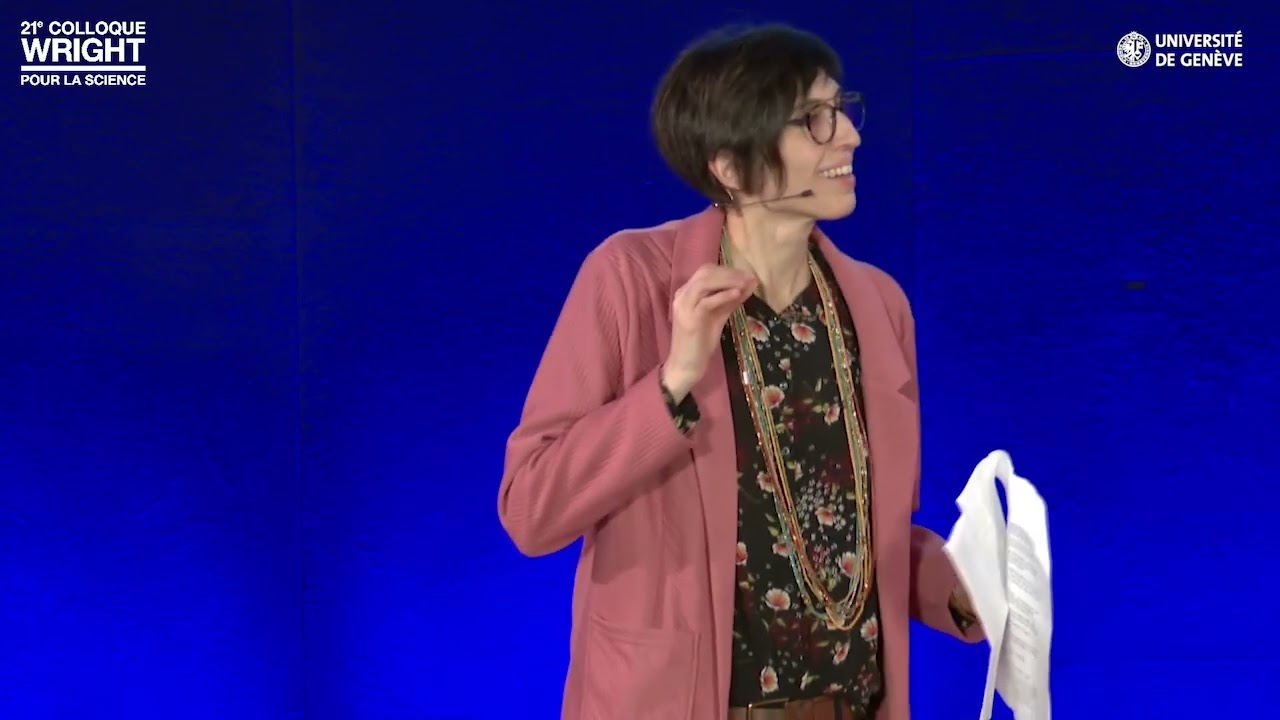
The making of a true second
Keywords
Summary
125 words
Critical Evaluation
Value of the Information & Strength of the Argument
The talk provides high informational value by weaving together the history of timekeeping, fundamental physics, and modern metrology. It clearly explains how astronomical cycles led to early definitions of the second, and how practical needs (navigation, prayer times) drove innovations. The argumentation is solid: it builds from simple observations (gnomon, star risings) to complex concepts (relativity, atomic clocks) with logical progression. The speaker acknowledges the role of intuition and experimental validation in physics, citing Einstein. The value lies in making a technical subject accessible without oversimplifying, and in highlighting the interconnectedness of measurement, theory, and technology.
Scientific Rigor, Source Quality, Title Accuracy
The scientific rigor is high, as the speaker is an expert in gravitation and cosmology, and the content aligns with established physics. Sources are not explicitly cited in the transcript, but the talk references historical figures (Einstein) and institutions (CIPM). The title accurately reflects the content, focusing on the definition of the second. No comments were provided, so no audience analysis is included.
174 words
Title / Content Match
The title 'The making of a true second' accurately reflects the talk's focus on the history and physics of time measurement, from ancient astronomical clocks to modern atomic definitions.
Quality & Reliability
9/10
The speaker is a CNRS research director and professor at the Paris Institute of Astrophysics, presenting well-established physics and metrology. The content is rigorous, historically accurate, and based on standard scientific knowledge. No unsupported claims or pseudoscience.
Key Moments
Markers derived by PSI from the transcript: the creator did not define chapters.
- Introduction by moderator Sarah Sermondadaz and welcome by University of Geneva vice-rector Martine Collard.
- Thierry Courvoisier, president of the Wright Foundation, introduces the theme of symmetries in the universe.
- Presentation of speaker Jean-Philippe Uzan by Jean-Marc Triscone, highlighting his career and achievements.
- Uzan begins his talk, discussing the nature of time and the approach of physics versus philosophy.
- Historical methods of time measurement: lunar phases, solar gnomon, and the division of day and night.
- The use of star risings to measure night hours and the evolution of hours of variable length.
- Transition from astronomical to mechanical clocks and the impact of navigation disasters.
- Mathematization of time: Newtonian and Einsteinian relativity, and the role of symmetries.
- Atomic clocks and the current redefinition of the second by the CIPM.
Contribution & Novelties
The talk offers a comprehensive synthesis of the history and physics of time measurement, connecting ancient astronomy to modern quantum metrology. It emphasizes the practical and theoretical drivers behind the evolution of the second, and how clocks serve as tools to test fundamental physics. The novelty lies in the integrated narrative that bridges disciplines.
Pour aller plus loin :
- Second — Wikipedia article on the unit of time and its definitions.
- Atomic clock — Overview of atomic clock technology and its role in metrology.
- International Committee for Weights and Measures — The CIPM and its work on redefining the second.
100 words
Radar Profile
The radar shows high scores in information quality and reliability, with slightly lower technical level due to the accessible presentation. The profile indicates a well-balanced, authoritative talk suitable for a general audience with scientific interest.