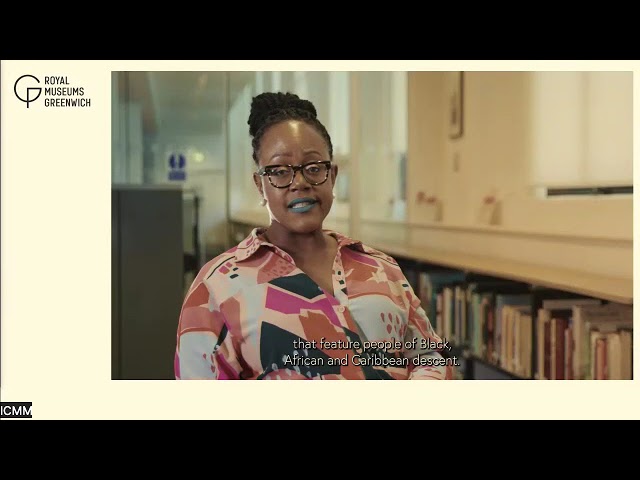
All Hands On Deck: Facilitating Equitable Community Collaboration - Sarah Lockwood, RM Greenwich
Keywords
Summary
110 words
Critical Evaluation
Value of the Information & Strength of the Argument
The presentation offers substantial value through detailed, real-world examples of community collaboration in museums. Lockwood articulates a clear framework and demonstrates its application through tangible projects, with honest reflections on challenges such as trust-building and relinquishing control. The argumentation is persuasive, grounded in practice and community feedback, and avoids over-simplification by acknowledging the ongoing nature of this work.
Scientific Rigor, Source Quality, Title Accuracy
The talk is a professional case-study presentation rather than a research presentation; it draws on internal museum project evaluations and community testimonials. No external sources are cited, but the evidence is credible given the speaker’s role and the documented outcomes. The title accurately matches the content, focusing on facilitating equitable collaboration. Audience comments are not available for analysis.
131 words
Title / Content Match
Title accurately reflects the talk's focus on collaborative community engagement in maritime museums.
Quality & Reliability
8/10
Presentation based on direct professional experience from a senior museum practitioner, with concrete case studies and project outcomes. No formal citations, but the content is rooted in institutional practice and community feedback.
Key Moments
Markers derived by PSI from the transcript: the creator did not define chapters.
- Introduction by session chair, highlighting the four key themes: facilitating, interpreting, engaging, and gendering.
- Lockwood introduces her framework: understanding, building trust, co-production, and relinquishing control.
- Case study: Tangata Moana, the Pacific advisory panel, emphasizing paid advisory roles and relationship-building.
- Case study: Migration Heritage and Belonging project, with community bridge builders and oral histories.
- Case study: Caribbean Social Forum museum takeover, with 8,000 attendees and positive feedback.
- Closing remarks on using privilege to enable communities to tell their own stories.
Concurring Sources
- ICOM Code of Ethics for Museums — Aligns with the principles of community participation and equity in museum practice.
Contribution & Novelties
The talk provides an insider perspective on how a major national museum operationalizes equitable community collaboration, offering practical insights into building trust and sharing power. It contributes to the discourse on decolonizing museums and co-curation.
Pour aller plus loin :
- ICOM Code of Ethics for Museums — Relevant to professional museum ethics and community engagement.
- New Museology — A concept addressing the shift towards community-centered museum practice.
- Co-production in public services — A framework that relates directly to the collaborative approaches described.
82 words
Radar Profile
The profile shows high scores in quality and reliability, moderate in quantity and technical level, reflecting a focused professional talk with practical case studies rather than comprehensive research.