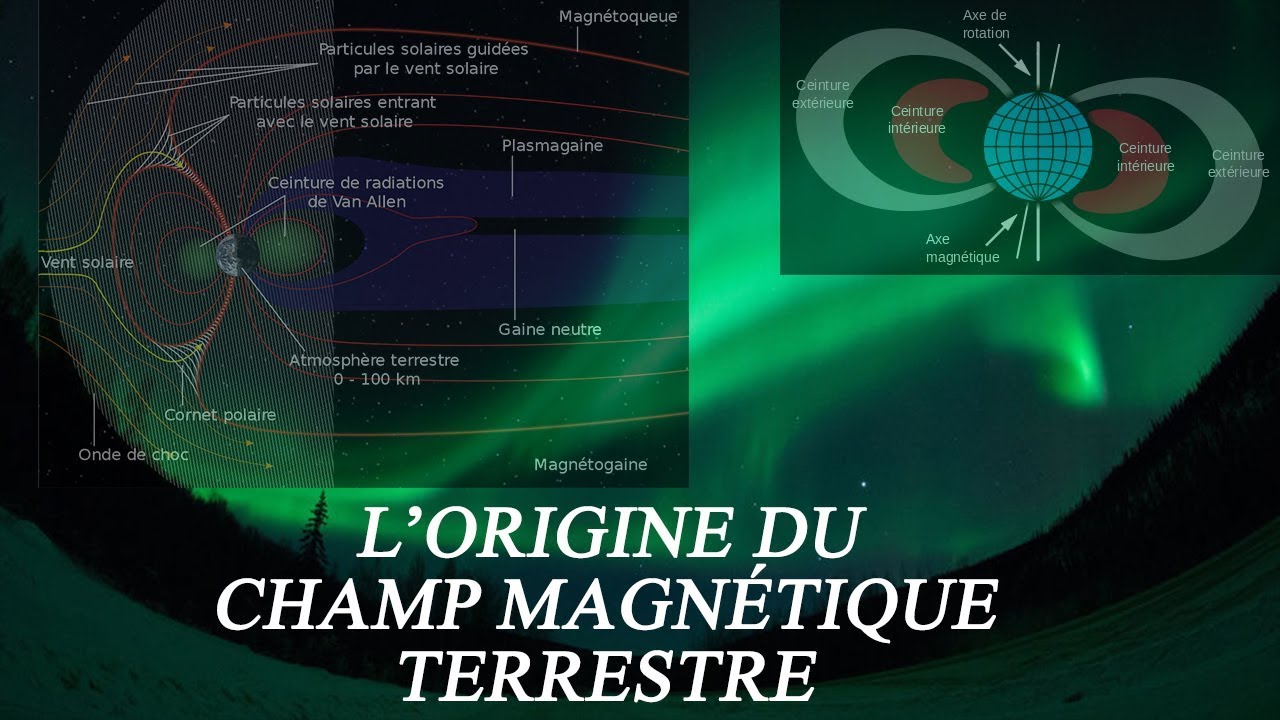
L'origine du champ magnétique terrestre
The origin of Earth's magnetic field
Keywords
Summary
180 words
Critical Evaluation
Value of the Information & Strength of the Argument
The value of this information lies in its pedagogical clarity and direct experimental demonstration. The speakers build the argument step by step, from simple observations (compass behavior) to fundamental electromagnetic principles, then synthesize them into the dynamo mechanism. The live experiments are especially valuable, as they visually and convincingly illustrate the physics involved. The argumentation is solid: it combines historical context, theoretical reasoning, and empirical evidence, including recent results from liquid metal experiments. The lecture avoids oversimplification, acknowledging the complexity of the field’s spatial and temporal variations. The use of multiple demonstrations (iron filings, heating magnet, Oersted’s setup, Faraday’s coil, and the homogeneous dynamo) provides a robust empirical foundation. The presentation is coherent and well-structured, leading the audience from the ‘why is Earth a magnet?’ question to a modern understanding of the geodynamo.
Scientific Rigor, Source Quality, Title Accuracy
The scientific rigor is high. The speakers are experts, and the content is consistent with established geophysics and dynamo theory. They mention historical figures and experiments accurately, and they cite the classic self-exciting dynamo experiment of Lowes & Wilkinson (1963) without misrepresenting it. The only external source provided in the description is the Canal-U link, which is authoritative. The title is perfectly adequate, as the lecture directly addresses the origin of Earth’s magnetic field. No discordant information is presented; the explanations align with peer-reviewed literature. The lack of formal citations within the talk is compensated by the experimental demonstrations and the speakers’ credibility. The adéquation between title and content is excellent, and the lecture’s depth and accuracy justify a high rating.
269 words
Title / Content Match
The title exactly reflects the lecture's focus on explaining the geodynamo and its origins.
Quality & Reliability
9/10
The presentation is given by two researchers, includes live experiments, references to historical and modern studies, and is hosted on Canal-U, an academic platform. The scientific content is accurate and well-demonstrated, with a clear progression from basics to advanced dynamo theory.
Key Moments
Markers derived by PSI from the transcript: the creator did not define chapters.
- Introduction: compass and magnetic forces at a distance
- Historical milestones: Petrus Peregrinus (1269) and William Gilbert (1600)
- Discovery of secular variation and Halley's magnetic charts
- Earth's internal structure: crust, mantle, liquid iron core and solid inner core
- Heating experiment: loss of ferromagnetism above Curie temperature
- Oersted's experiment: electric current deflecting a compass
- Faraday's induction and the principle of the dynamo (bicycle dynamo demonstration)
- Homogeneous dynamo experiment and comparison with Earth's core
Cited Sources
- Canal-U (original lecture platform) — Source of the original conference recording by Emmanuel Dormy and Nicolas Mordant
Concurring Sources
- Dynamo theory (Wikipedia) — Supports the self-exciting dynamo mechanism described in the lecture.
- Earth's magnetic field (Wikipedia) — Provides comprehensive information on the field's origin and measurements.
Contribution & Novelties
The lecture’s novelty lies in its accessible experimental approach to explaining the geodynamo. It combines historical anecdotes with live physical demonstrations, making a complex geophysical phenomenon tangible. The presentation effectively bridges the gap between classroom electromagnetism and cutting-edge research, including recent laboratory observations of magnetic reversals. The specific contribution is showing how basic experiments—such as heating a magnet or spinning a copper disk—illuminate the self-exciting dynamo mechanism.
Pour aller plus loin :
- Dynamo theory — Provides the theoretical background for self-exciting dynamos in planets and stars.
- Earth’s magnetic field — Comprehensive overview of the field’s structure, secular variation, and reversals.
- Geomagnetic reversal — Explains the polarity flips mentioned in the lecture and their paleomagnetic evidence.
115 words
Radar Profile
The radar profile is highly balanced, with strong scores across information quantity, quality, technical depth, and reliability. The lecture excels in presenting accurate scientific content through live demonstrations and historical context, making it a robust educational resource.