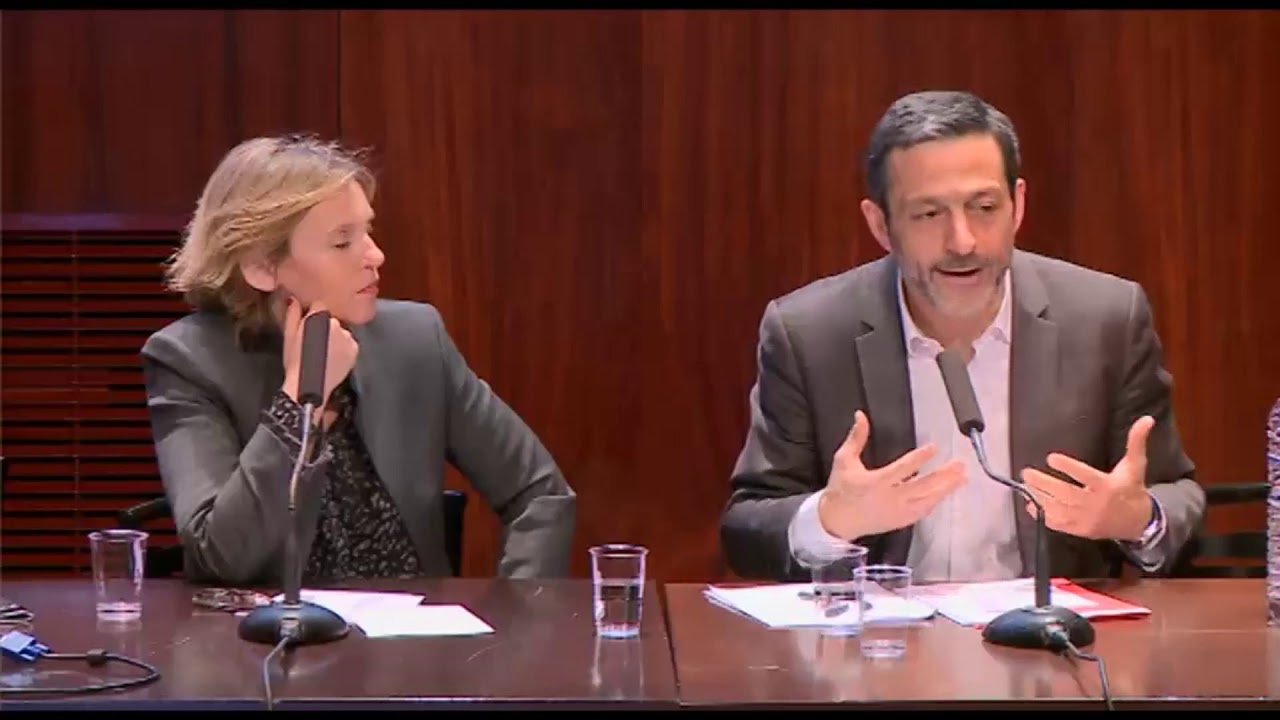
Les Démocraties à L'épreuve des Infox Numéro 2
Democracies Put to the Test by Fake News Number 2
Keywords
Summary
192 words
Critical Evaluation
Value of the Information & Strength of the Argument
The talk provides valuable insider information about the legislative logic and the exact provisions of a debated law. Ajdari clearly justifies the law’s necessity based on empirical observations (usage statistics, virality studies) and addresses criticisms with nuanced arguments. He acknowledges the fragile balance between protecting democratic debate and limiting free expression, but argues that the emergency procedure does not create new criminal offenses and only targets clearly false content spread massively and artificially. He also addresses the contradiction of being accused both of censorship and ineffectiveness. The argumentation is solid and well-structured, though it reflects the institutional perspective of the government.
Scientific Rigor, Source Quality, Title Accuracy
The speaker cites a recent study on the higher viral spread of false information, a barometer on public trust, and refers to the German law and the European Commission’s measures, but does not provide precise references. The description includes a link to the BNF website, which is mentioned as a source for media literacy and information quality. The title accurately reflects the content: the video is about how democracies face disinformation, specifically analyzing the French law. The speaker is a primary source as one of the law’s principal writers, lending high reliability. However, the presentation is an advocacy of the law, so viewers should consider other perspectives. Overall, the rigor is high, but lack of specific citations in the talk itself lowers the scientific precision.
241 words
Title / Content Match
The title accurately describes the content, which addresses how democracies face disinformation, focusing on the French law against information manipulation.
Quality & Reliability
8/10
The speaker, Martin Ajdari, is the Director General of Media and Cultural Industries and a principal drafter of the law, providing a firsthand expert account. The information is detailed and well-argued, though the institutional perspective may introduce some bias.
Key Moments
Markers derived by PSI from the transcript: the creator did not define chapters.
- Introduction by the moderator and presentation of Martin Ajdari
- Ajdari begins his presentation, stating three observations: news consumption habits, virality of false information, and the disinformation economy.
- He explains the two main types of intervention: cooperation duty for platforms and special rules for electoral periods.
- He details the transparency requirements for sponsored content and the emergency judicial procedure (reféré).
- He describes the new powers of the CSA regarding channels influenced by foreign states.
- He discusses the application to the European elections and the timeline for the decree.
- He compares with German and Russian laws and addresses criticisms.
- He defends the law against the accusations of being both liberticidal and ineffective.
- He concludes by mentioning other measures: support for press, media education, and public service media.
Cited Sources
- BNF (Bibliothèque nationale de France) — Mentioned as an institution with an irreplaceable role in expertise and dissemination of information, contributing to the quality of the democratic debate.
Contribution & Novelties
The talk offers an insider’s perspective on the French law against information manipulation, providing detailed explanations of its provisions and the thinking behind them. It clarifies the nuances of the law’s mechanisms, such as the emergency procedure and the platform cooperation duty. It also situates the French approach in a European context.
Pour aller plus loin :
- Loi contre la manipulation de l’information (Wikipedia) — This page describes the law in detail, its adoption process, and the debates it raised.
- Disinformation (Wikipedia) — This article defines disinformation, its mechanisms, and countermeasures, providing broader context.
- CLEMI — The CLEMI coordinates media education in France, a key element mentioned in the talk.
110 words
Radar Profile
The radar chart shows a balanced profile with high scores on information quantity and quality, a slightly lower technical level, and equal reliability. This indicates a dense and trustworthy presentation, though the technical depth could be higher for a specialized audience.