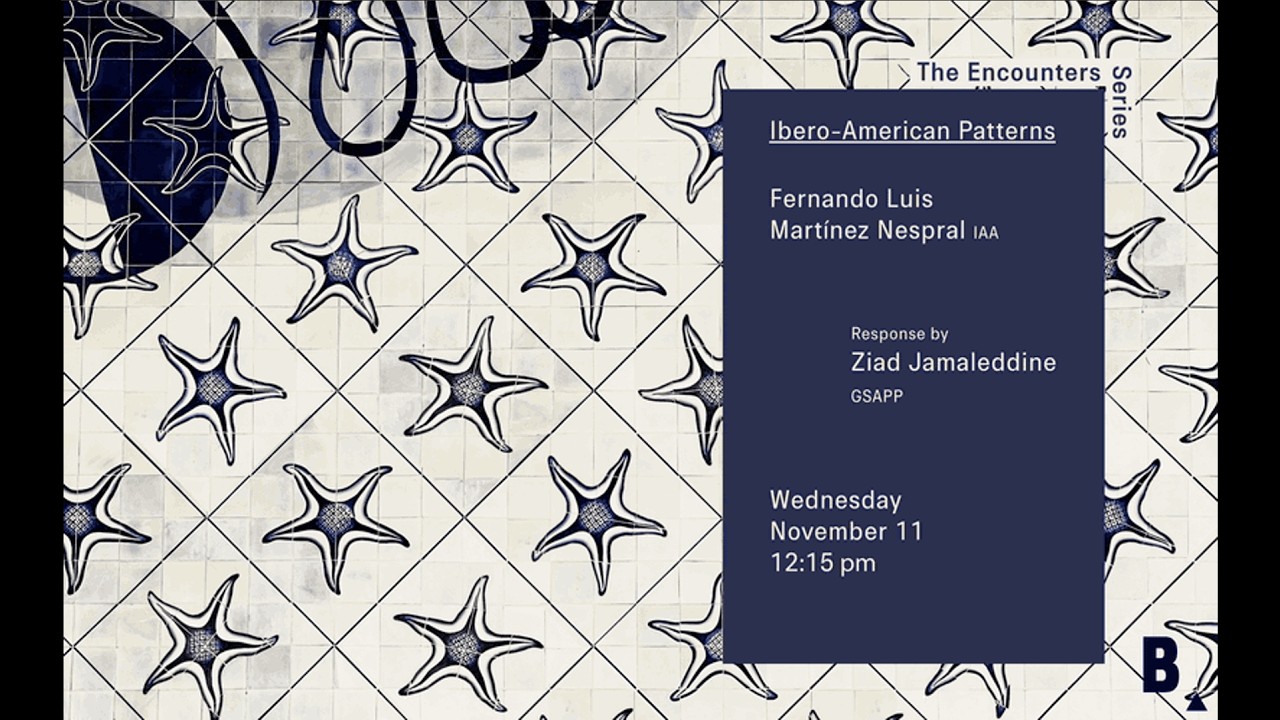
Encounters Series: Ibero American Patterns
Keywords
Summary
174 words
Critical Evaluation
Value of the Information & Strength of the Argument
The video offers a valuable scholarly contribution by challenging conventional notions of ‘influence’ and proposing ‘component’ as a more nuanced term. The argument is well-supported with concrete examples and a case study that illustrates the transformation and appropriation of materials across cultures. The reasoning is clear and cohesive, with the speaker carefully addressing terminology and conceptual frameworks. The response by Jamaleddine adds depth by linking the work to contemporary scholarship, reinforcing the value of the original thesis. The presentation is rigorous, though it assumes a basic familiarity with architectural history and terminology.
Scientific Rigor, Source Quality, Title Accuracy
The speaker draws on his extensive research and numerous examples, referencing his own book, institutional work, and scholarly texts. He cites specific works by Nasser Rabbat, Esra Akcan, Shahab Ahmed, and Doris Behrens-Abouseif, grounding the discussion in established academic literature. The title of the video accurately reflects the content, which centers on Ibero-American architectural patterns and their Arab influences. The lecture is well-structured, with clear reasoning and evidence, though some references are mentioned without full citations. The intellectual rigor is high, and the title adequately prepares viewers for the presentation.
197 words
Title / Content Match
The title accurately reflects the content, which focuses on Ibero-American architectural patterns and their Arab component.
Quality & Reliability
8/10
The video is an academic lecture by a qualified professor presenting his own book, with a scholarly response and references to established works. The argument is well-structured and grounded in historical research.
Key Moments
Markers derived by PSI from the transcript: the creator did not define chapters.
- Introduction and deconstruction of the book's title.
- Discussion on 'Arab' vs 'Islamic' terminology.
- Explanation of 'component' vs 'influence' and design criteria.
- Case study: 19th-century French tiles in South America.
- The Ottoman soldier tile and its significance.
- Response by Ziad Jamaleddine, situating the book in broader debates.
Cited Sources
- A History of the Arab Component in Ibero-American Architecture — The book presented by the author; core of the lecture.
- Islamic Architecture as a Field of Historical Inquiry — Essay by Nasser Rabbat, referenced by Ziad Jamaleddine.
- Architecture in Translation — Book by Esra Akcan (mentioned as 'Isra'), referenced in the response.
- What is Islam? — Book by Shahab Ahmed, referenced by Ziad.
- Beauty in Arabic Culture — Book by Doris Behrens-Abouseif, mentioned in the response.
Concurring Sources
- Mudéjar art — Supports the idea of Islamic influence in Christian contexts in Spain.
- Islamic architecture — Provides general background on architectural elements and design principles.
Contribution & Novelties
The lecture presents a novel framework for understanding the Arab component in Latin American architecture, rejecting the passive notion of ‘influence’ and instead using ‘component’ to emphasize integration. The concept of ‘design criteria’ allows for tracing cultural continuity across centuries and styles. The case study of French tiles highlights a specific example of how foreign materials were appropriated in line with pre-existing traditions. This invites further research into other cultural components, such as East Asian influences on the Pacific coast.
Pour aller plus loin :
- Mudéjar art — Explores the Christian use of Islamic artistic techniques in the Iberian Peninsula, directly relevant to the transmission discussed.
- Islamic architecture — Provides context on the architectural elements and design principles that traveled to Ibero-America.
- Arab culture — Useful for understanding the linguistic and cultural framework the speaker emphasizes.
136 words
Radar Profile
The radar profile shows high scores in information quality and reliability, indicating a solid academic lecture. The quantitative information is also substantial, though the technical level is moderate, balancing accessibility with specialized content. The global quality is high, with a slight lower score in quantity, possibly due to limited visual aids or production polish.