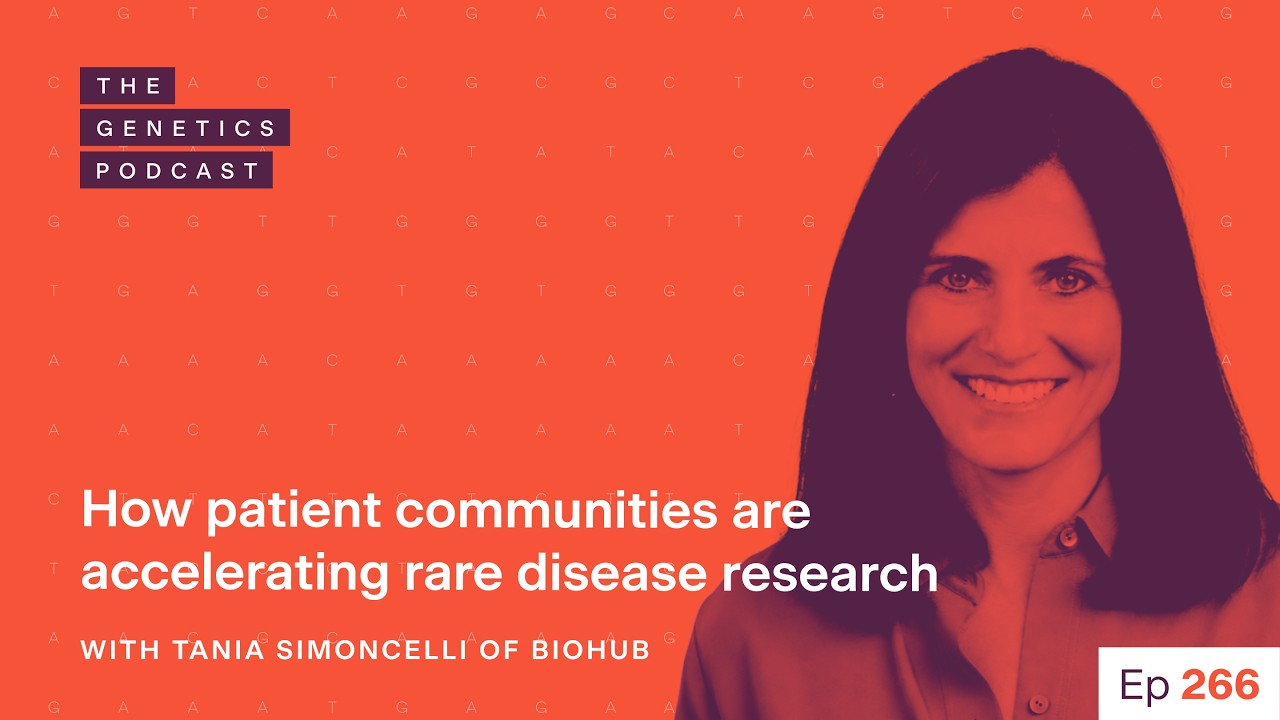
EP 266: How patient communities are accelerating rare disease research with Tania Simoncelli
Title history
- EP 266: How patient communities are accelerating rare disease research with Tania Simoncelli — observed on 20261119-1338 UTC (YouTube)
Keywords
Summary
207 words
Critical Evaluation
Value of the Information & Strength of the Argument
The podcast provides substantial value by sharing concrete data and outcomes from the Rare As One network, demonstrating the effectiveness of patient-led research models. Simoncelli’s arguments are well-structured, moving from the problem of rare disease research to the solution of funding patient communities. She supports her claims with specific statistics (e.g., $150M investment, 94 organizations, 123 clinical trials) and personal anecdotes, making the case compelling. The discussion also explores broader implications for AI in drug repurposing and virtual cell modeling, linking rare diseases to fundamental biology. However, the information is presented from the perspective of the funding organization, and independent verification of outcomes is not provided. Nevertheless, the argumentation is coherent and persuasive.
Scientific Rigor, Source Quality, Title Accuracy
The scientific rigor is moderate: Simoncelli is a credible figure with direct involvement in the programs, but the podcast does not cite external studies or peer-reviewed publications. The description includes timestamps but no additional sources. The title accurately reflects the content, as the episode focuses on patient communities’ role in rare disease research. The discussion of the gene patents case provides historical context but is not central. Overall, the video is informative but relies on expert testimony rather than formal citations. The adequacy between title and content is high.
217 words
Title / Content Match
The title accurately reflects the discussion on patient communities accelerating rare disease research.
Quality & Reliability
8/10
The podcast features a leader of a major rare disease research initiative, providing detailed statistics and insights from the Rare As One network. The claims are based on first-hand experience, but lack independent verification.
Chapters
- Intro to The Genetics Podcast
- Welcome to Tania
- The founding story and aim of the Rare As One Project
- Impact and scale of the Rare As One network, from funding to clinical trials
- Why cycle four focuses on rare respiratory, immune dysregulation and sarcoma communities
- How rare disease data and patient networks connect to Biohub’s virtual cell and AI models
- The Rare As One partnership with Every Cure on AI-driven drug repurposing
- Rare As One partnerships with the Broad Institute, Citizen Health and the Fowler lab
- Organizational and scientific capacity building for patient-led rare disease organizations
- Tania’s ACLU case against human gene patents and its impact
- How patient communities are adopting AI and where it could take rare disease research
- Closing remarks
Contribution & Novelties
This episode offers a comprehensive look at a major philanthropic initiative in rare disease research, providing insights into how patient-led organizations are transforming drug development. It highlights the importance of capacity building and network effects, and explores emerging AI applications. The discussion of the ACLU gene patents case adds historical perspective on legal battles in genomics.
Pour aller plus loin :
- Rare disease - Wikipedia — Background on rare diseases and their challenges.
- Drug repurposing - Wikipedia — Overview of repurposing existing drugs for new indications.
- Association for Molecular Pathology v. Myriad Genetics - Wikipedia — The Supreme Court case on gene patents discussed in the episode.
107 words
Radar Profile
The radar profile shows high scores on information quantity and reliability, with moderate technical depth. The video excels in providing extensive data and expert insights, making it a strong resource for understanding patient-led rare disease research.