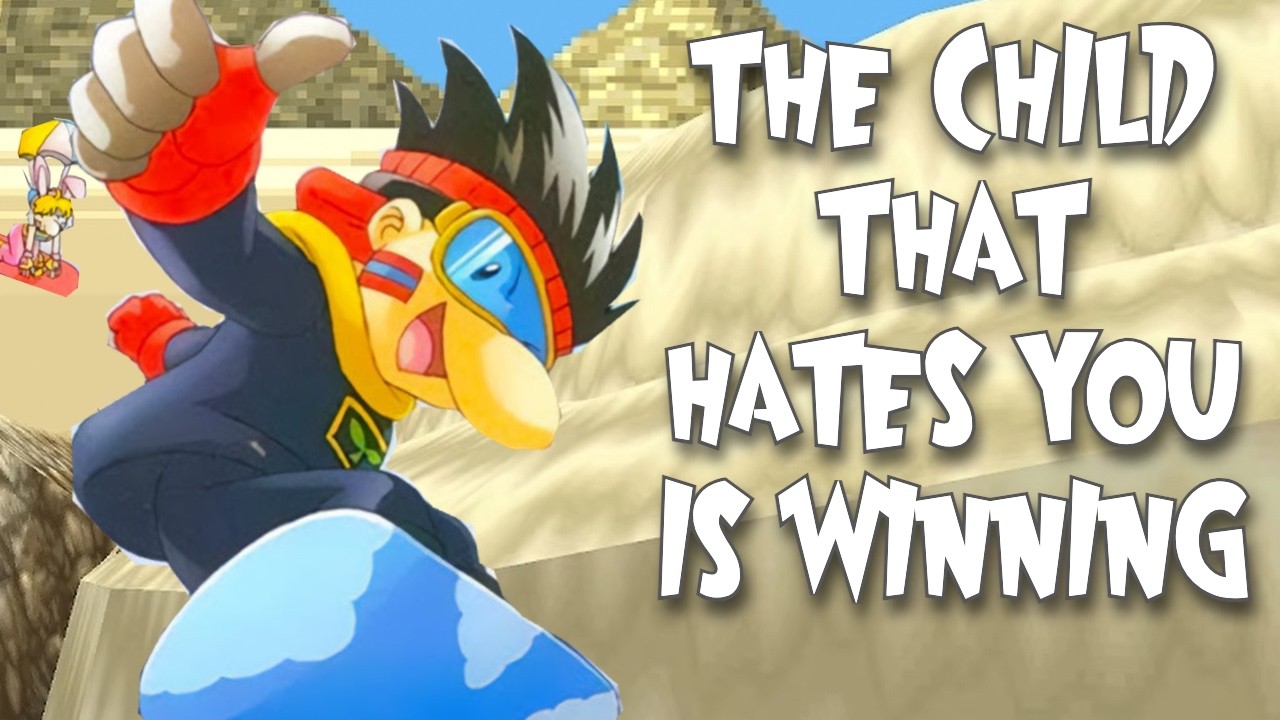
Another Weirdly BRUTAL Kids' Racing Game
Title history
- Another Weirdly BRUTAL Kids' Racing Game — observed on 20261121-1909 UTC (YouTube)
Keywords
Summary
157 words
Critical Evaluation
Value of the Information & Strength of the Argument
The video provides a highly valuable and detailed breakdown of Snowboard Kids’ game design, focusing on the interplay between track design, item mechanics, and AI behavior. The argumentation is solid, as each claim is supported with concrete examples from the game, such as specific moments on each track, item interactions, and AI patterns. The creator skillfully builds a coherent thesis that the game’s brutality stems from design choices that create an unfair but fascinating challenge. The enthusiasm and expertise shine through, making the analysis both informative and entertaining. The video does not just state facts but offers a structured argument, effectively comparing the game to others like Mario Kart 64 to highlight its unique flaws.
Scientific Rigor, Source Quality, Title Accuracy
The video demonstrates high rigor in its analysis, drawing from the creator’s extensive knowledge of game design and the specific examples shown. While no external scientific sources are cited, the video relies on direct observation and personal expertise, which is acceptable for an opinion-based essay. The title perfectly matches the content, capturing the video’s central theme of a kids’ game with brutal difficulty. The video’s structure is clear, with chapters that logically guide the viewer through the analysis. The creator also acknowledges the game’s merits, ensuring a balanced critique rather than a mere rant. The tone is professional and evidence-driven, and the absence of citations is mitigated by the depth of firsthand gameplay information.
244 words
Title / Content Match
The title accurately reflects the content: the analysis highlights the weirdly brutal difficulty of a kids' racing game.
Quality & Reliability
8/10
The video is a well-structured analysis by a specialist in game design, with coherent arguments and precise examples, though no external scientific sources are cited.
Chapters
Cited Sources
- Patreon — Support page for the Designing For series.
- BlueSky Profile — Creator's social media profile.
- Twitch Channel — Creator's streaming channel.
- Discord Server — Community Discord server.
- Exellock BlueSky — Editor and additional director.
- Intro Animation Channel — Creator of the intro animation.
- Intro Theme SoundCloud — Composer of the intro theme.
- All Songs Used (Pastebin) — List of all songs used in the video.
Contribution & Novelties
The video offers a unique and detailed dissection of Snowboard Kids, a relatively obscure N64 game, focusing on its unfair AI and item system. The creator effectively explains how the rubber banding mechanic, combined with track design, creates a brutally difficult solo campaign, while the multiplayer mode is a positive chaotic experience. This dual perspective is insightful and adds to the understanding of game design in 90s kart racers.
Pour aller plus loin :
- Snowboard Kids (Wikipedia) — Provides background on the game, its development, and reception.
- Dynamic game difficulty balancing (Wikipedia) — Explores the concept of rubber banding and adaptive difficulty in games.
- Game balance (Wikipedia) — Discusses the theory behind fairness and challenge in game design, directly relevant to the video’s critique.
124 words
Radar Profile
The radar profile shows a balanced distribution across all four dimensions, with slightly higher scores in information quantity and quality, and a slightly lower score in technical level and reliability. This reflects a thorough and well-argued analysis that is accessible to a broad audience, though it relies on the creator's expertise rather than external sources.
💬 Sur les 30 commentaires analysés, l'accueil est très positif, avec une ferveur nostalgique et des éloges pour la série, sans critiques notables.