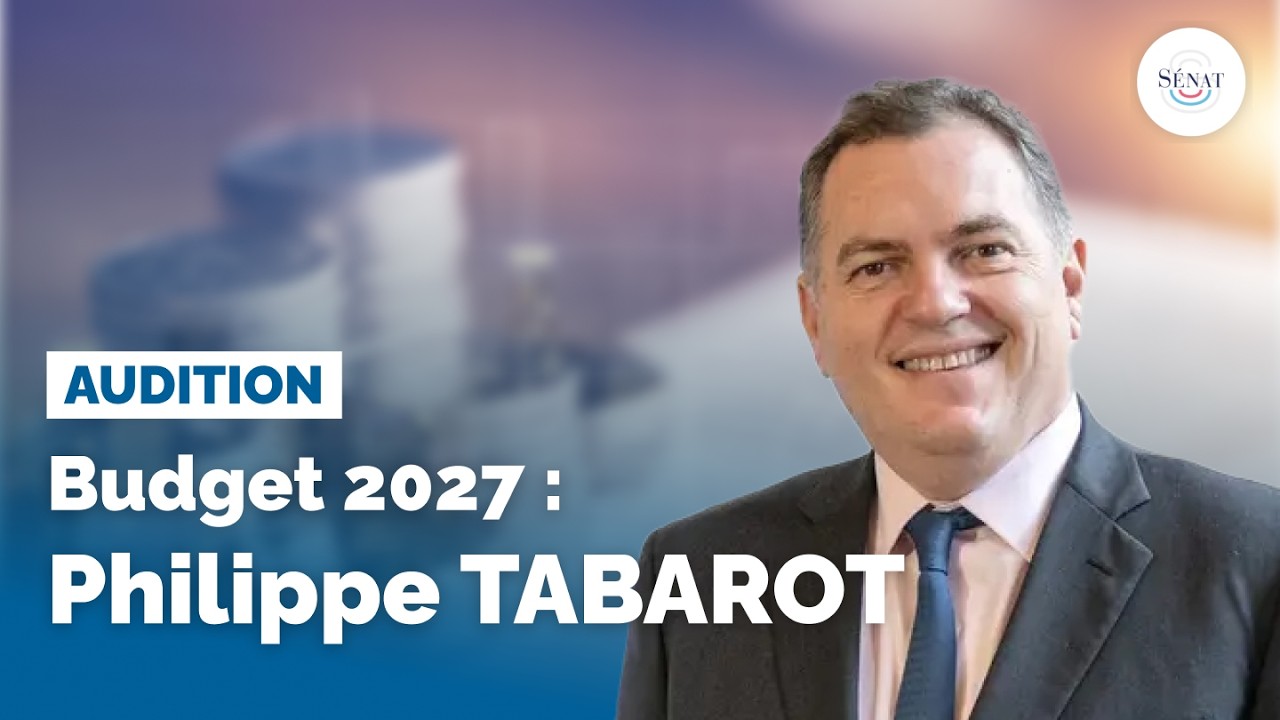
Budget 2027 : audition de Philippe Tabarot
2027 Budget: hearing of Philippe Tabarot
Title history
- Budget 2027 : audition de Philippe Tabarot — observed on 20261120-1039 UTC (YouTube)
Keywords
Summary
197 words
Critical Evaluation
Value of the Information & Strength of the Argument
The video provides substantial value as an official record of government budget proposals and ministerial justifications. The argumentation is largely based on technical budget figures and policy commitments, with senators offering evidence-driven critiques of specific allocations. The minister defends decisions with reference to contractual agreements and fiscal constraints. The discussion is constructive, balancing political perspectives with concrete data on tax revenue, investment plans, and regulatory impacts. However, the debate is inherently political, with opposition senators highlighting perceived failures while the minister emphasizes progress and legal constraints. The arguments are well-structured, but not all claims are independently verifiable within the video.
Scientific Rigor, Source Quality, Title Accuracy
The session demonstrates high rigor as an official parliamentary proceeding. All participants speak in an institutional setting with procedural norms. Sources referenced include the performance contract with SNCF Réseau, the framework transport bill, and various reports and studies. The budget figures are drawn from official documents, lending credibility. The title accurately reflects the content, a focused hearing on the 2027 budget. The debate is factual and structured, but political perspectives naturally influence emphasis. No external sources are linked in the description, so the analysis relies solely on the spoken content.
205 words
Title / Content Match
Title accurately reflects the content: a detailed hearing session on the 2027 budget with the transport minister.
Quality & Reliability
8/10
Official parliamentary hearing featuring detailed budget figures and policy statements from a minister, cross-examined by senators. High reliability due to institutional context, though politically oriented.
Key Moments
Markers derived by PSI from the transcript: the creator did not define chapters.
- Opening remarks by committee president Pascal Martin, outlining the session's constraints and introducing the rapporteurs for aviation, rail/maritime/fluvial, and road transport.
- Stéphane de Billi questions the minister about a sharp decline in French air traffic compared to Europe, the performance of air traffic control, and tax impacts on business aviation.
- Jean-Marc Déli addresses the SNCF Réseau performance contract, the need for external funding, and financing challenges for the rail network, including the proposed use of the TILD tax.
- Olivier Jacquin criticizes the use of energy savings certificates (CEE) to fund transport policies, calling it opaque and uncontrolled, and raises concerns about cycling infrastructure cuts.
- The minister begins his response, providing an overview of government transport policy, budget priorities, and responses to the rapporteurs' questions.
Cited Sources
- Contrat de performance entre l'État et SNCF Réseau (signed 12 November 2026) — Mentioned in opening remarks and by Jean-Marc Déli as a key framework for rail network maintenance funding.
- Projet de loi cadre sur le développement des transports — Discussed as a crucial legislative measure pending passage in the National Assembly.
- Rapport d'information de Guillaume Chevrolier et Gilbert-Luc de Vina sur l'insonorisation — Referenced by Stéphane de Billi regarding noise pollution mitigation plans.
- Programme C2E 'Mon vélo de A à Z' — Mentioned by Olivier Jacquin as a program whose termination threatens the FUB's liquidation.
Contribution & Novelties
This hearing offers an in-depth look at the 2027 French state budget for transport, revealing specific budget allocations, proposed tax changes, and policy directions. It provides insights into the government’s approach to funding rail infrastructure, the challenges of air transport decarbonization, and the controversial use of energy certificates. The novelty lies in the direct ministerial responses to targeted parliamentary scrutiny, clarifying official positions on contested issues such as the TNSA revenue diversion and the future of cycling investments. The discussion also highlights planned future legislation and the timeline for the framework law.
Pour aller plus loin :
- Contrat de performance SNCF Réseau — Official contract details can be explored on the French government’s transport ministry website, but exact URL is not confirmed.
- Système d’échange de quotas d’émission (ETS) — Relevant to maritime and aviation carbon costs; see https://ec.europa.eu/clima/eu-action/eu-emissions-trading-system-eu-ets_en (verified source).
- Certificats d’économies d’énergie (CEE) — French energy saving certificate system; see https://www.ecologie.gouv.fr/certificats-deconomies-denergie (verified source).
- Leasing social for electric vehicles — Proposed mechanism; see https://www.service-public.fr/particuliers/actualites/A17201 for general info (verified source).
169 words
Radar Profile
The profile shows a very high quantity of information with strong reliability, balanced by solid technical depth and good quality. The debate format ensures a wide coverage of transport sectors, but the moderately high technical level may limit accessibility. Overall, this is a dense, reliable source for understanding French transport budget politics.