MESSIDORE | Réanimation : mieux accompagner les décisions médicales pour les patients âgés
MESSIDORE | Resuscitation: better supporting medical decisions for elderly patients
Keywords
Summary
213 words
Critical Evaluation
Value of the Information & Strength of the Argument
The presentation provides high-value information by grounding the decision-support tool in real clinical scenarios and large-scale administrative data (SNDS). It clearly articulates the ethical tensions and the need for explainability, which is a strong point. The argumentation is structured and nuanced; the presenter acknowledges the model’s moderate discriminative ability (AUC 0.7) and the difficulty of comparing its performance to clinicians’ intuition. He also highlights potentially controversial findings like the importance of sex and dental care, providing balanced interpretation (social surrogate). The methodological choices, such as avoiding opaque neural networks and incorporating attention weights, are well-justified and contribute to the credibility of the argumentation.
Scientific Rigor, Source Quality, Title Accuracy
The scientific rigour is adequate for a conference presentation. The project is based on a comprehensive national database (SNDS) and involves a multidisciplinary team with data managers and ethicists. The presenter is transparent about limitations, including the lack of external validation and the overestimation of survival by clinicians. However, specific peer-reviewed publications are not directly cited, and the AUC value is modest. The title accurately reflects the content, though it focuses on ‘patient support’ rather than the AI prediction aspect. The session Q&A adds depth, particularly regarding the relevance of dental care and the importance of social context. Overall, the sources mentioned (SNDS, West Data Hub) are credible, but the absence of direct links to published studies limits the verifiability.
238 words
Title / Content Match
The title aligns well with the content focus: supporting ICU admission decisions for elderly patients via an AI-based decision aid.
Quality & Reliability
7/10
The presentation relies on a substantial dataset (French SNDS) and a structured methodology, yet the model's AUC of 0.7 and the lack of external validation temper its reliability. The ethical reflexion adds depth, but the research is presented as ongoing without peer-reviewed details.
Key Moments
Markers derived by PSI from the transcript: the creator did not define chapters.
- Introduction and the night-shift vignette of an 82-year-old patient with pneumonia.
- The core question: whether to intubate, and the distinction between ageism and unreasonable obstinacy.
- Epidemiological data: over 80-year-olds represent 30% of medicine units, 20% of ICU cases, with a median survival of 4 months at 50%.
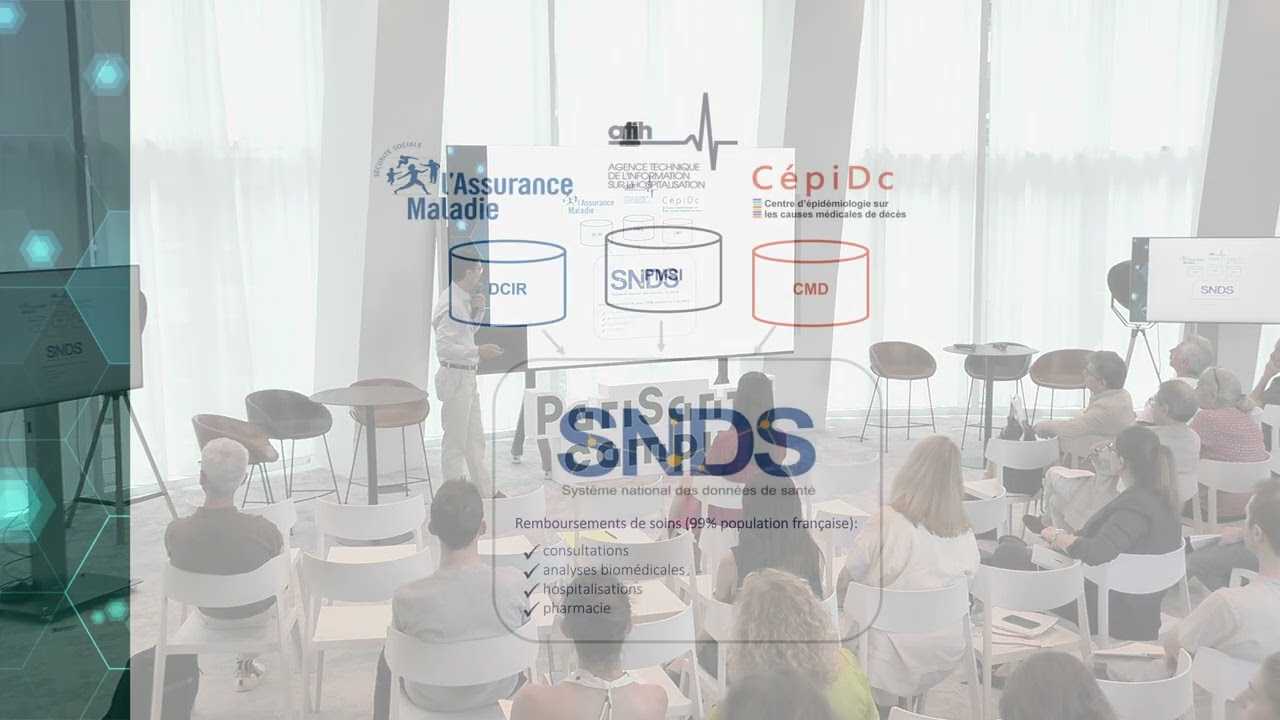
- Use of the SNDS database (1M patients, 3000 variables) and the shift from neural networks to attention-weighted explanations.
- Example prediction for the vignette: survival probability 0.29, with factors explaining the prediction (age, sex, hospitalizations, frailty).
- Deployment via the West Data Hub across the Grand Ouest and the importance of interoperable standards.
- Qualitative findings: physicians demand predictions on request, and the algorithm highlights sex and dental care as unexpected predictors.
- Conclusion: the demographic 'tsunami' of elderly patients by 2050, AXA funding for a simulated trial, and the need for societal anticipation.
Cited Sources
- MESSIDORE : 4 ans de recherche et d'innovation — Page de l'événement IReSP présentant le programme MESSIDORE, dont cette présentation fait partie.
Concurring Sources
- SOFA score — A widely used ICU organ failure score that predicts mortality, concordant with the idea of using objective scores to guide ICU decisions.
Dissenting Sources
- Risk of algorithmic bias in health AI — Some critics argue that predictive algorithms may reinforce existing disparities, contrary to the video's claim of more objective decisions. This is a general concern, not a specific study.
Contribution & Novelties
The main novelty lies in leveraging French administrative health data (SNDS) to create an explainable AI model for ICU admission decisions in the elderly, combined with a strong ethical component. Unlike many black-box models, the attention-weight approach allows clinicians to understand each prediction, which is critical for acceptance and trust. The project also integrates qualitative research on acceptability, making it a comprehensive socio-technical approach.
Pour aller plus loin :
- Explainable artificial intelligence — Provides an overview of techniques to make AI predictions interpretable, directly relevant to the paper’s ethical approach.
- Simplified Acute Physiology Score (SAPS II) — Classic ICU mortality prediction score, useful for comparing with the proposed algorithm.
- Frailty syndrome — The model uses a frailty score, and this concept is key to understanding the vulnerability of elderly patients.
- Advance care planning — The video touches on patient autonomy and decision-making, which ties into advance care planning discussions.
149 words
Radar Profile
The scores profile shows a moderate-high quantity of information (8) and decent quality (7), with a technical level around 6 indicating accessible yet substantive content. Reliability (7) is consistent with the transparent presentation of limitations, though the lack of external validation prevents a higher score.