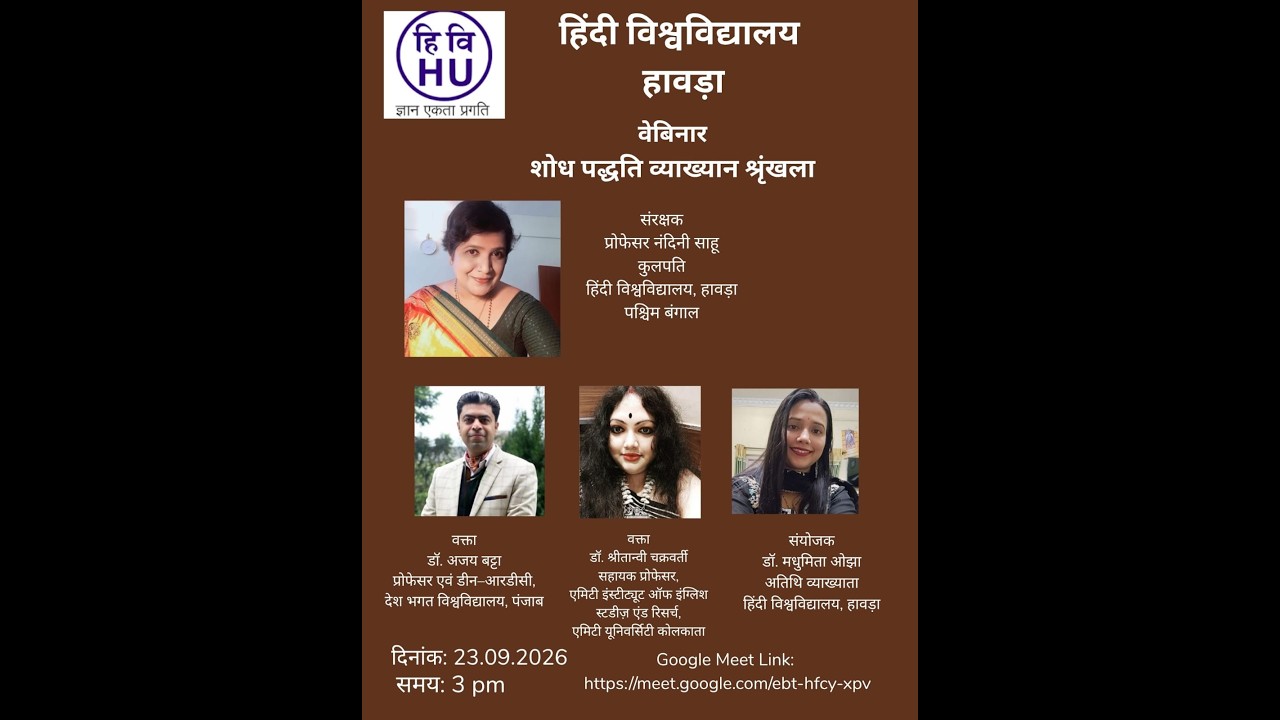
LECTURE: 02 - RESEARCH METHODOLOGY SERIES.
Keywords
Summary
177 words
Critical Evaluation
Value of the Information & Strength of the Argument
The lecture offers practical value by outlining a clear methodology for literary research, including specific steps and linguistic concepts. The argumentation is logical, moving from theoretical foundations (synchronic/diachronic, discourse analysis) to practical applications (thesis writing). It convincingly makes the case for incorporating digital humanities, arguing that research must be digitally archived to have impact. However, the presentation is somewhat superficial, with limited engagement with counterarguments or deeper theoretical nuances. The speaker relies on anecdotal advice and general principles rather than empirical evidence or case studies.
Scientific Rigor, Source Quality, Title Accuracy
The lecture demonstrates moderate rigor. It references established figures like Saussure and Derrida, but these references are brief and not critically analyzed. The title is generic but matches the content. The lecture lacks detailed citation of scholarly works beyond these mentions, and the speaker does not provide concrete examples or data to support the claims. The video’s production is simple, with no visual aids or additional resources provided in the description. The description only lists names and affiliations, no links to sources. Overall, the scientific rigor is limited.
188 words
Title / Content Match
The title accurately describes the video as a research methodology lecture, though it is generic without specific detail.
Quality & Reliability
6/10
The lecture provides practical guidelines on research methodology, citing some theoretical references, but the content is general and lacks rigorous scientific depth. The speaker is experienced, but the presentation is more expository than analytical.
Key Moments
Markers derived by PSI from the transcript: the creator did not define chapters.
- Introduction by Vice-Chancellor Prof. Nandini Sahu, outlining the series' purpose and the importance of research methodology.
- Speaker Dr. Ajoy Batta begins his talk on 'From Syntax to Silicon'.
- Discussion of synchronic and diachronic approaches, citing Saussure.
- Explanation of discourse analysis and its role in textual interpretation.
- Emphasis on lexis and grammar for effective research writing.
- Advocacy for digital humanities and the necessity of making research digitally available.
- Step-by-step guide to writing a research paper, including thesis statement creation.
- Conclusion of Dr. Batta's talk and introduction of second speaker.
Cited Sources
- Course in General Linguistics — Mentioned in relation to synchronic and diachronic approaches.
- Clara and the Sun — Cited as an example of representing technology through words.
- Derrida's 'there is nothing outside the text' — Quoted to emphasize multiple readings of a text.
Contribution & Novelties
The lecture contributes by bridging traditional literary research methods with digital humanities, offering a practical roadmap for students. It emphasizes the importance of making research accessible digitally. While not revolutionary, it synthesizes known concepts in a clear pedagogical manner.
Pour aller plus loin :
- Digital humanities — Overview of the interdisciplinary field combining computing with humanities scholarship.
- Discourse analysis — Detailed explanation of approaches to analyzing language beyond sentence level.
- Historical linguistics — Relates to diachronic analysis discussed in the lecture.
81 words
Radar Profile
The radar profile shows moderate scores across all dimensions, indicating a balanced but not exceptional lecture. Quantitative and qualitative information are comparable, technical level is intermediate, and reliability is moderate, consistent with an introductory educational talk.