Map of What You Never See": Bioethics and the Legacy of Paul Farmer with M. Therese Lysaught, PhD,
Title history
- Map of What You Never See": Bioethics and the Legacy of Paul Farmer with M. Therese Lysaught, PhD, — observed on 20261119-0643 UTC (YouTube)
Keywords
Summary
233 words
Critical Evaluation
Value of the Information & Strength of the Argument
The value of this presentation lies in its synthesis of Paul Farmer’s scattered critiques of bioethics into a coherent framework, and in its application to a specific, persistent health disparity. The argument is well-structured and supported by concrete data on Black infant mortality, especially in Wisconsin, and by citation of Farmer’s key articles. The speaker does not simply accept Farmer’s views without nuance; she acknowledges his appreciation for bioethics and the complexities of the field. The reasoning is solid, moving from a general metaphor (maps and bioethics) to a specific problem (Black infant mortality) and then to a prescriptive response based on Farmer’s work. The talk is intellectually engaging and offers a compelling critique of bioethics as overly individualistic and disconnected from social realities. However, it remains an expert opinion rather than an empirical study, and some arguments could be further substantiated with more detailed evidence or counterarguments.
Scientific Rigor, Source Quality, Title Accuracy
The talk demonstrates rigor through its explicit engagement with primary sources, including Farmer’s articles ‘Rethinking Medical Ethics: A View From Below,’ ‘The New Malaise,’ and ‘Listening for Prophetic Voices,’ as well as the biography by Tracy Kidder. The speaker also references Sarah M. Broom’s memoir ‘The Yellow House’ to support the map metaphor. Data on infant mortality are drawn from public health sources, and the literature search conducted with a librarian adds methodological transparency. The title is fitting and evocative; it frames the talk’s core metaphor and focus on Farmer’s legacy. However, the source citations during the talk do not include direct URLs or full bibliographic details, so a listener would need to search for them. The adequacy between title and content is high, as the talk consistently returns to the map imagery and Farmer’s influence on bioethics.
301 words
Title / Content Match
The title accurately reflects the content: the 'map' metaphor is central, and the talk centers on Paul Farmer's legacy and its implications for bioethics. The subtitle specifying the speaker is appropriate.
Quality & Reliability
8/10
The talk is delivered by an established academic (M. Therese Lysaught, PhD) with expertise in theology, medicine, and bioethics. She draws on primary sources, including Paul Farmer's own publications and demographic data, and provides a well-reasoned, critiqued argument. The presentation is a scholarly lecture, not peer-reviewed, but it demonstrates rigorous engagement with the literature.
Key Moments
Markers derived by PSI from the transcript: the creator did not define chapters.
- Introduction of speaker and her background; overview of the talk.
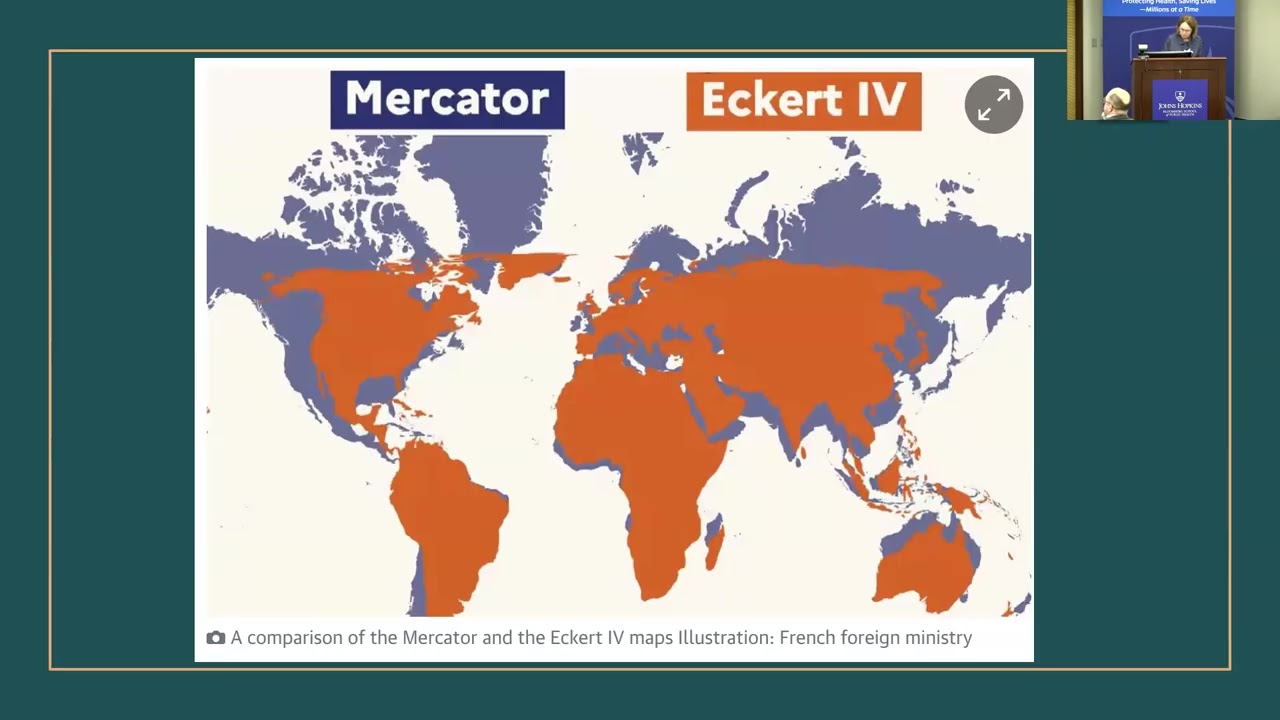
- Discussion of maps as culturally embedded tools; bioethics as a map.
- Introduction of Paul Farmer's Great Epi-Divide and its implications.
- Presentation of data on Black infant mortality in Wisconsin and the U.S.
- Farmer's critique of bioethics as unsocialized, with five points.
- Farmer's constructive framework: listening to those from below, accompaniment, etc.
- Application of Farmer's legacy to Black infant mortality and conclusion.
Cited Sources
- The Yellow House — Memoir by Sarah M. Broom; quoted for the map metaphor.
- Rethinking Medical Ethics: A View From Below — Article by Paul Farmer outlining critiques of bioethics.
- The New Malaise: Medical Ethics and Social Rights in the Global Era — Article by Paul Farmer addressing medical ethics and social rights.
- Listening for Prophetic Voices: A Critique of Market-Based Medicine — Article by Paul Farmer critiquing market-based medicine.
- Mountains Beyond Mountains — Biography of Paul Farmer by Tracy Kidder; referenced for the Great Epi-Divide description.
Concurring Sources
- Paul Farmer — Background on Farmer's life and work, supporting the talk's discussion of his legacy.
Contribution & Novelties
This talk offers a novel synthesis of Paul Farmer’s bioethics critiques and applies them concretely to a specific health disparity—Black infant mortality—which is largely absent from bioethics literature. It challenges bioethics to broaden its scope from individual clinical quandaries to structural and social determinants. The presentation also provides a constructive proposal for how bioethics can become ‘socialized’ by incorporating perspectives from below and engaging with communities affected by injustice.
Pour aller plus loin :
- Structural violence — Concept central to Farmer’s analysis, useful for understanding how social structures harm health.
- Social determinants of health — Research field that aligns with the talk’s emphasis on non-medical factors influencing health outcomes.
- Bioethics — Overview of the field and its historical focus, relevant to the critique presented.
124 words
Radar Profile
The radar profile shows a strong balance between quantity and quality of information, with slightly lower technical complexity. The talk is information-dense and reliable, but it remains an expert opinion rather than a formal empirical study, which is reflected in a moderate technical level. The overall high scores indicate a valuable contribution to bioethics discourse.