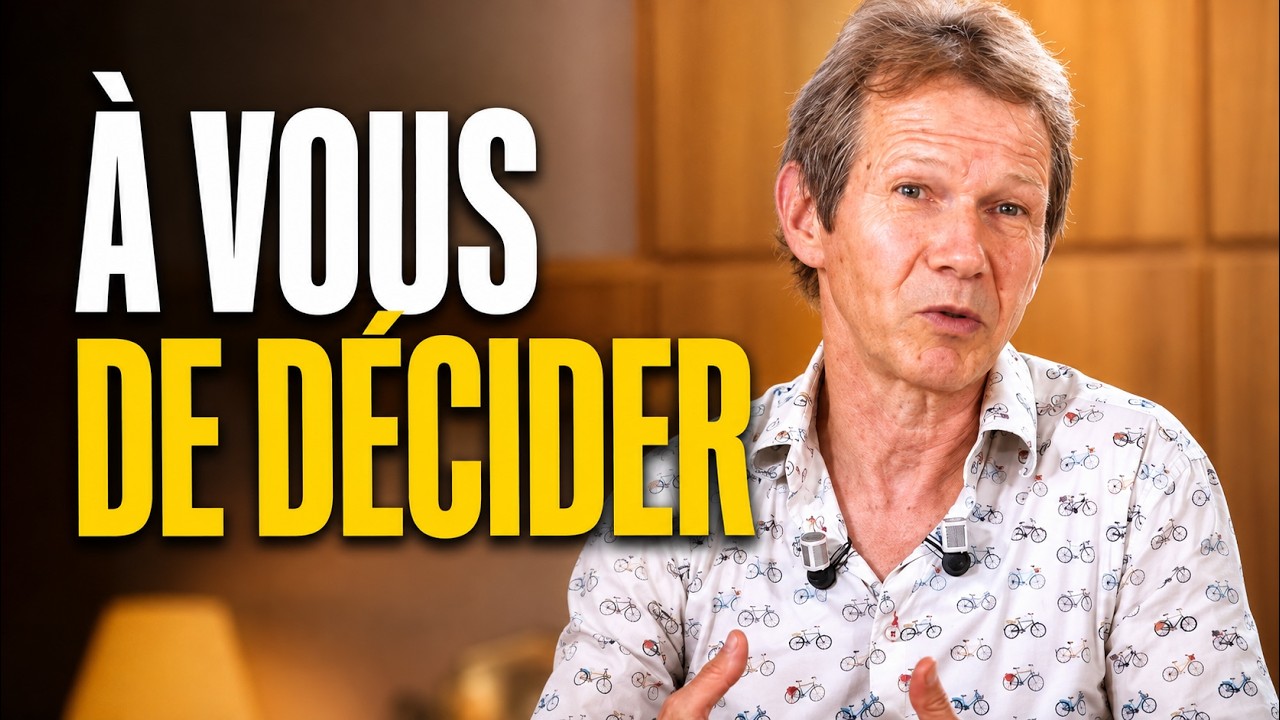
Jancovici : « La France n’est pas aussi divisée qu’on le croit »
Jancovici: "France is not as divided as we think"
Keywords
Summary
159 words
Critical Evaluation
Value of the Information & Strength of the Argument
The value of the information lies in the clarity of the project’s rationale and the discussion of concrete societal trade-offs (e.g., French jobs vs. cheaper imports). Jancovici builds his argument on the premise of approaching physical limits (climate, resources) that make current dilemmas new and urgent. He stresses the representativeness of the sampling and the absence of political affiliation, reinforcing the credibility of the process. The argumentation is logical and persuasive, though it remains promotional, with limited critical examination of potential pitfalls (e.g., feasibility of proposals). The discussion on ultra-fast fashion is insightful, highlighting the role of social norms and collective demand for change. Overall, the reasoning is coherent but relies heavily on assumptions about citizen engagement and political responsiveness.
Scientific Rigor, Source Quality, Title Accuracy
The video is an interview, so scientific rigor is moderate: no specific studies are cited, but references to the Climate Convention and WWF figures are made without concrete data. The only external source provided is the Ulule fundraising page, which is not a scientific reference. The title accurately reflects the content, focusing on France’s supposed unity. However, no comparative data is presented; it’s an assertion based on general polls. The lack of citations and reliance on the interviewee’s expertise lower the rigor. The promotional nature of the video (for a crowdfunding campaign) is transparent but affects neutrality.
232 words
Title / Content Match
The title reflects the main claim made in the interview: that France is less divided than often portrayed, exemplified by the citizen assembly project.
Quality & Reliability
7/10
Opinion of a recognized expert in energy and climate, but the video is promotional for his citizen assembly initiative. The factual claims (e.g., 24% of climate convention proposals applied) are not independently verified in the video.
Key Moments
Markers derived by PSI from the transcript: the creator did not define chapters.
- Introduction of the 'Un Commun Accord' initiative and its goals.
- Explanation of the selection method: 150 citizens, quota-based, similar to the Citizens' Convention on Climate.
- Discussion of the differences with the 2019 Climate Convention and the low implementation rate (24%).
- Talk about the timing relative to the presidential election and analysis of candidates' programs by The Shift Project.
- Reaction to the new tax on ultra-fast fashion and broader reflections on hyper-consumption and social norms.
Cited Sources
- Un Commun Accord - Ulule crowdfunding page — Only link in the video description, supporting the initiative.
Concurring Sources
- Convention citoyenne pour le climat — Reference made by the speaker to the previous assembly; its outcomes are cited (24% of proposals applied).
Dissenting Sources
- No conflicting sources found — The video does not present opposing viewpoints or cite contradictory sources.
Contribution & Novelties
The video’s main novelty is the proposal of a citizen assembly specifically for dilemmas related to physical limits, with a focus on representativeness and public support via crowdfunding. It distinguishes itself from previous conventions by aiming to generate popular momentum and not being linked to any political promise. This approach is presented as a way to demonstrate less partisan division than commonly perceived.
Pour aller plus loin :
- Citizens’ assembly — Wikipedia article on the concept, background on its uses and effectiveness.
- Convention citoyenne pour le climat — French Wikipedia for the 2019 climate convention, context of the referenced comparison.
- Sortition — Wikipedia article on selection by lottery, the method used for selecting participants.
- The Shift Project — Organization led by the interviewee, mentioned for analyzing candidates’ programs; no specific URL provided but official site is shiftproject.org (not verified).
139 words
Radar Profile
The scores are relatively balanced, with information quality and reliability slightly higher than quantity and technical level, reflecting an expert opinion piece rather than a data-rich analysis. The low technical level indicates accessibility to a general audience.
💬 Très positif : sur les 30 commentaires analysés, tous expriment un soutien enthousiaste au projet et à Jancovici, avec des encouragements et des participations à la cagnotte.