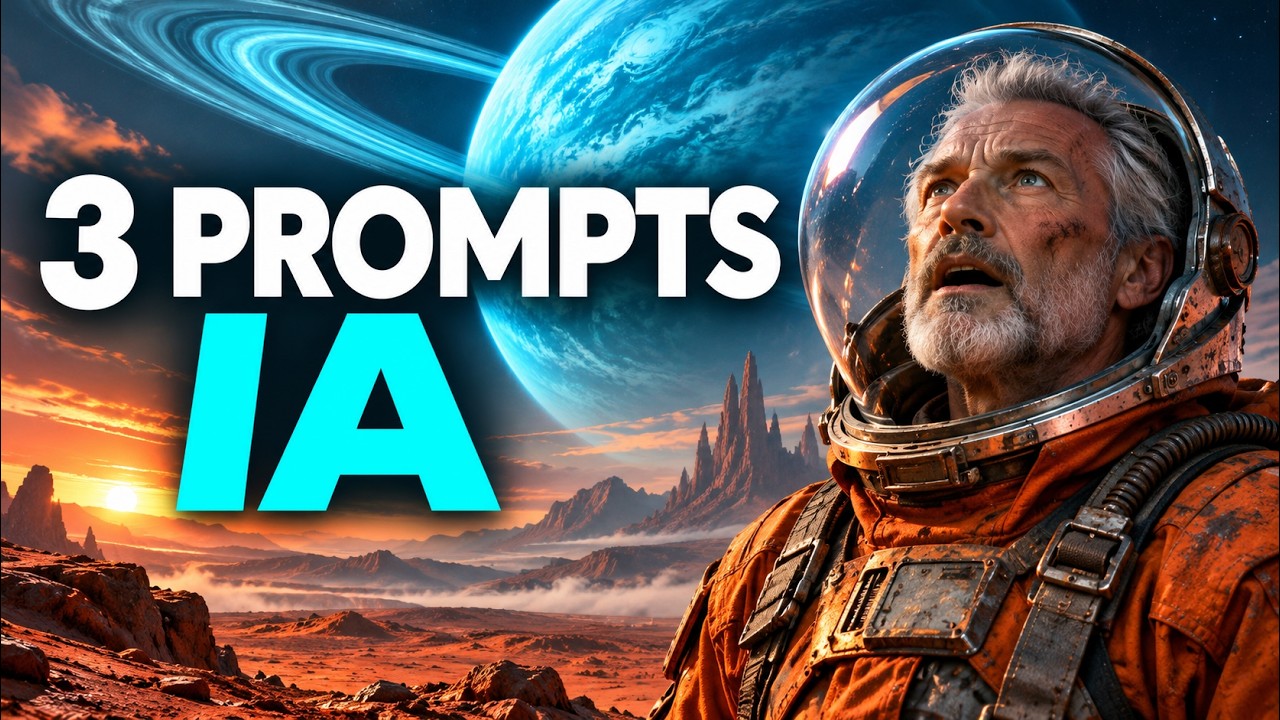
J'ai créé un mini-film de science-fiction avec seulement 3 prompts IA !
I created a sci-fi short film with only 3 AI prompts!
Title history
- J'ai créé un mini-film de science-fiction avec seulement 3 prompts IA ! — observed on 20261110-0238 UTC (YouTube)
Keywords
Summary
136 words
Critical Evaluation
Value of the Information & Strength of the Argument
The video provides a clear, step-by-step guide that is valuable for beginners interested in AI video generation. The argumentation is based on practical demonstration: the creator shows actual generated images and videos, which strengthens the instructional value. However, the content is inherently promotional, and the reasoning often revolves around platform features rather than independent evaluation. The selection of prompts and parameters is explained, and the creator provides comparisons between different scenes, which adds pedagogical value. The use of a character sheet as a technique for consistency is explained well. The main weakness is the lack of objective testing or comparison with other tools; the argumentation relies heavily on the showcased examples, which are chosen to appear impressive.
Scientific Rigor, Source Quality, Title Accuracy
The video is a tutorial, not a scientific study, so the notion of scientific rigor is limited. The sources cited are exclusively the Higgsfield platform links provided in the description, which are commercial and promotional. The creator mentions no external references or research. The title ‘I created a sci-fi mini-film with only 3 AI prompts!’ is accurate, as the video demonstrates using three prompts (one for the character, one for the character sheet, and one for the video) to achieve the final result. The title is slightly sensationalistic but not misleading. The video is well-structured with clear chapters, aiding comprehension. No comments were provided for analysis.
238 words
Title / Content Match
The title accurately describes the content: the creator produces a sci-fi mini-film using exactly three AI prompts, as shown step by step.
Quality & Reliability
6/10
The tutorial is practical and demonstration-based, but it is sponsored content with affiliate links, reducing independence. The technical claims are plausible but not independently verified.
Chapters
- Intro
- Comprendre images et vidéo IA avant de générer
- Compte Higgsfield et choix de l'abonnement
- Générer l'explorateur spatial Elias Voss en image
- Créer une fiche de référence du personnage
- Animer Elias avec Seedance 2.5 en vidéo
- Personnage testé en forêt bioluminescente
- Remplacer un personnage dans une vidéo existante
- Bilan de la plateforme et offre de lancement
Cited Sources
- Higgsfield AI - Make your first AI video — Affiliate link with discount for first purchase, mentioned throughout the tutorial.
- Seedance 2.5 — Link to the Seedance 2.5 model page on Higgsfield, used for video generation.
Contribution & Novelties
The video offers a practical, accessible introduction to AI video generation with a focus on character consistency, which is a common challenge. The use of a character sheet and the demonstration of cross-scene consistency provide a useful technique for creators. The Genjutsu feature for character replacement is an interesting addition. However, the information is largely platform-specific and promotional. The video adds value by translating abstract concepts into a concrete workflow, but it does not present novel scientific findings.
Pour aller plus loin :
- Text-to-video model — Provides background on AI video generation technology.
- Generative artificial intelligence — Broader context on generative AI systems.
- Artificial intelligence art — Related to image generation and creative AI uses.
- Character consistency: often addressed via ‘IP-Adapter’ or ‘LoRA’ techniques, but no reliable URL is provided here.
131 words
Radar Profile
The scores show a balanced profile with moderate informativeness and technical level, while reliability is slightly lower due to sponsorship. The quality of information is adequate for a tutorial, but the lack of independent verification and promotional context pulls down the overall reliability score.