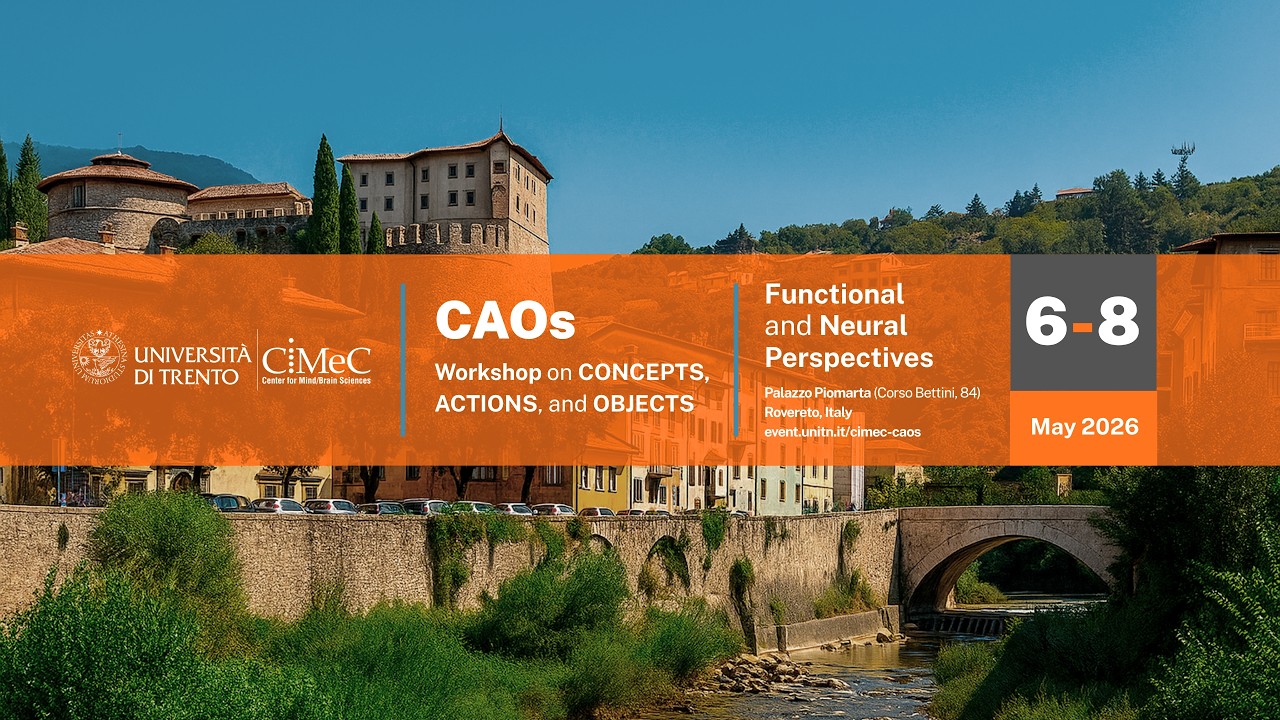
CAOS 2026 - Part 5 | Rovereto, 6 - 8 May | Marieke Mur
Keywords
Summary
175 words
Critical Evaluation
Value of the Information & Strength of the Argument
The talk demonstrates a significant methodological advance by extending frequency-tagging to fMRI with multiple stimuli, enabling the study of neural competition with high spatial resolution. The argumentation is logical and rigorous: it starts with a clear motivation, explains the limitations of existing methods, and systematically validates the approach through behavioral performance, gaze monitoring, retinotopic mapping, and cross-validation across data splits. The use of a control condition without tagging strengthens the interpretation. The presenter also grounds predictions in established physiological principles (e.g., divisive normalization) and uses simulations to support the link between intermodulation components and normalization. While the focus is on proof-of-concept with a limited number of participants, the evidence is compelling and opens new avenues for non-invasive investigation of local neural interactions.
Scientific Rigor, Source Quality, Title Accuracy
The scientific rigor is high: the experimental design is careful, with attention to confounds (fixation, attention, stimulus size), and the analysis uses standard fMRI frameworks (GLM) with appropriate statistical thresholds and split-half consistency. The talk cites previous work (e.g., Laura Lewis et al., Kim et al., Bruno Rossion’s group) and the conference link is provided, although no direct URLs to specific papers are given. The title is accurate and descriptive, clearly indicating the topic and part of a workshop series. There are no obvious discrepancies between title and content.
226 words
Title / Content Match
The title accurately reflects the talk's content, which focuses on frequency-tagged fMRI as a platform for studying object competition and attention.
Quality & Reliability
8/10
The talk presents a well-designed novel methodological approach (frequency-tagged fMRI) with clear rationale, robust within-subject replication, and thoughtful analyses; however, results are not yet peer-reviewed and some claims rely on simulations, giving a high but not maximum reliability score.
Key Moments
Markers derived by PSI from the transcript: the creator did not define chapters.
- Introduction to frequency-tagged fMRI: why and what it is
- Explanation of neural competition and challenges in measuring it with fMRI
- Adaptation of design from EEG to fMRI: two stimuli tagged at 0.125 Hz and 0.2 Hz
- Results: detecting frequency-tagged responses and multiplexing vertices
- Evidence for intermodulation components as index of normalization
- Ongoing work and future directions
Cited Sources
- CIMeC CAOS Workshop — Conference link for the workshop where this talk was presented
Contribution & Novelties
The main novelty is the successful adaptation of frequency-tagging to fMRI for simultaneous presentation of two stimuli, enabling direct measurement of neural competition in the human visual cortex. The talk provides evidence for multiplexing voxels and intermodulation components, offering a non-invasive method to index divisive normalization. This opens new possibilities for studying attentional selection and object recognition in health and disease.
Pour aller plus loin :
- Divisive normalization — Key computational principle underlying the interpretation of multiplexing and intermodulation.
- Retinotopy — The spatial organization of visual cortex, crucial for interpreting the maps shown.
- Steady-state visual evoked potential — The EEG counterpart of frequency tagging, providing the conceptual and methodological foundation.
110 words
Radar Profile
The radar profile shows very high technical level and high information quantity/quality, with moderate reliability due to unpublished status. The talk is heavily method-oriented, with strong emphasis on experimental design and signal processing, indicating a specialized scientific audience.