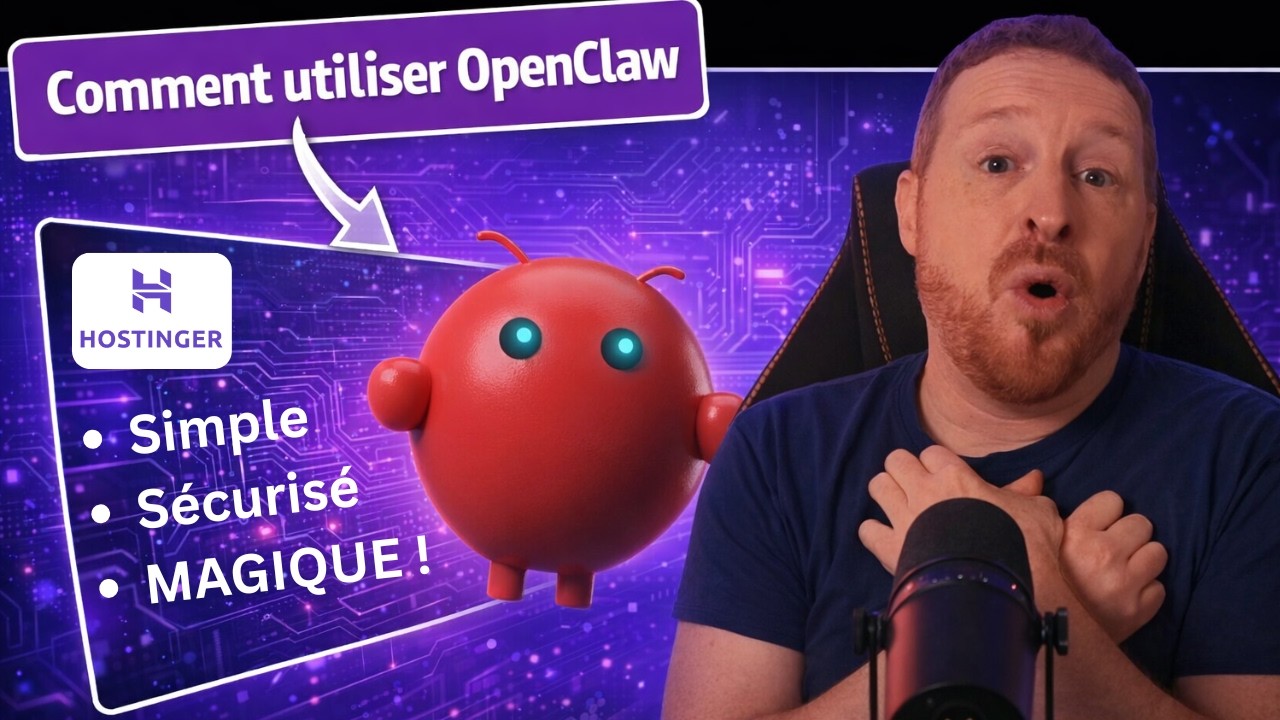
Comment utiliser OpenClaw, Tuto facile complet sécurisé
How to use OpenClaw, Easy, complete, and secure tutorial
Keywords
Summary
185 words
Critical Evaluation
Value of the Information & Strength of the Argument
The informational value is high for beginners and intermediate users: the tutorial provides a concrete, step-by-step walkthrough covering installation, configuration, security hardening, and practical usage of OpenClaw. The argumentation is generally solid — the creator explains the risks of running a powerful agent on a personal machine (data exposure, cookie theft, password leakage) and advocates a VPS approach that isolates risks. He also clearly distinguishes between his personal preference (direct Anthropic API keys) and the bundled Nexus AI option, presenting trade-offs transparently. However, the reasoning is somewhat undermined by the sponsor’s prominence: specific claims about Hostinger’s superior security are presented as authoritative without independent verification. The tutorial relies on practical demonstration rather than documentation citations, which limits its argumentative depth, but the step-by-step logic is coherent and easy to follow.
Scientific Rigor, Source Quality, Title Accuracy
Scientific rigor is moderate. The video does not cite formal sources in a structured way; it references the official OpenClaw documentation and GitHub repository generically without URLs, leaving viewers to find them independently. The demonstration of actual screens is reproducible and the advice to consult official docs for UI changes shows awareness of ongoing evolution. The title matches the content accurately — ‘complete easy secure tutorial’ aligns with the tutorial’s ambition and delivery. The security advice provided (isolating the environment, not exposing dashboards, using dedicated phone numbers) aligns with recognized security best practices in self-hosting communities. However, the commercial relationship with Hostinger is pervasive throughout, which warrants caution regarding the objectivity of the infrastructure recommendations. The video mentions that the OpenClaw project itself had naming changes early on, showing some critical awareness when describing sponsor upheavals.
281 words
Title / Content Match
The title accurately reflects the content: a complete tutorial on using OpenClaw, emphasizing ease and security. It delivers exactly what it promises.
Quality & Reliability
6/10
Practical, well-structured tutorial with real demonstrations. However, the content is heavily sponsored by Hostinger, creating commercial bias. Technical claims about security features and deployment are not independently verified. The creator does warn about real risks (not exposing control interface, monitoring API costs), which adds credibility, but the promotional nature of the video limits its neutrality.
Key Moments
Markers derived by PSI from the transcript: the creator did not define chapters.
- Introduction to OpenClaw: what it is and why it's described as a powerful agentic AI system
- Security warnings: why not to install OpenClaw on a personal machine
- Presentation of Hostinger's one-click OpenClaw deployment offer
- Installation steps and VPS plan selection (KVM2 vs KVM4)
- Configuration of API keys — direct Anthropic console vs Nexos AI aggregator
- Gateway token retrieval and first connection to OpenClaw Control
- Security features walkthrough: whitelisting, API key encryption, blocking rules
- Exploring agent capabilities: tools, web browsing, model switching
- WhatsApp channel integration and access control setup
- Memory system, sub-agents, and concluding best practices for automation
Cited Sources
- Hostinger OpenClaw deployment offer — Sponsor link — one-click VPS deployment of OpenClaw with integrated security features.
- Renaud Dékode community site — Announced in the video as the place for discussion and further exchanges with the community.
- Renaud Dékode Klub membership — Paid membership program offering e-learning and private events, promoted at the end of the video.
- Anthropic Claude API platform — Mentioned in the tutorial as the place to create API keys for using Claude models with OpenClaw.
Concurring Sources
- OpenClaw official documentation (referenced, not linked) — Mentioned in the video as the authoritative source for current UI changes and feature updates; aligns with the creator's advice.
- Docker official documentation — Docker-based deployment is the method recommended in the video; Docker documentation provides technical depth aligning with the tutorial's assumptions.
Contribution & Novelties
This video’s contribution lies in making OpenClaw accessible to a wider audience by providing a complete walkthrough in French, reducing the technical barrier commonly associated with self-hosted AI agents. It offers clear security guidance specific to OpenClaw deployment and compares two integration modes (direct API key vs aggregator). However, the content is largely a repackaging of official documentation and provider information rather than original research, and the heavy sponsorship limits its independent value.
Pour aller plus loin :
- Docker official documentation — Containerization technology used by the recommended deployment method; essential to understand for secure OpenClaw installation.
- Intelligent agent — Wikipedia — Overview of agentic AI concepts that underpin OpenClaw’s behavior, memory, and orchestration.
- Anthropic Claude API — The model provider used in this tutorial; exploring the API console helps monitor token usage and costs.
- OpenClaw official repository on GitHub — The source code and most current documentation; the exact URL is not provided in the video but the repository is referenced repeatedly.
163 words
Radar Profile
The radar profile shows a high quantity of information (8) supported by moderate quality (7) and technical depth (6), but lower reliability (6) due to commercial sponsorship and lack of independent source verification. The gap between quantity and reliability indicates rich content that should be consumed with critical awareness of potential bias.