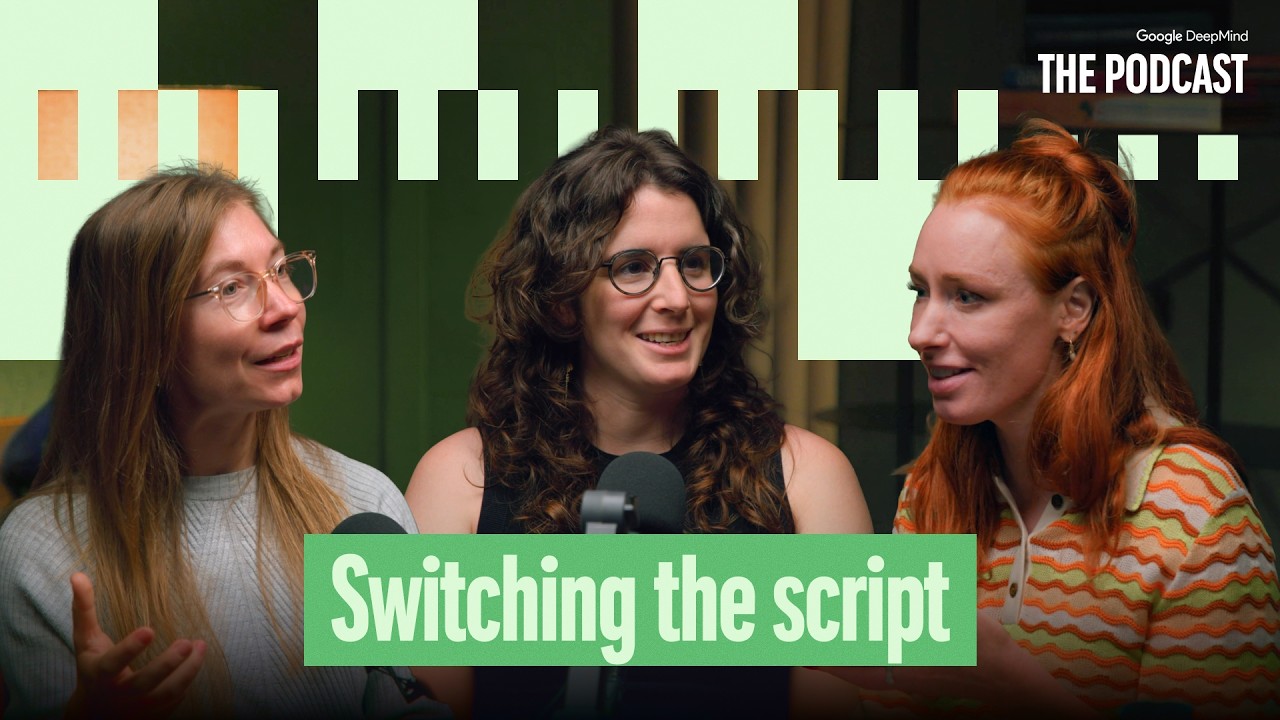
The brain helped us build AI. Now AI is explaining the brain.
Keywords
Summary
263 words
Critical Evaluation
Value of the Information & Strength of the Argument
The informational value is high for a general-audience science podcast, because the guest describes an actual research programme rather than a diffuse field overview. Concrete anchors are provided: the restaurant analogy, the four-option drifting-payoff task, the 0-to-1 fit index with 25% chance level, the comparison between a hand-built model and a neural network reaching about 68% choice prediction, and the final identification of two missing ingredients — context-dependent valuation of outcomes and a memory representation richer than one scalar per option. The argumentation is unusually honest for the format: a null result is reported and interpreted rather than buried, and the researchers explicitly describe their surprise and their initial suspicion of a coding error. The reasoning structure is set out clearly — establish a lower bound (interpretable but weak), establish an upper bound (predictive but opaque), then search the space between by relaxing assumptions one at a time. The self-critical remarks on the sociology of the field (‘graduate student descent’, the accumulation of ad hoc amendments to Q-learning) are a genuine epistemic contribution, as is the admission that current methods cannot deliver a description that is simultaneously high-fidelity and comprehensible. The main weakness is evidential: percentages, effect sizes, sample sizes and model-comparison statistics are all absent, so the listener cannot gauge how decisive the reported improvements are, and the hybrid-model results are described only qualitatively before the transcript ends. The vocabulary is accurate throughout — reward prediction error, model-based reinforcement learning, meta-reinforcement learning, universal function approximators, mechanistic interpretability — which gives the episode real conceptual density despite its conversational register.
Scientific Rigor, Source Quality, Title Accuracy
On scientific rigour, the episode is credible: the speakers are identified as senior research scientists in the relevant team, they repeatedly distinguish between a model that predicts and a model that explains, and they flag open problems rather than overselling. Claims about classical reinforcement learning, dopamine-related reward prediction error, bandit tasks and meta-reinforcement learning are stated at a level consistent with the established literature, and the negative result is reported as such. On sources, however, the episode is thin: the description contains no bibliographic reference at all, the link provided points to a corporate social-media page rather than to a study, and the paper discussed is never titled, dated, or given a DOI. Named collaborators and literatures (model-based reinforcement learning, working and episodic memory, mechanistic interpretability of language models) are invoked without citation, so a listener cannot verify any single claim. No external source contradicts the content, but the absence of traceable references caps the verifiability of the whole. On title/content fit, the title accurately announces the reversal thesis that organises the discussion, and the chapter markers match the substance of each segment; no discrepancy worth flagging.
462 words
Title / Content Match
The title is fully consistent with the content: the discussion explicitly frames the historical reversal from brain-inspired AI to AI-as-a-tool-for-neuroscience, and that inversion structures the whole episode.
Quality & Reliability
8/10
The episode features two senior research scientists from Google DeepMind's neuroscience team describing their own published work, and the methodological narrative is coherent and internally consistent: a baseline model, an upper-bound black-box benchmark, then a progressive relaxation of assumptions. Claims about reinforcement learning, reward prediction error, meta-learning and bandit tasks are standard and correctly presented. The main limits are the absence of any citable reference (no paper, preprint, DOI or dataset is linked in the description), the interview format that prevents any numerical detail from being checked, and the fact that the final results are described qualitatively rather than quantified.
Chapters
Concurring Sources
- Q-learning — Wikipedia — Provides the formal definition of the algorithm used as the baseline model and of the reward prediction error update rule described in the episode.
- Reinforcement learning — Wikipedia — Confirms the standard framing of model-free versus model-based reinforcement learning invoked when the guests discuss environment tracking and broader model classes.
External References
Contribution & Novelties
The genuine novelty lies less in the individual ingredients than in their combination and in the automation of theory-building. The episode describes a shift of methodological level: rather than taking a known AI algorithm as a metaphor for a brain process, the researchers use a neural network to search for the metaphor itself, replacing hand-written update equations inside a reinforcement-learning skeleton. It also reports an instructive negative result — that the entire Q-learning family, however amended, fails to account for the behavioural data — and then uses the failure to motivate broader model classes whose successive relaxations identify which assumptions are load-bearing. The two surviving ingredients, context-dependent valuation and a substantially richer memory representation, are individually known in separate literatures but are presented as newly unified in a single account. The framing of the fidelity-versus-comprehensibility trade-off, and the explicit desire to escape it rather than accept it, is a useful articulation of what a mechanistic science of the brain is actually aiming at.
Pour aller plus loin :
- Q-learning — The baseline algorithm discussed at length, including the reward-prediction-error update rule at the heart of the episode.
- Reinforcement learning — Broader framing of the field the guests situate their work in, including model-based and model-free approaches.
- Dopamine — Background on the neurotransmitter most associated with reward prediction error, mentioned as a classical bridge between AI and neuroscience.
- Sutton & Barto, “Reinforcement Learning: An Introduction” (2nd ed., MIT Press) — The standard reference for the temporal-difference and Q-learning formalism used as the baseline model here.
- Meta-reinforcement learning and the work of Jane Wang — Cited in the episode as the prior example of using an AI algorithm as a metaphor for learning in brains.
- Mechanistic interpretability of neural networks — Named in the discussion as the parallel effort to turn low-level descriptions into human-comprehensible mechanisms.
304 words
Radar Profile
The profile is that of a technically substantive but verbally delivered research discussion: high on quality and technical level, slightly lower on quantity because numbers and experimental detail are summarised rather than tabulated, and lower still on global reliability owing to the complete absence of traceable references. Overall a strong conceptual profile weakened only by verifiability.