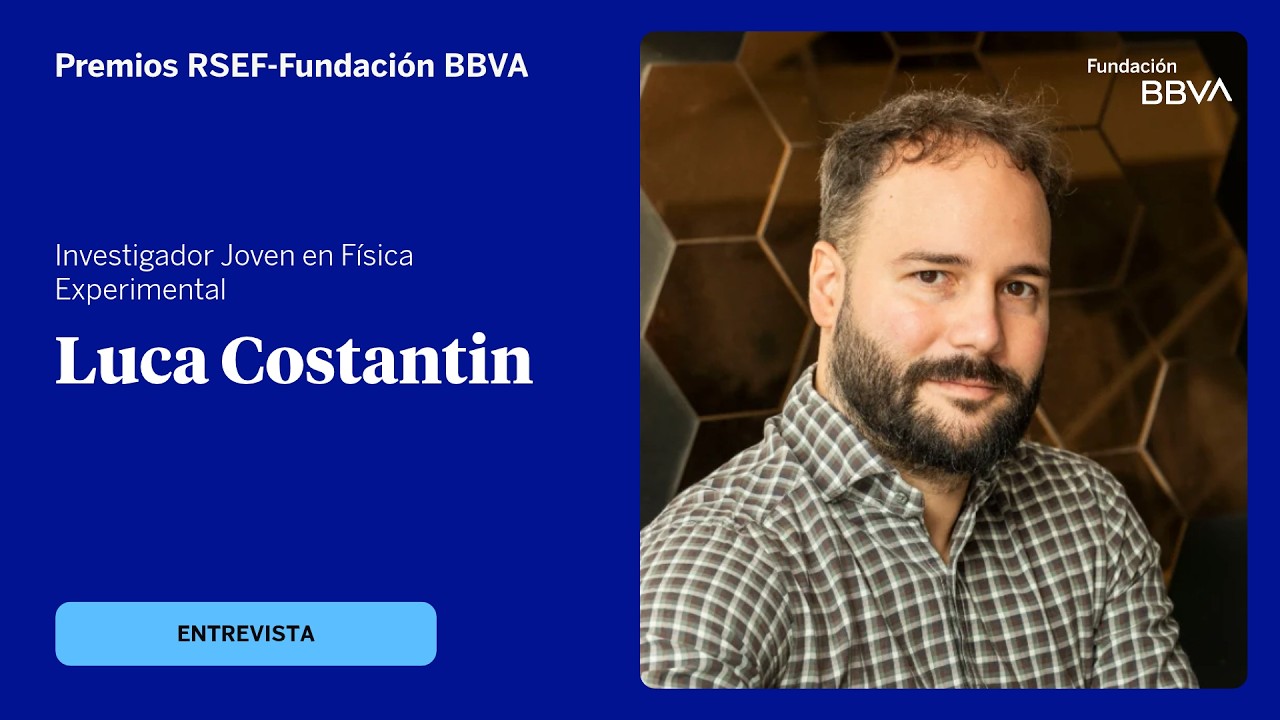
Luca Costantin: "Descubrí una galaxia lejana muy parecida a la Vía Láctea"
Title history
- Luca Costantin: "Descubrí una galaxia lejana muy parecida a la Vía Láctea" — observed on 20261120-0930 UTC (YouTube)
Keywords
Summary
158 words
Critical Evaluation
Value of the Information & Strength of the Argument
The interview provides valuable first-hand insights into the scientific process behind a significant discovery (CEERS-2112) and the instrumental developments that will shape future astronomy. Costantin’s arguments are coherent and grounded in his direct experience, effectively explaining how high-redshift galaxy observations challenge existing theoretical models. He also articulates the broader societal benefits of fundamental physics, linking it to technological innovation and public engagement. The argumentation is persuasive and scientifically sound, though not deeply technical, consistent with an interview for a general audience.
Scientific Rigor, Source Quality, Title Accuracy
The scientific content is presented rigorously, with references to well-documented projects (James Webb, WEAVE, MOSAIC) and to the 2026 RSEF-BBVA award. The sources cited in the video description (the official award announcement) support the context. The title accurately matches the core topic discussed early in the interview, and the overall presentation maintains a high level of credibility. No inconsistencies or unsubstantiated claims were detected.
160 words
Title / Content Match
The title accurately reflects the main topic: the discovery of a distant Milky Way-like galaxy, CEERS-2112.
Quality & Reliability
7/10
The interview features a leading astrophysicist discussing peer-reviewed discoveries (e.g., CEERS-2112) and upcoming instrumentation. Claims are consistent with current extragalactic astronomy knowledge, though presented in a popularized format with limited technical detail.
Key Moments
Markers derived by PSI from the transcript: the creator did not define chapters.
- Introduction to his fundamental contributions, including the discovery of a Milky Way-like galaxy at 2 billion years after the Big Bang.
- He highlights his involvement in developing next-generation instruments (WEAVE, FORS, MOSAIC).
- Discussion on the societal relevance of his research and technological spin-offs.
- Challenges in the field: connecting early and late universe observations, understanding galaxy formation.
- His scientific vocation born from curiosity.
- Motivations and difficulties in research: first observations and postdoc instability.
- Key to success: passion for the challenge and perseverance through failures.
- Assessment of physics in Spain: high-level research but insufficient investment and gender gap.
- Importance of physics and science communication for society.
- Meaning of the award: honor and motivation, shared with collaborators.
Cited Sources
- Fallados los Premios de Física RSEF-Fundación BBVA 2026 — Official announcement of the award that motivated the interview.
External References
Contribution & Novelties
The video offers a first-person account of a leading researcher on a cutting-edge discovery, providing context and personal motivation rarely found in scientific papers. It bridges technical concepts with accessible explanations, making it valuable for educational purposes. However, it does not present new scientific data for specialists.
Pour aller plus loin :
- James Webb Space Telescope — The observatory central to the discovery of CEERS-2112.
- Galaxy formation and evolution — A key concept in extragalactic astronomy, with extensive literature on high-redshift observations.
- CEERS-2112 — A specific barred galaxy at z≈3, discussed in the interview; relevant publications are available in peer-reviewed journals (e.g., Nature, 2024).
- WEAVE spectrograph — An instrument mentioned for future large-scale surveys.
114 words
Radar Profile
The profile shows moderate quantity and technical level, with higher reliability and quality. This reflects an interview that is scientifically sound but not deeply technical, suitable for a general audience.