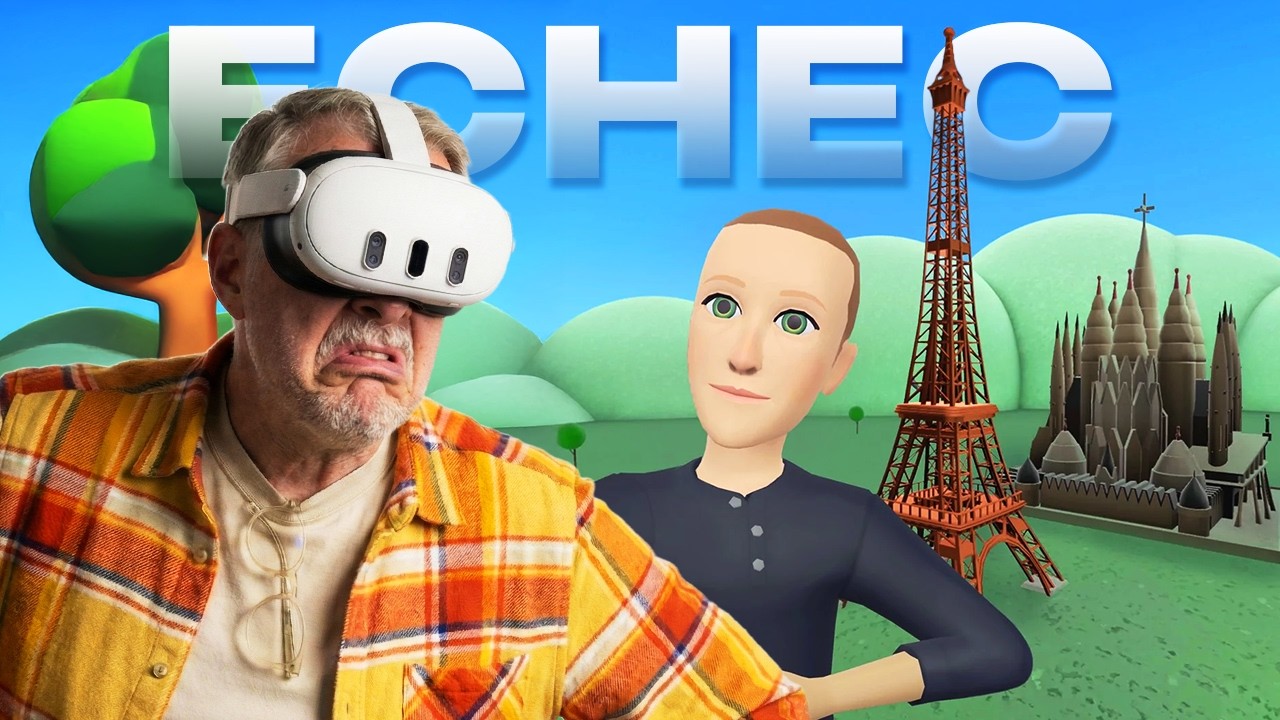
Metaverse, c'est mort ?
Is the Metaverse dead?
Title history
- Metaverse, c'est mort ? — observed on 20261101-0140 UTC (YouTube)
Keywords
Summary
130 words
Critical Evaluation
Value of the Information & Strength of the Argument
The video offers valuable insights into the strategic failures of Meta’s metaverse bet, connecting business decisions with technological limitations. The argumentation is coherent, following a chronological narrative from VR’s revival to its commercial disappointment. The creator supports claims with concrete examples (e.g., the 2 billion dollar Oculus acquisition, the 2016 journalist VR event, the rise of ChatGPT) and analyses user friction points. However, some subjective judgments (like calling the metaverse ‘ugly’ or ‘boring’) are presented as fact, and the video lacks quantitative data on user numbers or financial losses. The reasoning about Meta’s pivot to AI is plausible but simplified, ignoring broader competitive factors.
Scientific Rigor, Source Quality, Title Accuracy
The video does not cite specific academic or journalistic sources, relying instead on widely known tech history (e.g., Oculus Kickstarter, Cambridge Analytica scandal). The title’s question is answered clearly, but the content sometimes veers into opinion territory. The adéquation between title and content is strong, as the video directly addresses the metaverse’s death. The sources mentioned (e.g., Palmer Luckey, John Carmack) are credible figures, but their statements are not referenced. The only links provided in the description are to social media and Twitch, not to factual sources, which limits the ability to verify claims.
213 words
Title / Content Match
The title is a provocative question that matches the content: the video explores the rise and fall of the metaverse, concluding that it never truly materialized. The title accurately reflects the core theme.
Quality & Reliability
7/10
The video presents a well-structured narrative with historical context and recent events, but relies heavily on anecdotal evidence and personal commentary. No direct academic sources are cited, though factual claims align with widely reported tech news.
Chapters
Cited Sources
- Nowtech on Threads — Creator's social media profile mentioned in the video description, possibly for further context or promotions.
- Nowtech on Twitch — Creator's Twitch channel, referenced in the description for community engagement.
Contribution & Novelties
The video provides an engaging retrospective that synthesizes known events into a coherent story, highlighting how Meta’s obsession with the metaverse nearly failed the company and how the pivot to AI rescued it. It offers a unique perspective on the cultural barriers to VR adoption, such as the ‘dystopian’ image of VR headsets, and connects this to the success of AR glasses like Meta Ray-Ban.
Pour aller plus loin :
- Metaverse — Wikipedia overview of the concept and its history.
- Virtual reality — General background on VR technology and its applications.
- Meta Platforms — Corporate history of the company formerly known as Facebook.
103 words
Radar Profile
The radar profile shows moderate scores across quantity, quality, technical depth, and reliability, with a slight emphasis on narrative quality over technical rigor. It reflects a well-produced but lightly sourced video essay.
💬 Positive. Sur les 30 commentaires analysés, la majorité exprime un soutien à la VR et conteste la prémisse 'métavers mort', tout en complimentant la qualité de l'analyse.