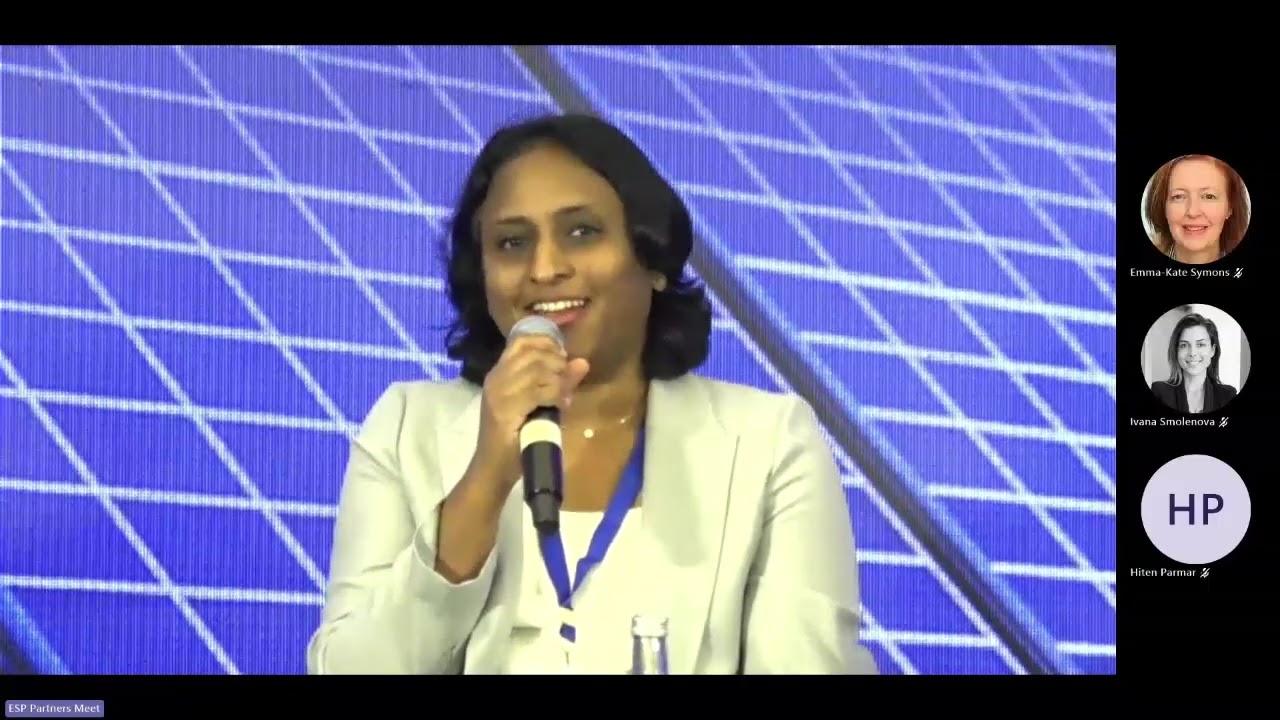
ESP Forum Day 1: Energy Storage Radar
Title history
- ESP Forum Day 1: Energy Storage Radar — observed on 20261119-1847 UTC (YouTube)
Keywords
Summary
165 words
Critical Evaluation
Value of the Information & Strength of the Argument
The discussion provides valuable insights into the practical deployment of battery storage, including integration challenges, the need for standardized turnkey solutions, and the evolving sustainability landscape. The argumentation is grounded in the speakers’ extensive professional experience, with concrete examples such as the shift to integrated containers and the impact of price drops on business cases. However, the arguments are largely qualitative and experiential, lacking systematic data or rigorous proof. The panel successfully highlights the importance of upfront studies and stakeholder alignment, but the lack of quantitative analysis weakens the overall argumentative strength.
Scientific Rigor, Source Quality, Title Accuracy
The discussion is scientifically plausible but not formally rigorous; it draws on expert opinions and anecdotal evidence rather than peer-reviewed studies. Specific sources are rarely cited; the only concrete reference is to Bloomberg for the $70/kWh price figure. The Global Battery Alliance and Faraday Institution are mentioned as organizations, but no detailed data or reports are provided. The title is apt and matches the content, though the ‘radar’ metaphor is loosely applied. Overall, the rigor is moderate, with claims needing further verification and more explicit sourcing.
193 words
Title / Content Match
The title accurately captures the session's focus on energy storage trends and insights from an ESMAP forum perspective.
Quality & Reliability
7/10
The content draws on expert experiences and insights from a World Bank ESMAP forum, but lacks explicit citations and verifiable data for most claims. Some numbers like $70/kWh are mentioned without detailed references.
Key Moments
Markers derived by PSI from the transcript: the creator did not define chapters.
- Harshal introduces the topic of integrated BESS solutions, discussing execution learnings and the vision for plug-and-play containers.
- Discussion on optimal system design versus choosing the best individual components, and the importance of grid studies and vendor validation.
- Promoda introduces the Global Battery Alliance and the Battery Passport initiative, outlining its role in supply chain transparency and sustainability.
- Panel discusses the cost implications of voluntary sustainability standards, and the readiness of top-tier suppliers to participate.
- Peter highlights the dramatic price drop of lithium-ion batteries to below $70/kWh, and its transformative impact on business cases, especially replacing diesel in remote areas.
Cited Sources
- Global Battery Alliance — Promoda represents GBA and discusses the Battery Passport and sustainability initiatives.
- Faraday Institution — Mentioned as a research institution collaborating with GBA in the battery supply chain.
Contribution & Novelties
This session provides a first-hand overview of current industry thinking on BESS integration, sustainability frameworks, and cost trends. The original contribution lies in the practical perspective of practitioners and the introduction of the Battery Passport as a solution to supply chain traceability. It also highlights the transformative price drops and their implications for developing countries.
Pour aller plus loin :
- Global Battery Alliance — Official site for battery supply chain sustainability and the Battery Passport initiative.
- Lithium-ion battery — Foundational technology reference.
- Digital product passport — Concept behind the Battery Passport, explaining its regulatory and industrial context.
97 words
Radar Profile
The radar profile shows high information quantity and moderate technical depth, indicating a broad, informative discussion with limited formal analysis. Reliability is above average due to expert input, but the lack of explicit citations balances the score.