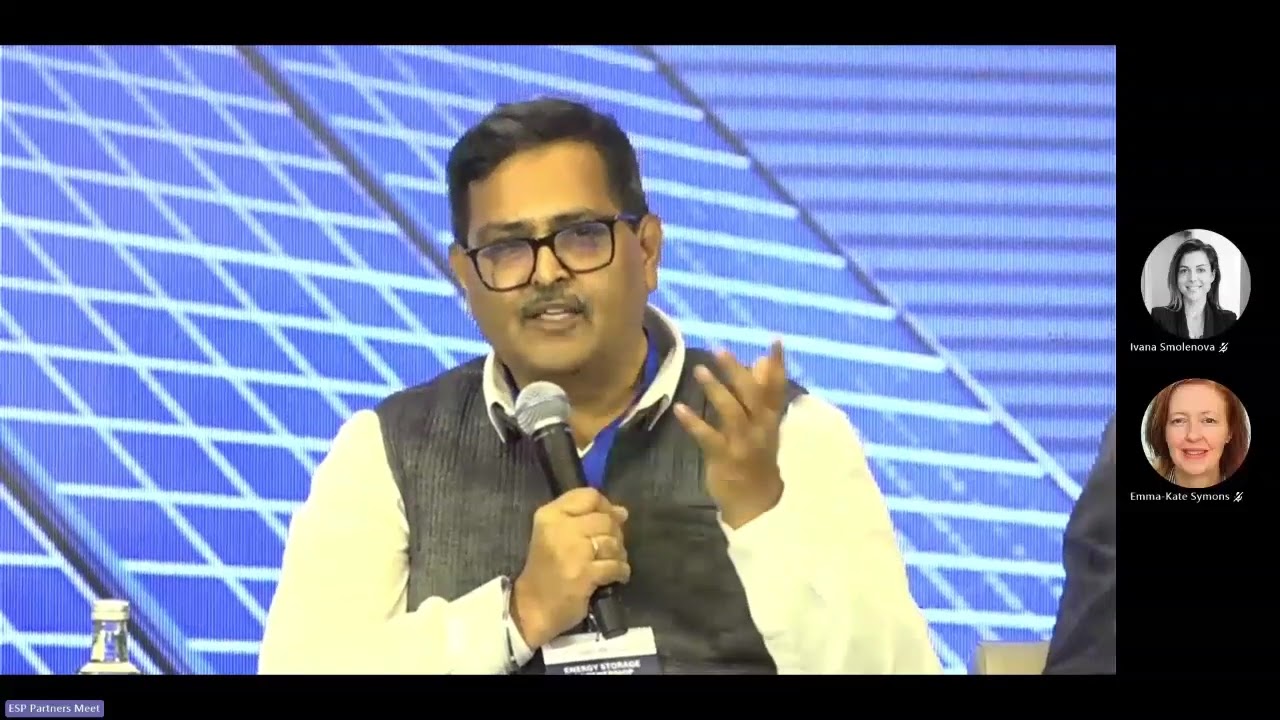
ESP Forum Day 1: Valuing Storage Services
Title history
- ESP Forum Day 1: Valuing Storage Services — observed on 20261119-1825 UTC (YouTube)
Keywords
Summary
220 words
Critical Evaluation
Value of the Information & Strength of the Argument
The video provides valuable insights into the complexities of valuing energy storage in the context of India’s rapidly evolving power system. The panel effectively argues that the focus on cost has overshadowed the multiple value streams that storage offers, such as energy arbitrage, ancillary services, and capacity provision. The argumentation is solid, grounded in practical examples like the peak demand crossing 270 GW and the presence of curtailment during solar hours. The distinction between value creation and revenue capture is well articulated, and the discussion on market design flaws, such as static PPAs and lack of time-differentiated pricing, is compelling. However, the conversation is often high-level and lacks quantitative analysis or case studies. The panelists offer opinions and identify problems but do not propose detailed solutions. The value lies in bringing together different perspectives—policy, market design, and developer—to paint a comprehensive picture of the challenges and opportunities for storage valuation.
Scientific Rigor, Source Quality, Title Accuracy
The rigor is moderate. The panelists are clearly knowledgeable, referencing specific regulatory frameworks like CERC’s staff paper on capacity markets, resource adequacy regulations, and ancillary service pilots. However, they do not cite specific studies or provide data sources, and some claims (e.g., ‘4.5 to 5 rupees of energy arbitrage’) are presented without references. The discussion is more experiential than evidence-based. The title is accurate, as the entire session is dedicated to valuing storage services, and the content matches the promise. There is no discrepancy between the title and the content.
255 words
Title / Content Match
The title accurately reflects the content, which focuses on the valuation of storage services, including revenue streams, market design, and policy.
Quality & Reliability
7/10
The discussion features credible experts from India's energy sector, providing insights on regulatory and market frameworks. However, no sources or data are explicitly cited, and it is a conversational format rather than a structured analysis.
Key Moments
Markers derived by PSI from the transcript: the creator did not define chapters.
- Introduction by moderator, framing the session around the value of battery storage versus cost.
- Ajit discusses India's peak demand challenges, curtailment, and the potential for energy arbitrage.
- Rahul argues for rethinking PPAs, moving to time-of-day pricing, and the need for market design changes.
- Ajit answers on storage sizing and location, emphasizing integrated resource planning and the need to monetize non-energy services.
- Rashi provides a developer's perspective on PPA constraints, warranty issues, and the need for distributed storage.
- Q&A segment and closing remarks on the gap between value and revenue, and future policy directions.
Contribution & Novelties
This panel discussion provides a nuanced exploration of the gap between the cost and value of energy storage, particularly in the Indian context. It brings together regulatory, market design, and developer perspectives, highlighting concrete barriers such as PPA constraints and the lack of monetization for ancillary services. The discussion calls for a shift from cost-based procurement to value-based frameworks, and emphasizes the need for granular pricing and integrated resource planning. For viewers, it offers a clear mapping of the revenue streams and regulatory levers that could enable storage to capture its full system value.
Pour aller plus loin :
- Capacity market — A mechanism to ensure resource adequacy, key to enabling storage value.
- Resource adequacy — Regulatory concept central to India’s planning, as mentioned by the panel.
- Ancillary services — Services like frequency regulation and inertia support that storage can provide, but are not yet fully monetized.
147 words
Radar Profile
The radar profile shows high scores in quantity and technical level, reflecting the depth of discussion on market and regulatory issues. Quality and reliability are moderate, as the content is expert opinion without clear citations. The profile indicates a video that is dense and informative but relies on conversational evidence rather than formal data.