Why Is Art So Expensive?
Keywords
Summary
150 words
Critical Evaluation
Value of the Information & Strength of the Argument
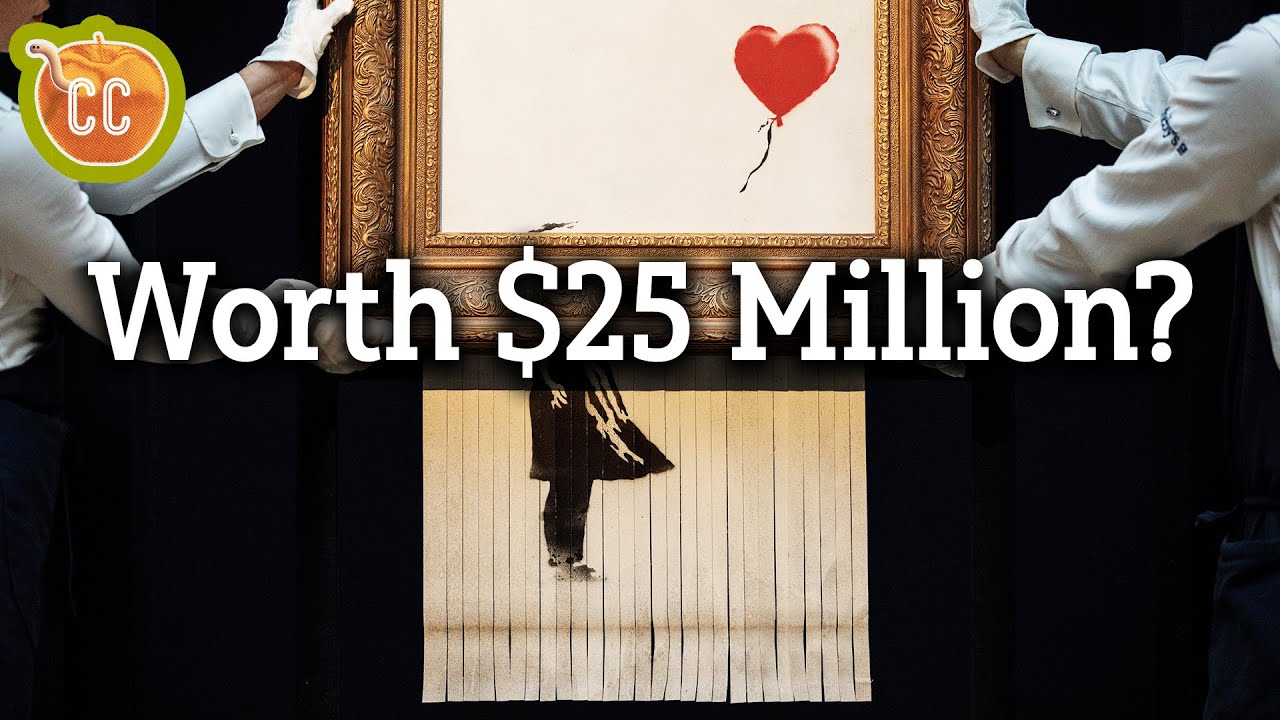
The video offers valuable historical and economic insights into the art market, effectively connecting patronage systems, the rise of free-market sales, and contemporary auction dynamics. The argumentation is coherent and well-structured, using specific examples such as the Salvator Mundi provenance case and Banksy’s self-destructing artwork to illustrate key points. However, the treatment of complex issues like colonialism and restitution is somewhat oversimplified, and the video could have delved deeper into the ethical debates. Overall, the value lies in its accessible synthesis, making dense topics understandable to a general audience.
Scientific Rigor, Source Quality, Title Accuracy
The scientific rigor is generally strong for an educational video; the content aligns with established art historical scholarship and includes a source document in the description for further reference. The video does not explicitly cite academic papers but relies on well-documented historical episodes and contemporary art market events. The title accurately encapsulates the central question, and the content stays on-topic throughout. While the treatment of certain debates (e.g., the authenticity of Salvator Mundi) is presented in a balanced manner, the brevity limits a full critical analysis, but this is acceptable for an introductory educational piece.
199 words
Title / Content Match
The title accurately reflects the content, which explores the historical and economic factors behind high art prices.
Quality & Reliability
9/10
The video provides a well-researched overview of the art market, citing historical examples and referencing contemporary critiques, while maintaining an accessible tone.
Key Moments
Markers derived by PSI from the transcript: the creator did not define chapters.
- Introduction: Million-dollar paintings and the question of value
- Patronage system in 15th-century Italy and artist dependence
- Emergence of the free market in the Dutch Republic and art dealers
- Appraisal and the case of Salvator Mundi's changing value
- Colonialism, stolen artworks, and provenance challenges
- The gallery industrial complex and critiques by CB Hoyo and Banksy
- Review and credits
Cited Sources
- Sources Document for Crash Course Art History Episode 19 — The video description links to a document with detailed sources and references for the episode.
- Image Descriptions for the Video — Provides image descriptions for accessibility, as mentioned in the description.
External References
Contribution & Novelties
The video synthesizes historical and contemporary art market practices into a concise narrative, making complex topics accessible to a broad audience. Its contribution lies in connecting historical patronage to modern auction practices and highlighting critiques from artists like Banksy. The inclusion of the Salvator Mundi case effectively illustrates how provenance and perceived authorship drive value, while the Maori statue example sheds light on colonial legacies.
Pour aller plus loin :
- Art market - Wikipedia — Provides a comprehensive overview of the economic aspects of art trading.
- Provenance - Wikipedia — Explores the concept of artwork history and its role in determining value.
- Salvator Mundi (Leonardo) - Wikipedia — Details the painting’s journey and controversies, relevant to the video’s case study.
120 words
Radar Profile
The radar profile shows high scores in information quantity and quality, with moderate technical depth, reflecting an accessible yet substantive educational video. The reliability score is strong, indicating trustworthy content, while the overall note aligns with a high-quality resource for introductory understanding.