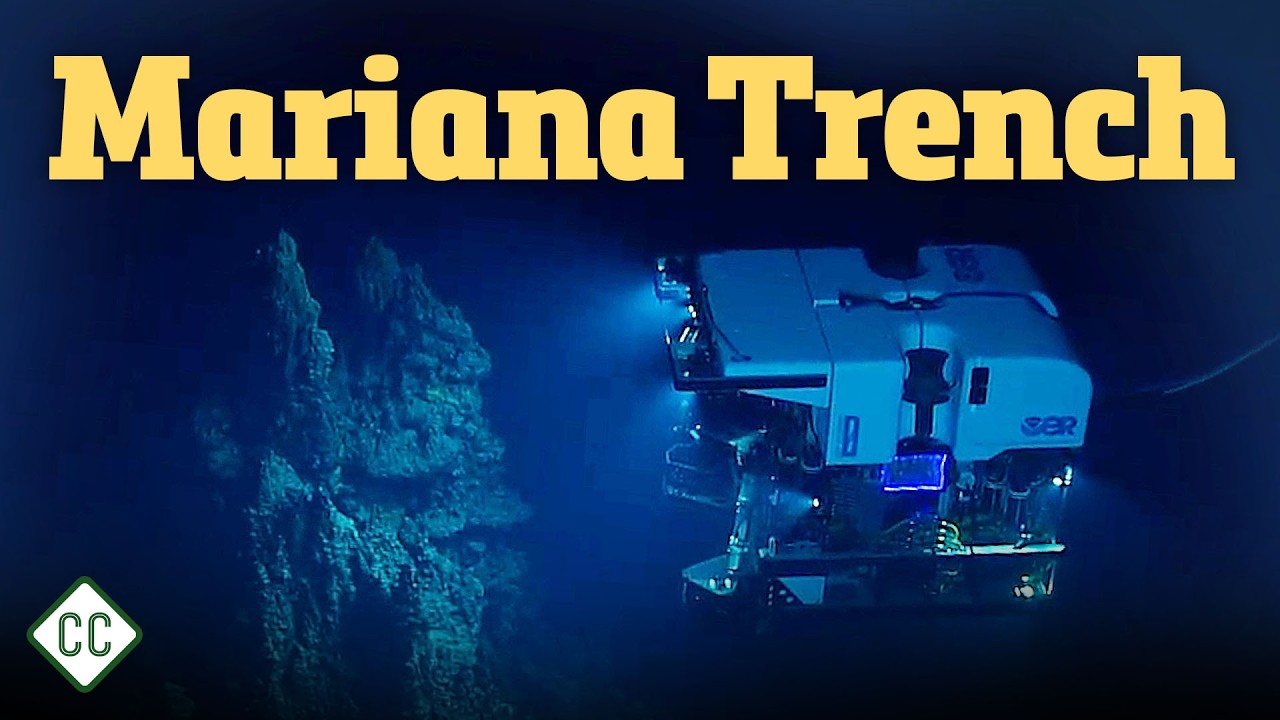
The Deepest Point in the World: Crash Course Geology #12
Keywords
Summary
140 words
Critical Evaluation
Value of the Information & Strength of the Argument
The video provides a solid overview of marine geology, effectively connecting plate tectonics to seafloor features like vents and trenches. It argues the importance of the ocean for Earth’s climate and life, citing specific examples such as the Panama Isthmus effect and deep-sea ecosystems. The argumentation is clear and logically structured, using relatable analogies (e.g., Dwayne the camera) to explain complex processes. The value lies in its accessibility and ability to synthesize multiple concepts without oversimplifying. It also correctly acknowledges uncertainties in depth measurements and mapping coverage, enhancing its credibility.
Scientific Rigor, Source Quality, Title Accuracy
The scientific rigor is high: the video cites a sources document in the description and uses reputable scientific data (e.g., 2020 submersible dives for Challenger Deep depth). It distinguishes between established facts and hypotheses (e.g., life origin at vents). The title aptly reflects the main focus on the deepest point while covering broader marine geology. The content aligns with standard geological knowledge and includes current data (as of 2024/2026). The lack of visible commercial ads or sponsorships in the provided description indicates no conflict of interest. However, the depth of each topic is limited due to the short format, but this is expected for an introductory educational series.
213 words
Title / Content Match
The title accurately reflects the content, which focuses on the deepest point (Challenger Deep) but extends to broader ocean floor geology.
Quality & Reliability
8/10
The video relies on established geological and oceanographic knowledge, references a source document, and is produced by CrashCourse, known for educational reliability. It includes specific details (depth measurements, dates) and clearly states current uncertainties.
Key Moments
Markers derived by PSI from the transcript: the creator did not define chapters.
- Introduction to deep sea life and the ocean's significance.
- Overview of oceanography and the HMS Challenger expedition.
- Explanation of the ocean floor: continental shelf, slope, rise, and abyssal plain.
- Formation of hydrothermal vents and deep sea trenches, including Challenger Deep.
- Discussion of ocean currents, their drivers, and effects on climate and nutrients.
- Review of key points and credits.
Cited Sources
- Crash Course Geology #12 - Sources document — Referenced in the video description as the primary list of sources for this episode.
Concurring Sources
- NOAA Ocean Explorer - Mariana Trench — Supports the depth and geological features discussed in the video.
- USGS - Plate Tectonics and Seafloor Spreading — Confirms the role of plate tectonics in forming mid-ocean ridges and vents.
External References
Contribution & Novelties
The video provides a concise, engaging introduction to marine geology, connecting physical geological processes (plate tectonics, bathymetry) with biological ecosystems (chemosynthesis, deep-sea life) and global climate systems (currents, carbon sink). Its originality lies in presenting this interconnectedness in an accessible format, using a narrative character (Dwayne) to guide the viewer through the seafloor. It also highlights current knowledge gaps, such as the limited mapping of the ocean floor.
Pour aller plus loin :
- Mariana Trench — Overview of the deepest point, its exploration, and geological significance.
- Hydrothermal vent — Detailed explanation of vent formation, ecosystems, and implications for life origins.
- Ocean current — Comprehensive information on types, driving forces, and global impacts.
112 words
Radar Profile
The radar profile shows balanced scores with slightly higher reliability and information quality relative to technical depth, reflecting the video's accessible yet factually solid approach. The moderate quantity of information is appropriate for its duration.