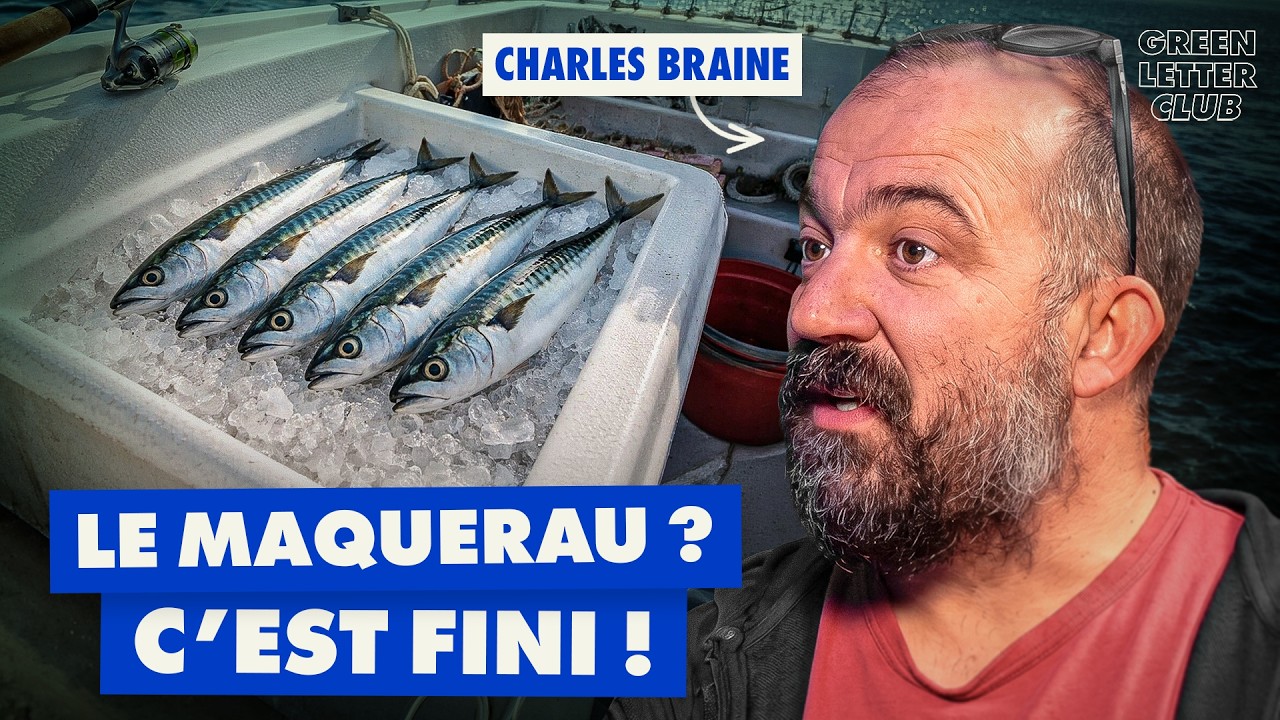
Pourquoi la pêche artisanale s'effondre ?
Why is small-scale fishing collapsing?
Keywords
Summary
223 words
Critical Evaluation
Value of the Information & Strength of the Argument
The informational value is high, grounded in the guest’s dual expertise as both a trained fisheries scientist and a practicing artisanal fisherman. The video provides vivid, concrete contrasts — 100 kg versus 100 tonnes per day, 0.70 €/kg versus 6.50–7 €/kg, an 88-meter trawler versus a 6.30-meter boat — that make abstract policy issues tangible. The causal argumentation is well structured: industrial overfishing combined with climate-driven mackerel migration and diplomatic failures over quota allocation leads to stock collapse, and the burden falls on small boats that cannot relocate or diversify. The guest is honest about uncertainties (e.g., what happens on board industrial vessels, total bycatch figures). However, the presentation is clearly advocacy-based: the guest is president of the Pleine Mer association, and the framing consistently paints industrial fishing as the villain and artisanal fishing as the solution. Some claims (e.g., that industrial vessels reallocate quotas after stocks recover, as with bluefin tuna) are asserted without on-screen evidence, and the employment ratio figures are attributed to a report by Didier Gascuel but not shown. Overall, the argumentation is coherent and compelling, though it would benefit from more systematic references to studies and catch data.
Scientific Rigor, Source Quality, Title Accuracy
The guest’s scientific credentials are solid — engineering training, a degree in halieutics (fisheries science), and prior experience as WWF’s sustainable fisheries lead — lending strong authority to the technical explanations of quotas, licenses, and fisheries management. The video mentions specific scientific warnings (e.g., scientists recommending a 70% cut in mackerel catches) and names concrete actors (France Pélagique, the Scombrus and Prince Bernard vessels), which enhances credibility. However, the productivity of sources is limited: no studies, reports, or documents are shown on screen, no citations appear in the video description (only a donation link), and all quantitative claims rest on the guest’s oral testimony. The attribution of the ‘10 times more employment’ figure to Didier Gascuel is verbal with no reference displayed. The title accurately matches the content. The video has an openly normative/advocacy angle, which is acknowledged rather than hidden, but it means the information is presented from a committed perspective rather than a neutral one.
365 words
Title / Content Match
The title accurately reflects the content: the video explains the collapse of artisanal fishing through industrial competition, mackerel stock decline, quota systems, and lobbying.
Quality & Reliability
7/10
The video features a highly qualified guest (fisheries scientist, former WWF officer, and practicing artisanal fisherman) and cites concrete data and scientific warnings. However, most claims rely on personal testimony rather than on-screen documents, and the guest holds a clearly advocacy-oriented position as president of an association promoting sustainable fishing.
Chapters
- Introduction
- Pêche industrielle vs pêche artisanale : quelle différence ?
- Les prises accessoires
- Le scombrus : l'exemple d'un mégachalutier
- Le maquereau s'effondre
- "J'ai mis mon bateau en vente"
- Quotas & licences : comment fonctionnent la pêche en France ?
- Le "pic de poisson"
- Le quota par bateau
- Les licences
- Les comités des pêches
- La folklorisation de la pêche
- Omerta ?
- Les subventions publiques & les subventions
- Les mesures à prendre ?
Contribution & Novelties
The video’s original contribution lies in combining an insider’s field experience (a working artisanal fisherman) with scientific and regulatory expertise to explain a concrete collapse: the mackerel stock crisis in the Northeast Atlantic. It offers a rare, detailed look at how French quotas and licences actually function on the water, how industrial vessels operate under the same flag while landing and exporting abroad, and how climate change interacts with political quota negotiations. The concrete economic comparisons (price per kilo, jobs per tonne) bring a useful, if partisan, analytical lens to the debate.
Pour aller plus loin :
- Common Fisheries Policy — The EU regulatory framework that sets quotas and catch limits, central to the video’s discussion of quota allocations.
- Overfishing — Core concept of industrial stock depletion, directly illustrated by the mackerel case.
- Bycatch — Unintended catch of non-target species, discussed in the video’s section on prises accessoires.
- Atlantic mackerel — The species at the center of the collapse narrative and quota disputes.
163 words
Radar Profile
The radar profile shows strong scores in information quantity and quality, reflecting a dense, well-structured 82-minute interview with a highly knowledgeable guest. The technical level is moderate-strong, with detailed yet accessible explanations of fisheries regulations. The reliability score is slightly lower, reflecting the advocacy stance and the absence of verifiable on-screen sources or citations in the description.