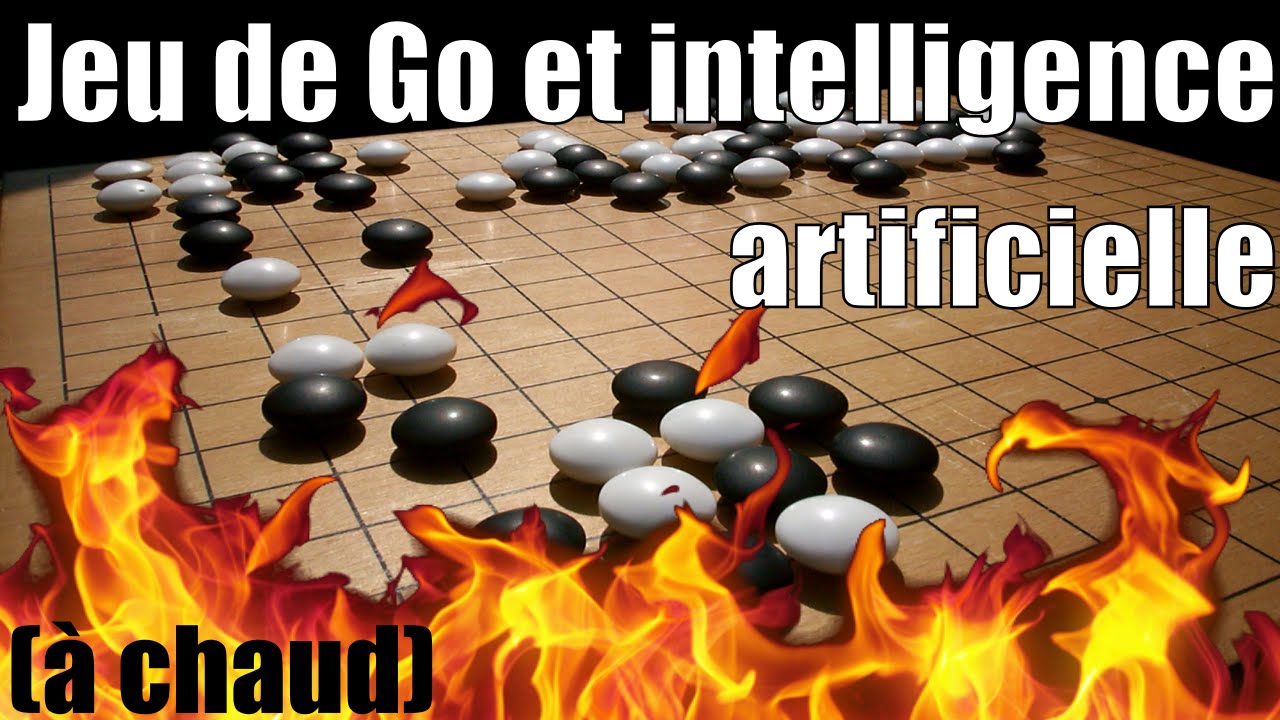
Jeu de go et intelligence artificielle — À chaud ! #2
Go game and artificial intelligence — Hot take! #2
Title history
- Jeu de go et intelligence artificielle — À chaud ! #2 — observed on 20261019-0425 UTC (PSI archive)
Keywords
Summary
139 words
Critical Evaluation
Value of the Information & Strength of the Argument
The video delivers high value by demystifying a complex AI milestone in an accessible yet precise way. It builds a solid argument rooted in the key differences between chess and Go: the branching factor and the absence of a straightforward evaluation function. The explanation of AlphaGo’s use of deep neural networks and tree search is clear and technically sound, supported by the citation of the Nature paper. The narrative flows logically, from the problem to the solution, and convincingly justifies why the victory was surprising.
Scientific Rigor, Source Quality, Title Accuracy
The video demonstrates strong scientific rigor by referencing the peer-reviewed Nature paper by Silver et al. (2016) and accurately explaining its key contributions. No unsubstantiated claims were made; the description links directly to the paper. The title ‘Jeu de go et intelligence artificielle — À chaud ! #2’ precisely matches the content, which is a topical commentary on the Go AI match. Based on the 30 comments analyzed, the audience overwhelmingly praises the clarity, educational value, and the one-take presentation, with some offering additional game-specific insights but no criticisms of the factual content.
193 words
Title / Content Match
The title accurately reflects the content, as the video is a reaction to AlphaGo's victory explaining the significance and technology behind it.
Quality & Reliability
8/10
The video provides a clear and accurate explanation of AlphaGo's workings based on the Nature paper, with no evident factual errors.
Key Moments
Markers derived by PSI from the transcript: the creator did not define chapters.
- Announcement of AlphaGo's victory over Lee Sedol
- Explanation of Go rules and board layout
- Comparison of tree search in chess versus Go
- Discussion on branching factor and complexity
- The problem of evaluating Go positions
- Description of AlphaGo's neural network architecture
- Implications for AI and concluding remarks
Cited Sources
- Mastering the game of Go with deep neural networks and tree search (Nature 2016) — The video explicitly refers to this Nature paper as the source for AlphaGo's methodology, describing its use of deep neural networks and tree search.
Concurring Sources
- Mastering the game of Go with deep neural networks and tree search (Nature 2016) — The video's explanation of AlphaGo's architecture directly aligns with the findings presented in this peer-reviewed paper, which is cited as the primary source.
Contribution & Novelties
The video’s original contribution lies in its concise, accessible synthesis of why Go was a greater challenge for AI than chess, explaining the core technical hurdles and how AlphaGo overcame them using deep learning and tree search. It effectively bridges the gap between specialist literature and public understanding, making a complex AI breakthrough understandable without oversimplifying.
Pour aller plus loin :
- Monte Carlo tree search — The core search algorithm used by AlphaGo, directly relevant to understanding its decision-making process.
- Deep learning — The basis of the neural networks employed in AlphaGo’s policy and value networks.
- Reinforcement learning — The self-play training method that enabled AlphaGo to improve beyond human expertise.
111 words
Radar Profile
The radar shows a balanced profile with high scores in information quantity and quality, reflecting the video's informative and accurate nature. The technical level is moderately high, accessible to a general audience while retaining depth. The overall reliability score is strong, indicating trustworthiness and alignment with scientific literature.
💬 très positif — Sur les 30 commentaires analysés, le public exprime une admiration unanime pour la clarté, la pédagogie et la performance de la vidéo en une seule prise, sans critique majeure.