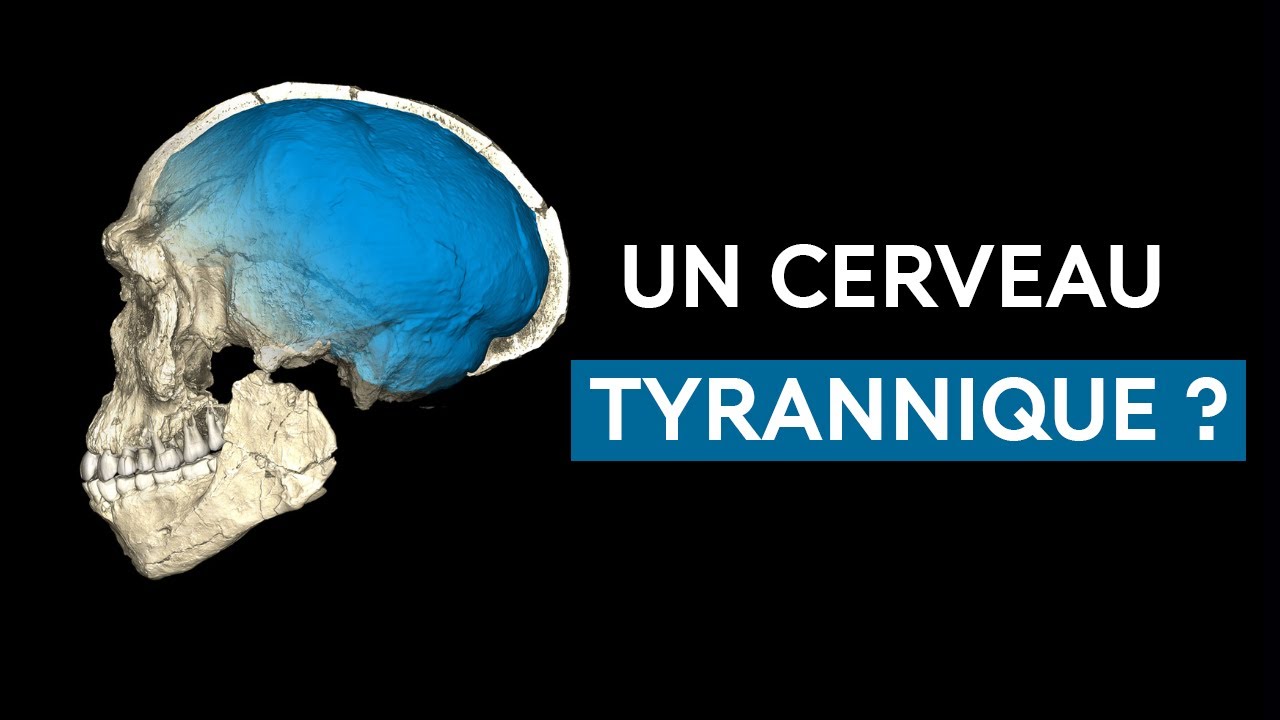
La tyrannie du cerveau : un nouveau regard sur l'évolution humaine
The Tyranny of the Brain: A New Look at Human Evolution
Keywords
Summary
132 words
Critical Evaluation
Value of the Information & Strength of the Argument
The lecture provides a compelling and well-argued synthesis of how energy constraints shaped human evolution. Hublin integrates data from comparative primatology, paleoneurology, and archaeology to build a coherent narrative. He explicitly explains the metabolic budget analogy, making the argument accessible while maintaining scientific rigor. The evidence for cooperative behavior from dental reduction is presented with caution, and he acknowledges alternative viewpoints. The discussion of female fat storage and its link to brain nourishment is a valuable insight often overlooked. Overall, the argument is solid, though some claims (e.g., the exact timing of brain expansion) are presented as more certain than the debate suggests.
Scientific Rigor, Source Quality, Title Accuracy
Hublin draws on a wide body of published research, including his own work and that of other specialists such as Ruddiman and Brown, mentioned in the Q&A session. He does not provide all references during the talk, but the institutional page (Musée de l’Homme) links to the conference and likely the book. The title accurately reflects the content: the brain’s energy demands are indeed presented as a driving force. No major discrepancy between title and content. The presentation is rigorous, though as a single-expert synthesis, it necessarily reflects the author’s perspective.
209 words
Title / Content Match
The title accurately reflects the central thesis: the brain's energy demands have driven human evolution and shaped our biology and environment. The subtitle 'a new look at human evolution' is well matched.
Quality & Reliability
8/10
The presentation is given by a renowned paleoanthropologist (Jean-Jacques Hublin), based on his recent book. It synthesizes a broad range of scientific studies in paleoanthropology, energetics, and evolutionary biology. The arguments are clearly structured and supported by specific data (brain sizes, metabolic costs, dietary shifts). The institutional context (Musée de l'Homme) adds credibility. However, it is a single-author synthesis, so some interpretations may be debated.
Key Moments
Markers derived by PSI from the transcript: the creator did not define chapters.
- Introduction: theme of the brain's tyranny and the importance of energy in human evolution.
- Comparison of brain size across mammals and humans; encephalization quotient.
- Temporal expansion of brain size in hominins over 2 million years.
- Discussion of cooperation and niche construction as key hominin traits.
- Energy costs of the brain: 20% of basal metabolism, 10 times more than other tissues.
- Adaptations to fuel the brain: increased basal metabolic rate, fat storage, dietary changes.
- Role of meat and marrow consumption, stone tools, and fire in providing dense energy.
- Reduction of digestive tract and reallocation of energy to the brain.
- Acceleration of brain growth in the last 500,000 years and implications.
- Conclusion: the tyranny of the brain continues to shape human societies and environment.
Cited Sources
- La tyrannie du cerveau - Conférence au Musée de l'Homme — Page officielle de la conférence où Hublin présente les thèses de son livre.
Concurring Sources
- Expensive tissue hypothesis (Aiello & Wheeler) — Supports the idea that brain expansion required energetic trade-offs.
Dissenting Sources
- Alternative hypotheses on canine reduction — Some commenters argue that canine reduction was due to bipedalism and tool use, not only increased cooperation.
Contribution & Novelties
Hublin’s approach is original in that it places energy metabolism at the center of human evolution, linking brain growth to a cascade of physiological and behavioral adaptations. He presents the concept of ’tyranny’ as a narrative device to explain the constraints and consequences of having a costly brain. This goes beyond classic adaptationist stories by emphasizing the feedback loops between biology and culture (niche construction). The talk also questions the future implications of this energy-hungry brain in a context of finite resources.
Pour aller plus loin :
- Niche construction — Central concept discussed in the talk to explain how species modify their environment and thus their own evolution.
- Encephalization quotient — Metric used by Hublin to compare brain size across species.
- Expensive tissue hypothesis — The idea that human brain expansion was supported by reduction of other expensive tissues (guts).
- Homo erectus — Key species in the increase of brain size discussed by Hublin.
154 words
Radar Profile
The profile is balanced with high scores in quantity and quality of information, moderate technical level, and high reliability. This reflects a comprehensive expert synthesis accessible to a educated public.
💬 Globalement très positif : sur les 30 commentaires analysés, la grande majorité exprime enthousiasme et gratitude pour la qualité de la conférence, avec quelques critiques méthodologiques et débats sur des points spécifiques.