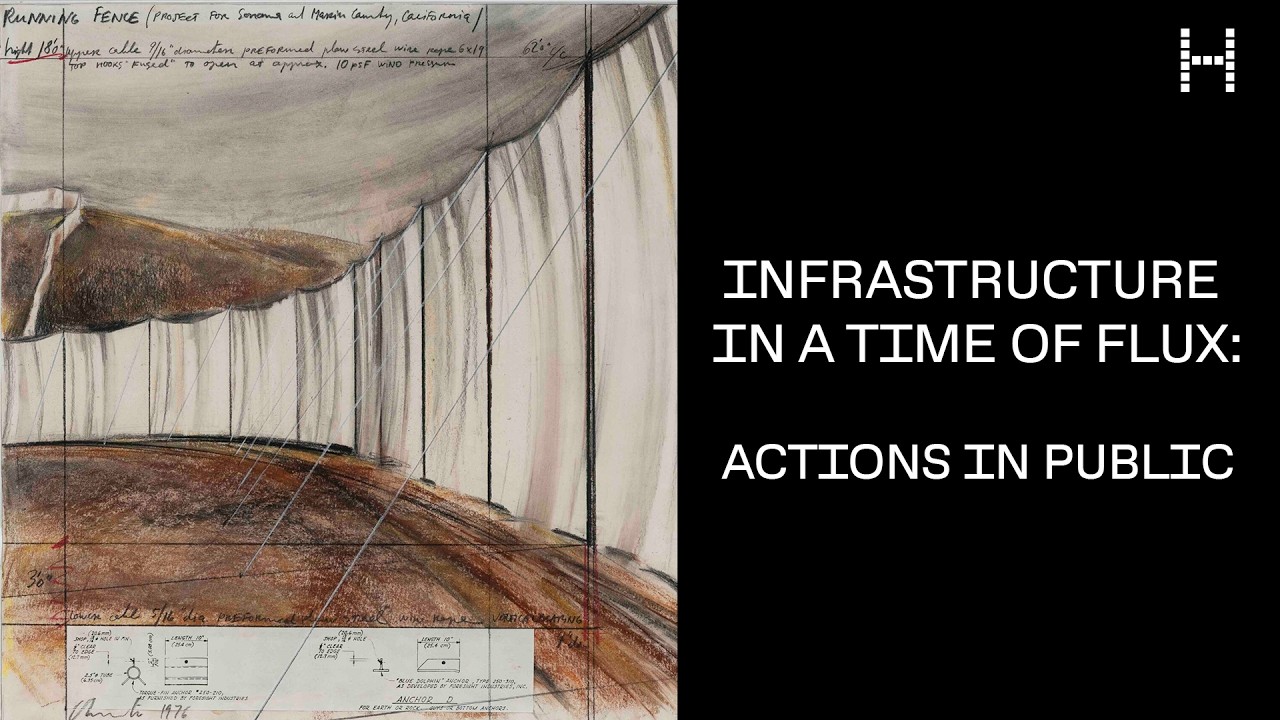
Infrastructure in a Time of Flux: Actions in Public
Keywords
Summary
143 words
Critical Evaluation
Value of the Information & Strength of the Argument
The talk provides a comprehensive overview of a critical rethinking of urban infrastructure. The argument for integrating impermanence into design is presented logically, drawing on multiple case studies and theoretical frameworks. Mehrotra’s notion of ‘reversibility’ as an epistemological category is compelling and well-illustrated. The presentation is persuasive, though some concepts may require prior knowledge.
Scientific Rigor, Source Quality, Title Accuracy
The speaker is a renowned professor and the content is based on published research and an extensive curated exhibition. The talk references specific projects and publications, but lacks direct citations of external sources. The title accurately reflects the focus on infrastructure and flux. No comments were provided, so audience feedback is not analyzed.
122 words
Title / Content Match
The title accurately reflects the content: a discussion on infrastructure under changing conditions, emphasizing impermanent and adaptive design approaches.
Quality & Reliability
8/10
The talk is delivered by Professor Rahul Mehrotra, a respected academic and curator, drawing on extensive research and a curated exhibition. The content is well-structured, coherent, and grounded in a clear theoretical framework, though it lacks direct citations to external sources.
Chapters
Cited Sources
- Running Fence (1977) documentary film — Mentioned in introduction and presentation as an example of temporary public art infrastructure.
- MAG magazine issue on tents — Curated by Rahul Mehrotra, discussed in relation to the tent as an architectural archetype.
- Mapping the Ephemeral Mega City — Book by Rahul Mehrotra on the Kumbh Mela, cited as a foundational research output.
Contribution & Novelties
The presentation advances the concept of ephemeral urbanism, challenging the traditional association of infrastructure with permanence. It offers a taxonomy of methods, conditions, and situations to analyze and design for impermanence, introducing ‘reversibility’ as a new design principle. The talk also bridges urbanism, architecture, and structural engineering, and highlights the role of art in prompting public engagement with these ideas.
Pour aller plus loin :
- Temporary urbanism — Related concept in urban planning.
- Ephemeral architecture — Design approach focused on transience.
- Kumbh Mela — Example of a large-scale ephemeral city discussed in the talk.
- Christo and Jeanne-Claude — Artists whose Running Fence illustrates temporary infrastructure.
105 words
Radar Profile
The content scores high on information quality and quantity, with moderate technical depth and high reliability, indicating a well-balanced and authoritative presentation that is accessible to a broad audience interested in urbanism.