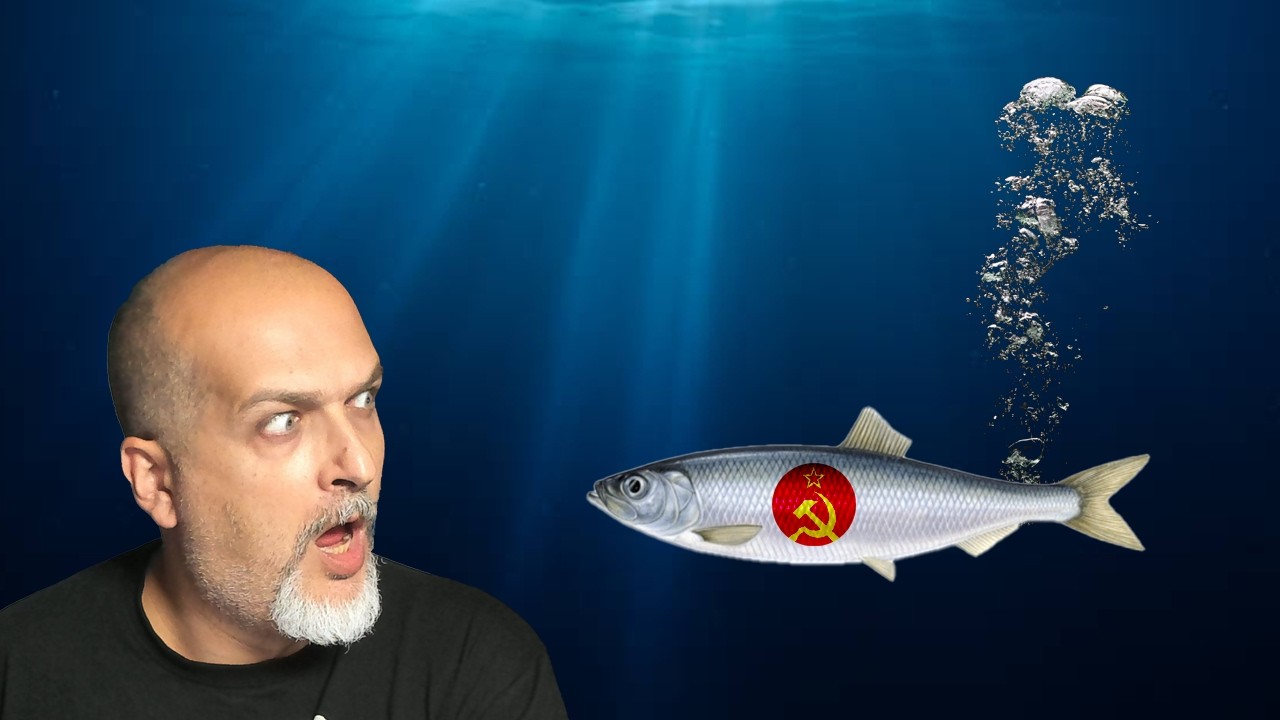
L'espion qui pétait
The spy who farted
Keywords
Summary
196 words
Critical Evaluation
Value of the Information & Strength of the Argument
The video excels in presenting the scientific process with humor and clarity, while maintaining factual accuracy. It provides specific details such as frequencies (1.7–22 kHz) and durations (0.6–7.6 seconds) of the herring signals, and describes the experimental method of squeezing dead herring to replicate the sound. The argumentation is compelling: it demonstrates how a mundane biological mechanism (flatulence) can be mistaken for espionage, and how the fear of ridicule can delay scientific publication. The presenter supports his claims by referencing real publications and documentaries, and he acknowledges the limitations of anecdotal observations while emphasizing their role in generating hypotheses. The tone is engaging, but the scientific core is treated with appropriate rigor, making the video both informative and thought-provoking.
Scientific Rigor, Source Quality, Title Accuracy
The video cites sources in the description, including the original herring study (natuurtijdschriften.nl), the duck paper (likely via PMC or the Deinsea journal), and a TED talk by Kees Moeliker. The presenter also mentions other videos on his channel for further context. While the description includes several YouTube links to his own content, the key scientific references are external and credible. The title ‘L’espion qui pétait’ is a playful pun that accurately reflects the herring story, and the content matches the title by explaining the ‘spy’ mystery was due to fish farts. The video contains a sponsorship segment at the beginning (approximately 2 minutes 28 seconds), which is clearly separated from the scientific content and does not interfere with the message. The overall rigor is high, though the presenter occasionally jokes about the subject matter, which is appropriate for a popular science audience.
277 words
Title / Content Match
The title is catchy and directly refers to the herring farting story that misled Swedish military intelligence; it accurately foreshadows the video's central anecdote.
Quality & Reliability
8/10
The video is based on real scientific publications and events, and the presenter cites specific sources in the description. The content is well-documented and presented with appropriate nuance, though some dramatization is inherent to the storytelling format.
Chapters
- Sponsor
- Introduction
- Générique
- La Suède et l'URSS
- Un réseau d'écoute révolutionnaire
- Un signal inconnu
- Coup de bol
- Une origine organique ?
- Le test du hareng
- La réponse scientifique
- Publication scientifique
- Une histoire de canard
- Les faits
- Une observation scientifique
- Etude scientifique du cas
- Publication
- Conséquences
- Conclusion
- Générique de fin
Cited Sources
- Herring sounds and FRT (Natuurtijdschriften) — Scientific paper on herring acoustics, referenced for the FRT discovery.
- Potential paper on duck necrophilia (PMC) — PubMed Central article likely related to the duck necrophilia study.
- RadioLab podcast transcript 'Red Herring' — Podcast discussing the herring fart story.
- Author's Twitch channel — Channel link in description.
- Article in ALR Journal (2003/03) — Potential source for the herring or duck research.
- Kees Moeliker TED Talk: How a dead duck changed my life — TED talk by Kees Moeliker about the necrophilic duck observation.
- YouTube video link (xQ1Jr6QqSlE) — YouTube link provided in description, possibly related content.
- YouTube video link (0YI8W0_dWR8) — YouTube link provided in description.
- YouTube video link (6XKj0BacmvA) — YouTube link provided in description.
- YouTube video link (I30ybzyWqkU) — YouTube link provided in description.
- YouTube video link (JGM1TLoy_YU) — YouTube link provided in description.
- YouTube video link (gTmiV9zMpPA) — YouTube link provided in description.
- YouTube video link (rq12cx6YfP8) — YouTube link provided in description.
Contribution & Novelties
The video’s originality lies in its compilation and accessible presentation of two underappreciated scientific anecdotes, highlighting the importance of observing and documenting unusual animal behaviors. It goes beyond simple retelling by emphasizing the methodological and sociological aspects of scientific publication, particularly the fear of ridicule that can hinder the dissemination of novel findings. The narrative effectively bridges military history, bioacoustics, and animal sexual behavior, offering a unique perspective on how scientific curiosity can illuminate seemingly absurd phenomena.
Pour aller plus loin :
- Ig Nobel Prize — This award celebrates unusual research that makes people laugh and then think, directly relevant to both herring farts and duck necrophilia.
- Bioacoustics — The study of sound in animals, which is central to the herring FRT discovery.
- Animal sexual behavior — Includes discussions of homosexual and necrophilic behaviors observed in various species, providing context for Moeliker’s observation.
143 words
Radar Profile
The radar profile shows high scores in information quantity, quality, and reliability, with a moderate technical level. This suggests the video is rich in accurate content and well-sourced, but remains accessible to a general audience. The lower technical score reflects the use of some scientific terms and concepts, but they are explained clearly.