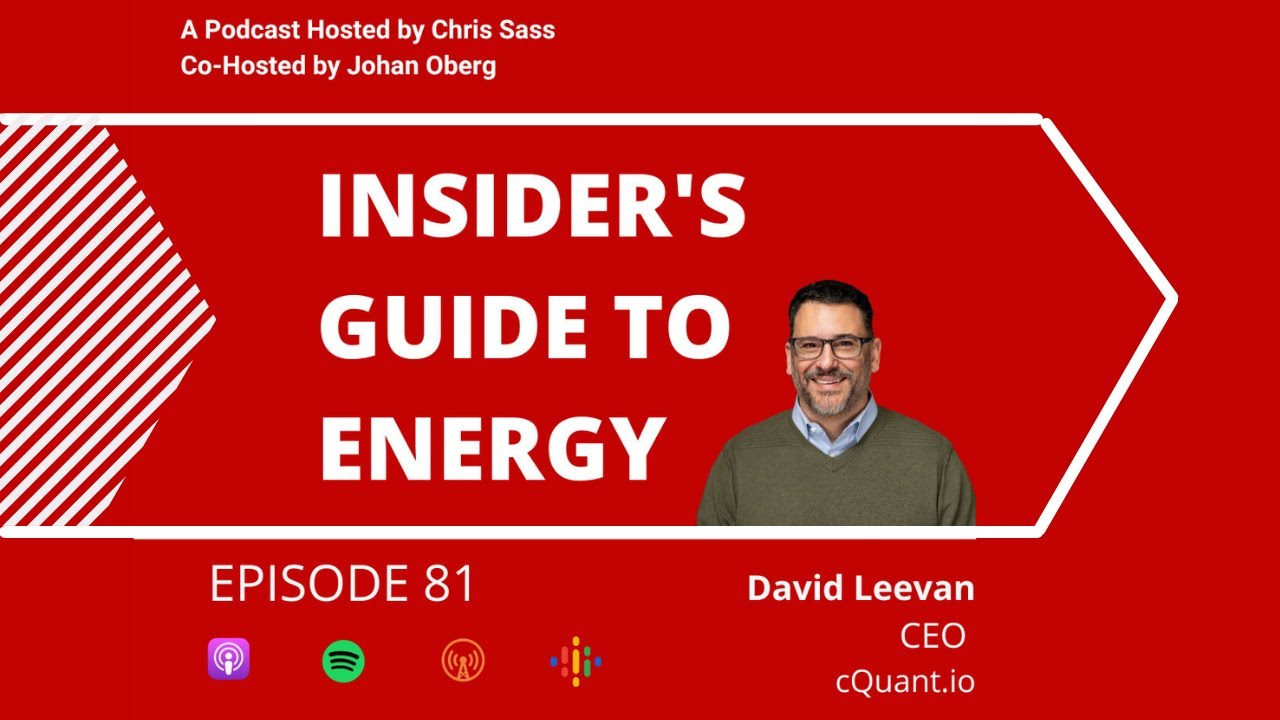
81- Energy Portfolio Management with David Leevan
Keywords
Summary
161 words
Critical Evaluation
Value of the Information & Strength of the Argument
The video provides valuable insider perspectives on the energy analytics market, especially regarding the adoption of advanced quantitative tools and the differences between regions. Leevan argues convincingly for the benefits of vendor solutions over in-house builds, citing shared improvements and scalability. He also presents a nuanced view on the energy transition, acknowledging short-term volatility while defending long-term trends. The argumentation is based on experience and specific examples, though it lacks empirical data and is promotional in nature.
Scientific Rigor, Source Quality, Title Accuracy
The title accurately describes the content, which focuses on energy portfolio management through the lens of cQuant’s founder. The primary source cited is the company’s homepage, and the discussion references the book ‘Crossing the Chasm’ without a link. The rigour is moderate: the episode is an expert opinion piece, not a scientific study, and conclusions are drawn from anecdotal evidence. The hosts ask relevant questions, but the content remains largely qualitative. The presence of a brief advertisement at the start is noted but does not detract from the substance.
181 words
Title / Content Match
Titre accurately reflects the focus on energy portfolio management and the guest's expertise.
Quality & Reliability
6/10
Interview with a domain expert providing practical insights, but promotional and anecdotal; no verifiable data or peer-reviewed references are mentioned.
Chapters
- Introduction
- cQuant’s Services
- cQuant’s Mainstream Adaptation
- Dream Scenario for cQuant
- Building the Tools That Make Energy Portfolio Management Easier
- Benefits of Vendors that Compile User Data
- The Power of Providing Customizability
- The European Go-To-Market Plan
- ESG Concerns Dropping
- cQuant’s Corporate Philosophy
- Intuitive Design for All to do Energy Analytics
- Start-up Motivation from David
Cited Sources
- cQuant.io — The company's homepage, mentioned as providing an analytic platform for energy industry challenges.
Contribution & Novelties
The episode offers first-hand insights into the operational and strategic challenges of an energy analytics startup, including the need for a mix of vendor solutions and in-house ‘secret sauce’ analytics. It highlights the European and US market differences (e.g., basis risk) and the emerging trend of portfolio management as a service. The discussion on the evolution of ESG priorities during energy crises is also original.
Pour aller plus loin :
- Crossing the Chasm – The book referenced by Leevan, explaining technology adoption lifecycle and market transitions.
- Energy transition – Context for the global shift towards cleaner energy sources and its impact on analytics.
- Portfolio optimization – A key concept in energy asset management and quantitative analytics.
116 words
Radar Profile
The profile suggests a balanced but moderate performance: information quantity is high, while technical level and reliability are moderate, reflecting the interview's practical yet promotional nature.