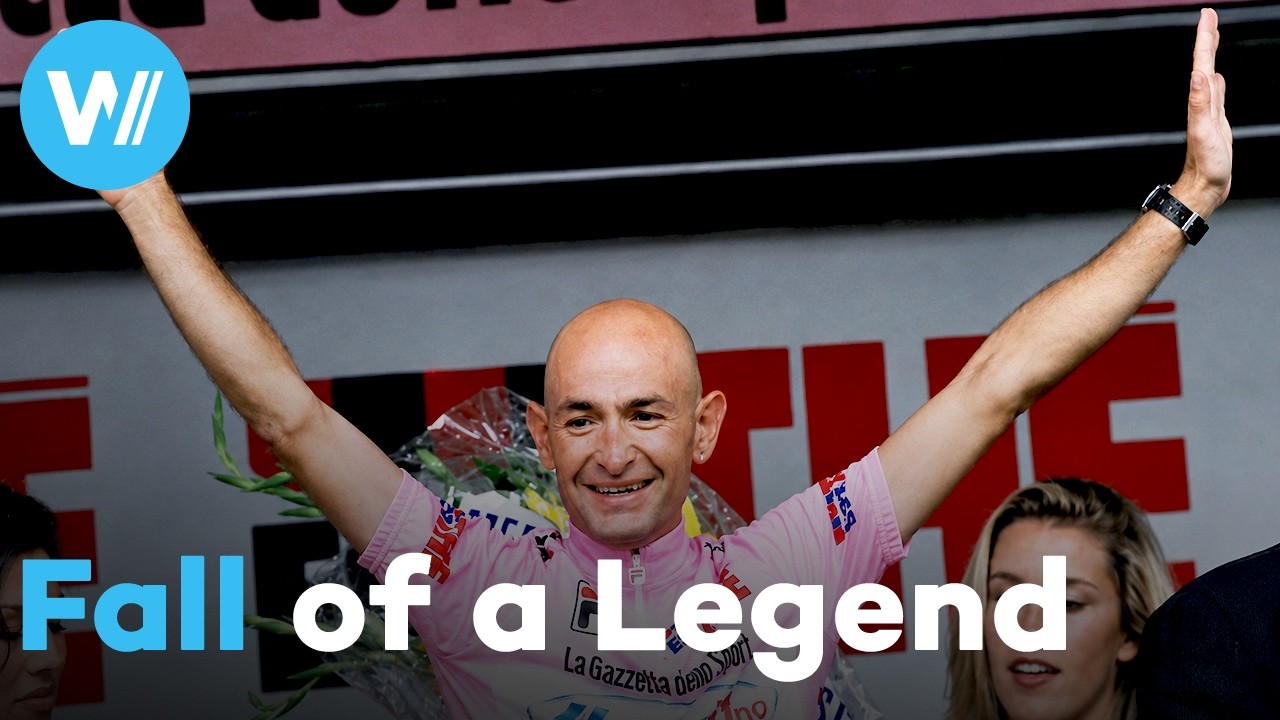
Marco Pantani: The Rise and Fall of Cycling's Greatest Climber (Documentary, 2021)
Keywords
Summary
269 words
Critical Evaluation
Value of the Information & Strength of the Argument
The informational value lies above all in the density and consistency of the direct testimony. The mother describes keeping her son’s house untouched, sleeping in his bed, and the harrowing scene at the mortuary; the brother speaks of a sibling who ‘belonged to everyone’ and of a family that fractured under the pressure; the youth coach recounts the teenage phone call in which Pantani announced he wanted to win the Giro; the lawyer and press officer reconstruct, minute by minute, the morning of Madonna di Campiglio and the silent car journey to Imola. These are cumulative, mutually corroborating accounts of the same events from different vantage points, and they give the film real documentary substance on the human and emotional record. The film also supplies useful factual scaffolding: the exact date and score of the 1999 withdrawal, the 50% haematocrit threshold, the distinction between a precautionary health suspension and a doping sanction, and the two voluntary tests performed at Imola on the evening of 5 June. The argumentative structure, however, is built on affect rather than on demonstration. Key causal claims — that Pantani was sacrificed to a wider anti-doping campaign targeting football, that betting interests dictated the outcome, that the press ’lynched’ him without evidence — are voiced by friends, his lawyer and his former press officer, and are not submitted to any adversarial examination, to documentary evidence (betting records, federation correspondence, court rulings) or to an independent expert. The film also leans on a rhetorical equivalence between ’never tested positive’ and ‘did not dope’, which is a legitimate legal point but not a physiological one; no haematologist explains how reliably a 52% value can be attributed to altitude, dehydration, natural variation or EPO, even though that is precisely the technical crux. The emotional testimony is authentic and valuable; the causal interpretation layered on top of it remains assertion.
Scientific Rigor, Source Quality, Title Accuracy
The sourcing is archival and oral rather than bibliographic. On screen the viewer gets period television news footage, newspaper front pages (notably the ‘Inebriati da Pantani’ headline contrasted with the following day’s coverage), race broadcasts, family photographs and home video. No historian, no anti-doping scientist, no UCI or CONI official and no independent journalist is interviewed, and no document is cited by reference. The film is explicitly framed as a portrait rather than an investigation — the description states it is neither a tribute nor an inquiry into the death — which sets a legitimate but limited evidentiary ambition. The most notable structural choice is that the technical explanation of the haematocrit episode is delegated to the cyclist’s own press officer and lawyer, i.e. to interested parties, without counterpoint. Several interviewees themselves lament the flood of roughly thirty to forty books written about Pantani, and one of them states that ’the truth about Marco has not yet been written’ — an admission that the film does not claim to close the evidentiary gap. On title/content adequacy: the title and thumbnail promise a rise-and-fall biography focused on his climbing, and that is exactly what the two-hour film delivers, chapter by chapter, with the 1999 crisis placed early as the dramatic hook and then resolved chronologically.
539 words
Title / Content Match
The title is faithful to the content: the film is a chronological portrait of Pantani from childhood in Cesenatico to his death in 2004, covering both the rise and the collapse after Madonna di Campiglio. The promotional wording 'greatest climber' is an editorial flourish, but the body of the film does support the sporting analysis of his climbing.
Quality & Reliability
5/10
The film rests on a substantial base of first-hand testimony (mother, brother, youth coach, lawyer, childhood friends, press officer) and on period archive footage, which gives it genuine documentary value for the biographical and affective record. However, no independent scientific or institutional voice is given a comparable platform, the haematocrit episode is explained only by a former press officer and a lawyer rather than by a haematologist or anti-doping official, and the betting-mafia / institutional-vendetta hypotheses are asserted by interviewees without being confronted with the official record. Testimonies are coherent with each other but essentially homogeneous, and the film does not distinguish on screen between established fact, eyewitness memory and interpretation.
Key Moments
Markers derived by PSI from the transcript: the creator did not define chapters.
- Opening in Cesenatico: friends film a casual doorstep visit to Pantani, singing 'Romagna Mia' — the film's intimate, non-journalistic register is set immediately.
- 5 June 1999, Madonna di Campiglio: news bulletin announcing that the pink-jersey leader did not start, with the 52% haematocrit reading given as the reason.
- Attempt to explain what haematocrit means; the press officer and lawyer argue the threshold was a precautionary health rule, not a doping finding, and that Pantani never tested positive.
- The car journey from Madonna di Campiglio to Imola, the silence, and the two voluntary blood tests returning 47.6% and 48.1%.
- Family and home: the mother describes keeping Marco's house and bedroom intact; the brother speaks of a family that broke apart after the scandal.
- Childhood and discovery of talent: friends and the first coach recall the teenage Pantani, the piadina shop, hunting and fishing with his grandfather.
- Entry into professional cycling: the move to the Fanini amateur team and the declared ambition to win the Giro d'Italia.
- The mountain comeback and the 1998 double; witnesses describe his climbing acceleration and the impact on team-mates' salaries.
- The legal battle after the 1999 Giro and the accusation that his team management left him alone and undefended.
- Death and aftermath: the brother's account of identifying the body in the mortuary, and the family's enduring sense that the circumstances remain unexplained.
Cited Sources
- The Natural. Marco Pantani — a film by Paolo Santolini — Original title and authorship credited in the video description (© 2021, licensed by Nexo Digital); the film itself is the primary object, no external bibliography is given.
- wocomoDOCS channel network pages — The description's only outbound links are to the distributor's sister channels (wocomoHISTORY, wocomoHUMANITY, wocomoWILDLIFE, wocomoTRAVEL, wocomoCOOK); these are navigation links, not documentary references.
Concurring Sources
- Marco Pantani — Wikipedia — Corroborates the chronology and the key factual anchors used by the film.
Dissenting Sources
- Doping in sport — Wikipedia — Offers the mainstream interpretation of elevated haematocrit as a strong marker of EPO use, which the film's interviewees dispute without expert support.
External References
Contribution & Novelties
The film’s originality is access rather than revelation. Santolini obtained sustained, unhurried testimony from Pantani’s mother, brother, first coach, lawyer, press officer and childhood circle, and shot much of it in Cesenatico — in the family’s piadina shop, in the house kept as it was, on the canal — so that the cyclist is re-anchored in a specific Adriatic working-class milieu rather than in the abstract iconography of the champion. The mother describes it as ’the first real film about Marco’. The result is a corrective to the two dominant framings of Pantani (unconditional hagiography and doping-tabloid indictment) in favour of a portrait of a man destroyed by an administrative decision he experienced as a moral verdict. It offers no new documentary evidence on either the 1999 affair or the death, and it explicitly declines to investigate the latter, but it does preserve a body of first-hand memory that would otherwise be lost, and it usefully restates the legal distinction between an elevated haematocrit and a doping positive.
Pour aller plus loin :
- Marco Pantani — Wikipedia — Neutral chronological reference to check the dates and results asserted in the testimony.
- Hematocrit — Wikipedia — Physiological basis for understanding why a 52% reading was contested and what factors can legitimately move the value.
- Blood doping — Wikipedia — Context on the 50% health threshold introduced in cycling at the end of the 1990s as a precautionary, non-disciplinary rule.
- UCI haematocrit rule of the late 1990s — the regulatory text itself (health protection versus anti-doping sanction) is the document the film would need to settle its central argument; cited by name as no stable public URL is guaranteed.
- Madonna di Campiglio stage of the 1999 Giro d’Italia — the specific stage and its sporting stakes, to be checked in a race-results archive rather than in press commentary.
306 words
Radar Profile
Profile of an oral-history documentary: strong on information density and narrative coherence, weak on technical depth and adversarial verification. Reliability is mid-range — abundant consistent testimony, but untested causal claims about an institutional stitch-up. Technical level is intentionally low, with the one quantitative element (the haematocrit threshold) explained in lay terms and then dropped.