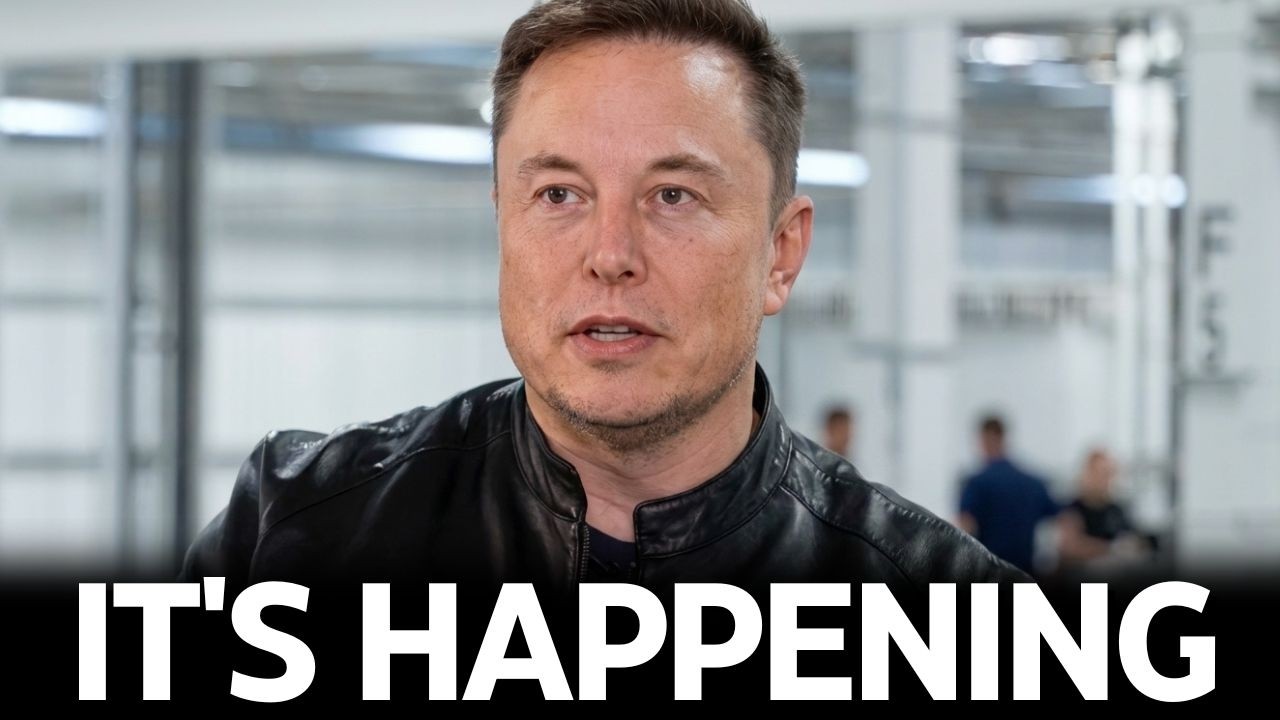
Elon Musk's Most Insightful Interview Yet
Title history
- Elon Musk's Most Insightful Interview Yet — observed on 20261110-0303 UTC (YouTube)
Keywords
Summary
132 words
Critical Evaluation
Value of the Information & Strength of the Argument
The interview provides significant value by translating abstract concepts like the Kardashev scale into concrete engineering plans. Musk’s argumentation is logical and grounded in first principles: reusability of rockets, scaling of solar power, and the need for massive compute. He justifies each step with technical details, such as the efficiency of radiators in vacuum and the feasibility of laser communication. The reasoning is coherent and forward-looking, though it rests on optimistic assumptions about technology scaling and economic viability. The discussion is compelling but lacks critical examination of costs, timelines, and alternative approaches.
Scientific Rigor, Source Quality, Title Accuracy
The video relies on Musk’s personal expertise and claims, with no peer-reviewed sources cited. The description includes two books that offer related context, and an original SpaceX interview link, but these are not rigorously integrated. The title, while engaging, may overstate the interview’s uniqueness given existing Musk interviews. The content is credible as expert opinion but not as established scientific fact. The title-contenu match is adequate; the interview indeed covers deep insights into Musk’s vision for space and AI.
186 words
Title / Content Match
The title is fitting, as the interview delves into Musk's visionary thinking on energy, space, and AI, offering a broad perspective on humanity's future.
Quality & Reliability
7/10
The interview provides detailed technical plans and visionary arguments from a primary source, but relies heavily on speculative timelines and lacks independent verification. Opinions are presented as plausible engineering pathways, though future promises are unproven.
Key Moments
Markers derived by PSI from the transcript: the creator did not define chapters.
- Introduction to the Kardashev scale and it's significance.
- Discussion on the Sun's mass and energy output relative to Earth.
- Need to move solar power collection to space.
- Starship's role in providing mass-to-orbit and rapid reusability.
- Design of the AI satellite: solar panels, radiators, and power specs.
- The Terafab: a massive chip factory for AI compute.
- Lunar mass driver as a next step for scaling infrastructure.
Cited Sources
- Original SpaceX interview on X — Referenced in description as the source of the footage; provides additional context.
- Master Plan: What Elon Musk is Actually Building — Book by Farzad, mentioned as related resource.
- Abundance or Collapse — Book by Farzad, mentioned as related resource.
Concurring Sources
- Kardashev scale - Wikipedia — Supports the theoretical basis of the interview's main topic.
- Space-based solar power - Wikipedia — Corroborates the practical concept of capturing solar energy in space.
External References
Contribution & Novelties
The video offers a unique synthesis of Musk’s plans to ascend the Kardashev scale through space-based AI compute, combining existing Starlink technology with new satellite designs. It presents a specific roadmap from a 150 kW satellite to a terawatt-scale infrastructure, culminating in a lunar mass driver. This visionary outlook is distinctive in its integration of solar power, AI chips, and mega-constellations.
Pour aller plus loin :
- Kardashev scale — Provides the theoretical framework used in the interview.
- Space-based solar power — Discusses the feasibility and challenges of gathering solar energy in space.
- Mass driver — Explains the electromagnetic launcher concept proposed for the Moon.
104 words
Radar Profile
The radar profile is strong on technical depth and information quantity, reflecting the detailed engineering discussion. Reliability is moderate due to speculative nature, while technical level is high, indicating advanced content. The balance suggests an informative but forward-looking presentation.
💬 Très positif : Sur les 30 commentaires analysés, la grande majorité exprime une grande admiration pour Elon Musk et son projet, avec des références à la civilisation du futur et des encouragements. Une critique technique isolée mentionne un problème de refroidissement, mais le ton général est enthousiaste et optimiste.